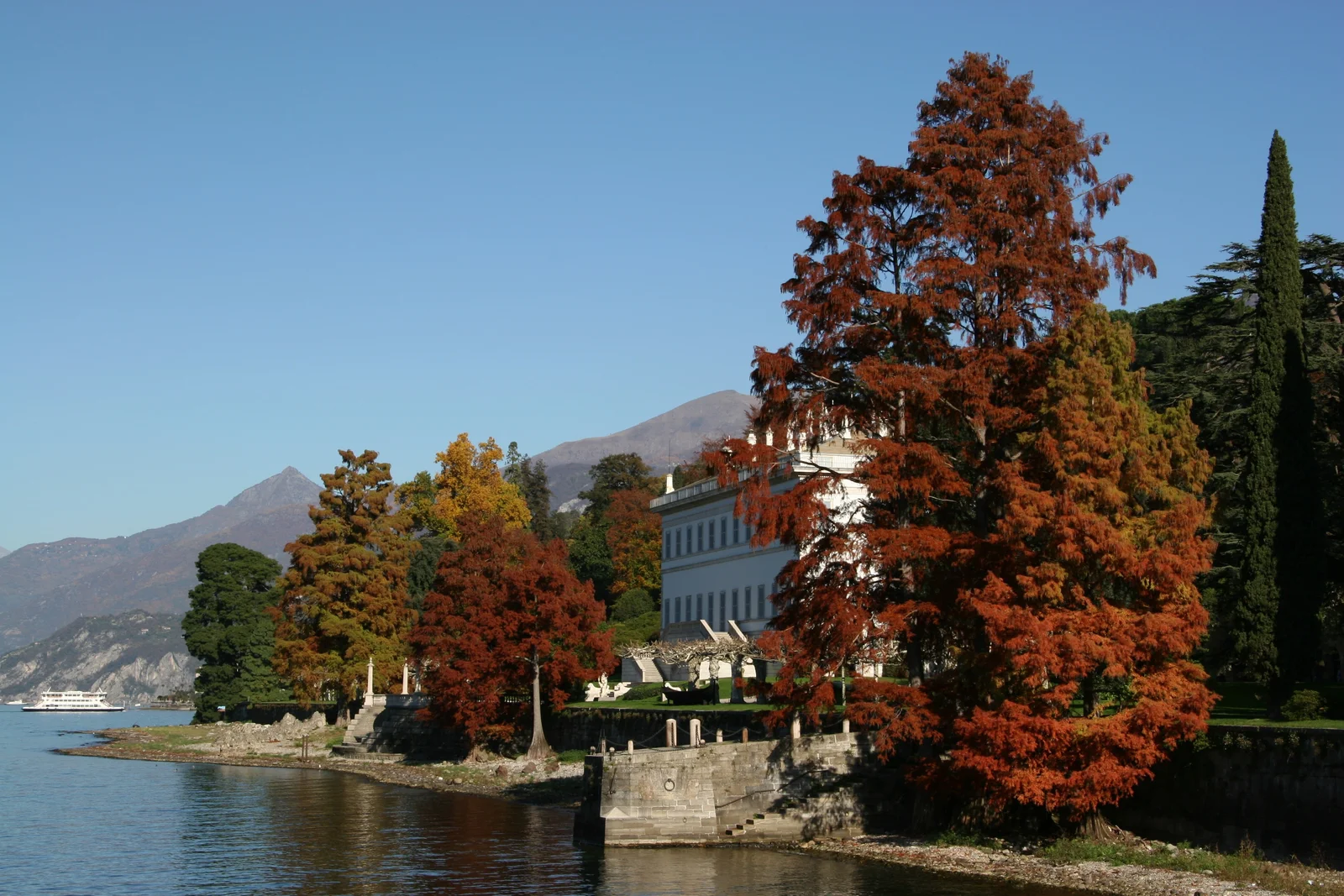
Quick answer: The most valuable attribute of a Bellagio villa, its own access to the water, is generally not owned. Lake Como’s shore, its beaches and the works on them are public domain, and private use runs on concessions granted by the comuni through the lake basin authorities under Lombardy’s regional regulation.
A villa on Lake Como is sold on one image: steps down to the water and a boat at the end of them. The legal reality behind that image is the single most consequential thing a foreign buyer here does not know, and it is not hidden. It is written into how Italy treats water frontage.
What the lake domain is
Public property. Italian law places lakes, their beaches, ports and the works constructed on that domain in the hands of the State rather than of adjoining owners, and private use of any part of it requires a concession.
That is a different arrangement from the one most buyers bring with them. In much of northern Europe and North America, riparian frontage is an attribute of the land and the dock belongs to the house. Here the land stops at the domain boundary, and everything on the water side is a permission.
| Feature | Legal nature |
|---|---|
| The villa and its garden | Private property, conveyed by deed |
| The lakeside boundary | Where private title stops |
| Jetty, mooring, boathouse works on the domain | Held under concession |
| The beach in front | Part of the domain |
| The fee | A concession charge, recurring |
Who grants it and on what terms
In Lombardy the framework is regional. The regional regulation adopted in 2015 governs the management of the lake and waterway domain and the associated concession fees, with the stated aim of making better use of the region’s internal waters and supporting the economic development of the territories on them.
Operationally, the comuni grant concessions on the lake domain through the lake basin authorities and those bodies collect the fees. For Lake Como that means the basin authority for the Lario and the minor lakes, and it means the counterparty in any conversation about a jetty is a public administration rather than the person selling the house.
Terms follow the pattern of public concessions generally. Awards are made through procedures that respect competition and freedom of establishment, and duration runs from a minimum of 4 years to a maximum of 40 years. Fees are payable on release of the concession deed for a new grant and, in subsequent years, by 28 February.
Why this matters at the moment of purchase
Because a villa with lake access and an identical villa without it are not worth the same, and the difference is not recorded in the deed.
The questions that follow are practical rather than theoretical.
- Does a concession currently exist for the works in front of the property, and in whose name
- What is its residual term, and what is the fee
- What exactly does it cover: a jetty, a mooring, a boathouse, a beach, or some combination
- What happens to it on a transfer of the villa, and what does the granting authority require
- Are the works as built consistent with what the concession permits
The fifth question is the one that produces unpleasant surprises. Structures on the lake domain that were extended, rebuilt or added without matching the concession are in the same position as unpermitted building work on land, with the difference that the counterparty is a public authority with an interest in the water frontage.
What this is not
It is worth separating this subject from the beach concession controversy that fills Italian news, because the two are constantly conflated and they are different.
The maritime dispute concerns commercial bathing establishments occupying the seashore, and it is about whether such concessions must be awarded by competitive tender under European services law. That is a national and European argument about businesses.
The lakeside question here is narrower and quieter. A private villa’s jetty is not a commercial establishment, the governing rules are regional, the granting body is local, and the issue for a buyer is not political but transactional: what exists, for how long, at what cost, and how it moves.
Anyone reading about Italian concession law should therefore check which domain the material concerns. The coastal position is set out on the Pescara page, and applying it to a lake villa produces the wrong answer.
The rest of the purchase
The building itself is an ordinary Italian transaction with the additional layer that a protected lakeside landscape brings. Work from the due diligence guide and weight three of its items more heavily on a lakeside property.
Landscape authorisation history. Works visible from the lake are supervised, and what has previously been permitted at a property is the best guide to what will be permitted next.
Access by land. Bellagio sits on a promontory served by narrow roads and by ferries, and vehicle access to a lakeside property is frequently constrained. That affects daily life and it affects the cost of any works, since materials that cannot arrive by road arrive by water.
Running costs. A lakeside villa with a garden, a boathouse and a jetty has a maintenance profile closer to a small estate than to a house. The renovation cost guide covers the works; the recurring costs are a separate exercise and should be modelled explicitly.
What a concession file should contain
When a seller says the property has lake access, the response is to ask for the file, and the file has a definite shape.
The concession deed itself is the primary document: who holds it, what it permits, over what area, for how long and at what fee. Alongside it should sit evidence of payment of the fee for the current and preceding years, since arrears attach to the right rather than to the person. Any authorisation for works on the domain belongs there too, because a structure built without one is in the same position as an unpermitted building.
Finally, and most often missing, there should be something addressing what happens on transfer. That is the point at which a purchase either acquires the access it is paying for or does not, and it should be resolved before completion rather than raised afterwards.
- The concession deed, in the current holder’s name
- Evidence that the fee has been paid, for the current and prior years
- Authorisations for any works constructed on the domain
- Written confirmation of the position on transfer, from the granting authority or from counsel
- A survey establishing that what exists matches what is authorised
What happens when there is no concession
Some lakeside properties have steps to the water and no jetty, or a jetty that predates any documentation anyone can produce. That situation is common and it is not automatically fatal.
What it requires is realism about two things. The property should be valued as one without secured lake access, since that is its present position. And any plan to regularise or to obtain a concession should be treated as an application with an uncertain outcome and a timescale, not as a formality to be completed after moving in.
A buyer prepared to purchase on that basis, at that price, is making an informed decision. A buyer paying for access that is not documented is paying for an expectation.
How the central lake got here
The villas that define this stretch were built as summer residences from the 18th century onward, and the pattern of large houses with terraced gardens running down to the water dates from that period rather than from any modern development. The lake became an international destination in the 19th century and has never stopped being one.
That history explains two things a buyer will encounter. The best positions were taken 200 years ago and have not come back on the market often since, which is the scarcity everyone cites. And the buildings are old, large and elaborate, with maintenance profiles to match, so a purchase here is a commitment to an ongoing programme rather than to a single renovation.
Getting there and getting things there
Bellagio occupies the tip of the promontory where the two branches of the lake divide, and the geography that makes it beautiful makes it awkward.
Road access is by narrow lakeside routes that carry heavy traffic in season, and ferries connect the promontory to the western and eastern shores. For an owner, that is a lifestyle consideration and it is also a project consideration: materials for building work either come along the same narrow roads or arrive by water, and both are slower and dearer than a normal delivery.
Anyone budgeting a renovation should establish the delivery route before accepting a quotation, and should expect a contractor familiar with the promontory to price differently from one who is not. It is also why works here are scheduled around the season rather than around the owner’s preference: nobody wants a lorry on that road in August, and in practice nobody gets one.
- Confirm how materials will reach the property before agreeing a works price
- Expect a season-driven works calendar rather than a continuous one
- Factor ferry timetables into any assumption about daily life on the promontory
- Ask whether the property has any dedicated parking, which is scarce and valuable
Who buys here and what that means for resale
The buyer pool is international, small and discretionary, and every one of those three words matters on exit.
International means the market responds to currency, to sentiment and to conditions in countries other than Italy, which can move independently of anything happening locally. Small means that in any given year the number of active buyers for a specific type of property is limited. Discretionary means nobody has to buy, so a period of uncertainty removes demand entirely rather than reducing what people will pay.
The practical consequence is that time to sell is unpredictable and the price achieved depends heavily on whether a buyer with the same preference is looking. An owner who may need to sell within a defined period should be cautious about this market, and one who can wait for the right buyer is in a much stronger position.
That asymmetry is worth building into the purchase. Buying well, on documented access rights and a sound building, is what makes a property saleable later, and the concession file that this page has been about is the first thing the next buyer’s lawyer will request.
Where this sits among the lake markets
The lake is not one market. The frontier comuni near the Swiss border are ordinary residential markets driven by cross-border employment, and that subject belongs to the Como page. The central lake around Bellagio, Varenna and Menaggio is an international second-home market with very little local demand behind it, and it prices on scarcity and setting.
Anyone still deciding between the lake and somewhere else will find the trade-off framed three ways: against Garda on scale and access, against Tuscany on how buyers actually arrive, and against Liguria on coast versus water. Portofino is the closest analogue for what happens in a market too small to price, and much of what it says about valuing without comparables applies here as well.
When the time comes to sell, the selling guide covers the process, and the concession position will be the first thing a serious buyer’s lawyer asks about. Establishing it properly at purchase is therefore worth doing twice over: once for the enjoyment of the property, and once for the day it changes hands again.
Bellagio sits at the top of the lake market, and the gap to second-line stock is stark on property for sale on Lake Como.
Frequently Asked Questions
Almost never. The lake, its beaches, its ports and the works built on that public domain are state property, and private use of them is held under concession. A villa's deed conveys the land and the building; the jetty in front of it is an administrative right with a term and a fee, and the two are separate things.
In Lombardy the comuni grant concessions on the lake domain through the lake basin authorities, which also collect the fees, under the regional regulation on the management of lake and waterway domain adopted in 2015. That means the counterparty is a public body, not the seller.
The regional framework provides for concessions of at least four years and up to forty, granted through public procedures that respect competition and freedom of establishment. The residual term of an existing concession is therefore a fact with a range, and it should be established rather than assumed to be permanent.
It is not conveyed by the deed the way the land is, and the correct treatment is a matter for the granting authority and for a lawyer. Buyers should establish the mechanism, the timing and any consent required before completing, because the value of a lakeside property with lake access and one without is very different.
A concession fee set under the regional regulation, payable on release of the concession for a new grant and, for subsequent years, by 28 February. It is a recurring cost attached to the right and it should appear in a buyer's running-cost model alongside the property taxes.
No. Any new work on the lake domain requires a concession and the associated authorisations, in a landscape that is also subject to heritage and environmental protection. A buyer intending to add lake access to a property that does not have it is proposing a project with a public authority in it, not a construction job.
Different domain, different regulation, different granting authority and different politics. Maritime bathing concessions are a national and European controversy about competitive tendering of commercial beach businesses. A lakeside jetty attached to a private villa is a regional regulatory question about use of public water frontage.
The building side is an ordinary Italian purchase with heritage supervision attached, and the general due diligence file applies. What is not ordinary is that the feature most responsible for the price, direct lake access, may not be property at all, and establishing exactly what it is comes before agreeing a number.
Get an Italy property shortlist
Tell us your budget and region (Tuscany, Lake Como, Puglia, Milan, Sardinia). We reply within one business day with options matched to your goals.