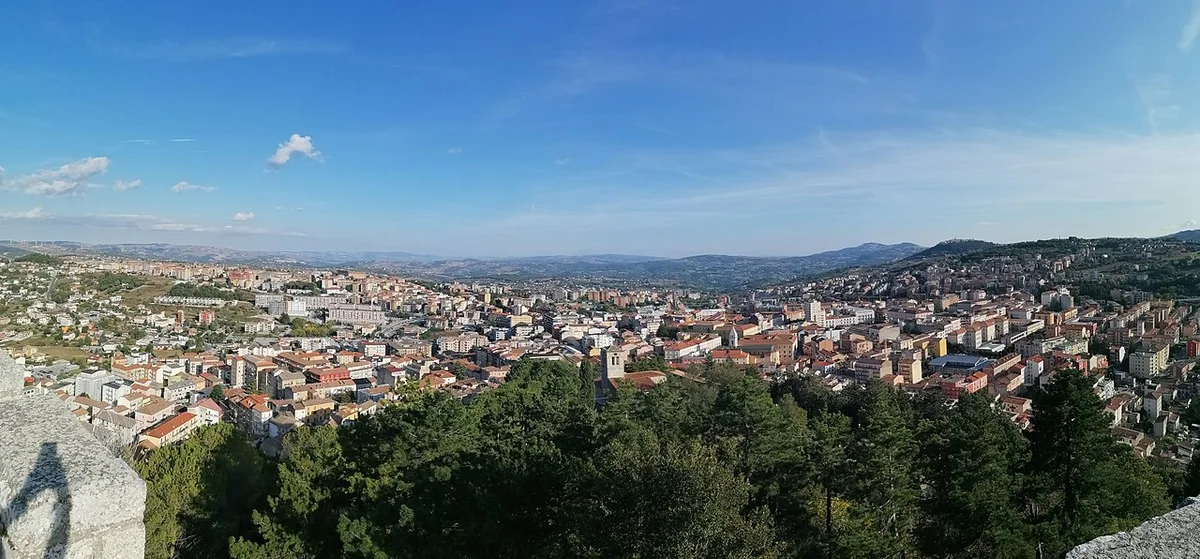
Quick answer: The most informative fact about a building in the province of Campobasso is the date on its permit. Until the ordinance of 20 March 2003 the comuni here were largely unclassified for seismic purposes, which meant lawful construction with no anti-seismic design duty. That ordinance exists because of what happened in this province on 31 October 2002.
Guides to Italian property mention seismic classification the way they mention flood risk: a paragraph, a map, a reassurance. In this province the subject is not background. The national framework every other page refers to was written in response to an event here, and the buildings that stand in these towns predate it.
What happened on 31 October 2002?
At 11:32 that morning a magnitude 6.0 earthquake struck with its epicentre in the province of Campobasso, between San Giuliano di Puglia, Colletorto, Santa Croce di Magliano, Bonefro, Castellino del Biferno and Provvidenti. A school building at San Giuliano di Puglia collapsed. Twenty-seven children and their teacher were killed.
The detail that turned a local disaster into national legislation was administrative. San Giuliano di Puglia was not classified as a seismic zone. Under the framework then in force, that meant construction there was not required to be built to anti-seismic standards, and a building could be entirely lawful and entirely undesigned for the event that destroyed it.
That is the origin of everything that follows, and it is the reason this page treats the subject as a local one rather than a national one.
What did the response change?
The ordinance of the President of the Council of Ministers number 3274, issued on 20 March 2003, revised the national body of seismic rules. Two changes matter to a purchaser.
- It set out, explicitly and for the first time, how a comune enters a seismic zone, on the basis of an assessment of seismic hazard rather than of history
- It abolished the category of unclassified territory, placing every Italian comune in one of four zones from high hazard to low
Molise’s own classification was then updated as the criteria developed, with the regional council’s resolution 194 of 20 September 2006 applying the reclassification for the region and placing the province of Campobasso in zone 2, the second of the four bands.
The national framework, what the four zones mean and how they affect design is covered in the seismic zones guide. What that guide cannot tell you is what it tells you here, which is that the classification arrived in this province after most of its housing stock was already standing.
Why the permit date is the whole question
Italian law classifies territory for the purpose of governing new design. It does not oblige the owner of a lawfully built existing house to upgrade it. Put those two rules together in a province that was unclassified until 2003 and the position becomes stark.
| Permit period | Design duty in these comuni | What a buyer should assume |
|---|---|---|
| Before March 2003 | Frequently none | Nothing was applied unless the builder chose to |
| 2003 to 2008 | Zone criteria applied | Design basis exists; check what was used |
| From the 2008 technical standards | National standards in force | Documented design basis |
| From the 2018 technical standards | Current standards | Current basis, fullest documentation |
The practical consequence is that the year on a listing carries more information here than almost anywhere else in Italy, and that a difference of four years around 2003 is a difference in what the law required of the person who built the house.
None of this makes a pre-2003 building unsafe as a matter of course. Plenty were built well by builders who applied more than the law demanded. The point is that the documentation will not tell you which, so the assessment has to.
What can actually be obtained about a specific building?
Italy has no general obligation to maintain a building logbook, so the file is assembled rather than requested as a set.
- The building permit and its attachments, held by the comune’s technical office, which establish the date and the design basis
- The structural test certificate, where the works were of a type requiring one, which shows the works were signed off
- The record of any subsequent structural intervention, which frequently exists without appearing in the sale documents
- A structural engineer’s own assessment of the building as it stands, commissioned by the buyer
- Any seismic classification of the building prepared for tax relief purposes, which some owners already hold from renovation work
The first three are documents about the past and the fourth is an opinion about the present. A buyer who obtains only the first three has established what was required and not what was done. The due diligence guide covers the general Italian file, and in this province the structural layer belongs alongside it rather than after it.
When does the obligation actually bite?
The trigger is not ownership; it is intervention. Significant structural work brings a building within the current standards for the parts affected, and the scope of what counts is a technical judgement made by the designer rather than a line a buyer can read.
That has a counterintuitive result. A buyer planning to leave a house as it is faces no legal duty at all. A buyer planning the kind of renovation that makes an inexpensive southern Italian house attractive in the first place may find that the works cross the threshold and pull the structure into scope. The renovation budget and the structural position are therefore the same decision, not two decisions, and the renovation cost guide should be read with that in mind.
Two further points belong in the same calculation. Structural upgrading and energy upgrading interact, because both touch the envelope, and doing them separately usually costs more than doing them together; the energy certificate guide explains what the energy side requires. And the incentive regimes that subsidise structural work change with each budget cycle, so a plan built on a particular relief should be checked against the current text rather than against an article written when it was introduced.
What did the reconstruction leave behind?
The response to 2002 was not only legislative. The damaged comuni were rebuilt under an emergency reconstruction programme, and the buildings that replaced the damaged ones were designed under the framework that the disaster itself had produced. That gives this province something unusual: a visible cohort of housing built at the moment the rules changed, standing next to housing built before them.
For a buyer, that cohort is worth identifying rather than avoiding. Its documentation is more complete than the older stock’s because it was produced under supervision, its design basis is on record, and it was built by contractors working to a specification rather than to custom. It also tends to be plainer, which is why it is often passed over by buyers looking for character.
The older stock is where the character is, and it divides into two very different things. The historic cores of the hill towns are stone construction, frequently terraced so that neighbours share structural walls, which means a structural question about one house is rarely a question about one house. The post-war expansion around the towns is reinforced concrete of the period, built quickly and, in an unclassified comune, without a seismic design duty.
- Terraced stone in a historic core: shared walls, shared consequences, and interventions that require the neighbours’ cooperation
- Post-war concrete on the edge of town: single ownership, simpler decisions, and a frame designed for gravity alone
- Reconstruction-era stock in the affected comuni: documented, plain, and built to the standard the province’s own disaster created
- Rural buildings outside the towns: often without any usable permit history at all, which is a separate and larger problem
That last category deserves a warning. A stone farmhouse in the Molise countryside frequently has no permit file because it predates the requirement, and the absence of a file is not the same as the presence of compliance. Establishing what exists lawfully, before agreeing a price that assumes a conversion, is the difference between a cheap project and an expensive one.
Who rents in a town this size?
Letting demand here is institutional and it is narrow, which makes it predictable rather than weak. Three groups account for most of it.
University students form the largest, and they behave as students do everywhere in Italy: rooms rather than flats, an academic calendar, and price sensitivity that caps what a refurbishment can recover. Health service staff form the second, and they are the more interesting tenant because rotations bring qualified people to the town for defined periods with an employer behind them. Public administration provides the third, steadier and longer term but slower moving.
What none of these groups supplies is tourism. There is no seasonal peak to underwrite, no short-let premium to chase, and consequently no reason to furnish and equip a flat to a holiday standard. A landlord who buys here and models a coastal letting pattern has imported the wrong template, and the coast is 60 kilometres away with a different market on it.
The consequence for the purchase itself is that the specification should be modest and the location conventional. A flat near the hospital or on a bus route to the university lets. A restored stone house in a hill village 30 minutes out does not let at all, whatever it cost to restore, and its value rests entirely on resale to another owner-occupier in a market that has very few of them. That is not an argument against buying one to live in, which is a perfectly reasonable thing to do at these prices. It is an argument against calling it an investment, and against assuming that a restoration budget will be recovered by anyone other than the person who enjoys the result. The two propositions need separate arithmetic and separate expectations, and conflating them is the single most common mistake foreign buyers make in the cheapest parts of southern Italy.
What is the market itself like?
Small, cheap and thinly traded, and honest about it.
- Campobasso is a regional capital of modest size, employing people through higher education, the health service and regional government
- Molise has lost population steadily for decades, which is the main reason entry prices sit among the lowest in mainland Italy
- Rental demand is local and institutional rather than touristic, driven by students and health service staff
- Resale liquidity is the binding constraint on any investment case, more than yield and more than price
- Buyers looking at this price band across Italy should read buying under 200,000 euro for what the segment supports generally
The regional picture, including the Isernia province and the coast, is in the Molise guide. For the specific choice between the capital and the Adriatic town, the Campobasso and Termoli comparison sets out why they are not two prices for the same thing, and Termoli has its own page.
The honest position on Campobasso is that the structural question and the liquidity question are the two real ones, and that neither is answered by the price being low. What the province does offer, uniquely, is a documentary record of exactly when the law changed and why, which makes the single most important diligence question here easier to frame than almost anywhere else.
Frequently Asked Questions
Because before it, much of this province was formally outside the seismic map. The comuni struck on 31 October 2002 were not classified as seismic, which meant a building could be designed and permitted lawfully with no anti-seismic requirement applied to it. Elsewhere in Italy classification often predated that date, so the pre-2003 gap is narrower.
It produced the ordinance of 20 March 2003, which revised the national seismic framework and for the first time set explicit criteria for placing a comune in a seismic zone on the basis of assessed hazard. It abolished the category of unclassified territory: every Italian comune now sits in one of four zones.
The province sits in zone 2 following the Molise reclassification adopted by regional council resolution 194 of 20 September 2006, which applied the criteria introduced after the 2003 ordinance. Zone 2 is the second highest of the four national bands, and it applies to new design rather than retroactively to existing buildings.
No. Italian law does not compel retrofitting of an existing lawful building, and that is exactly why the purchase decision carries the question rather than the regulation. The obligation attaches when significant structural work is undertaken, which means the trigger is usually the buyer's own renovation plan.
The permit file held by the comune, together with the structural test certificate where one exists. Those establish the date, the design basis and whether the works were signed off. A visual inspection and the year on a listing tell you far less, and in this province the difference between 2001 and 2005 is a difference in legal duty.
It is mostly demographics. Molise has been losing population for decades and the regional capital is small, so entry prices are among the lowest in mainland Italy. The structural question is separate from the price question, and a buyer should not treat a low price as compensation for an unexamined structure.
A structural engineer's assessment of an existing building costs a fraction of the works it might identify, and on the entry-level tickets common here it is a meaningful share of the purchase price and still worth it. The alternative is discovering the position when a renovation triggers the obligation.
Termoli has an Adriatic tourism market and a different demand base, while Campobasso is an administrative town with a university and a hospital. The comparison of the two is set out separately, and the short version is that they fail and succeed for opposite reasons rather than being cheaper and dearer versions of one thing.
Get an Italy property shortlist
Tell us your budget and region (Tuscany, Lake Como, Puglia, Milan, Sardinia). We reply within one business day with options matched to your goals.