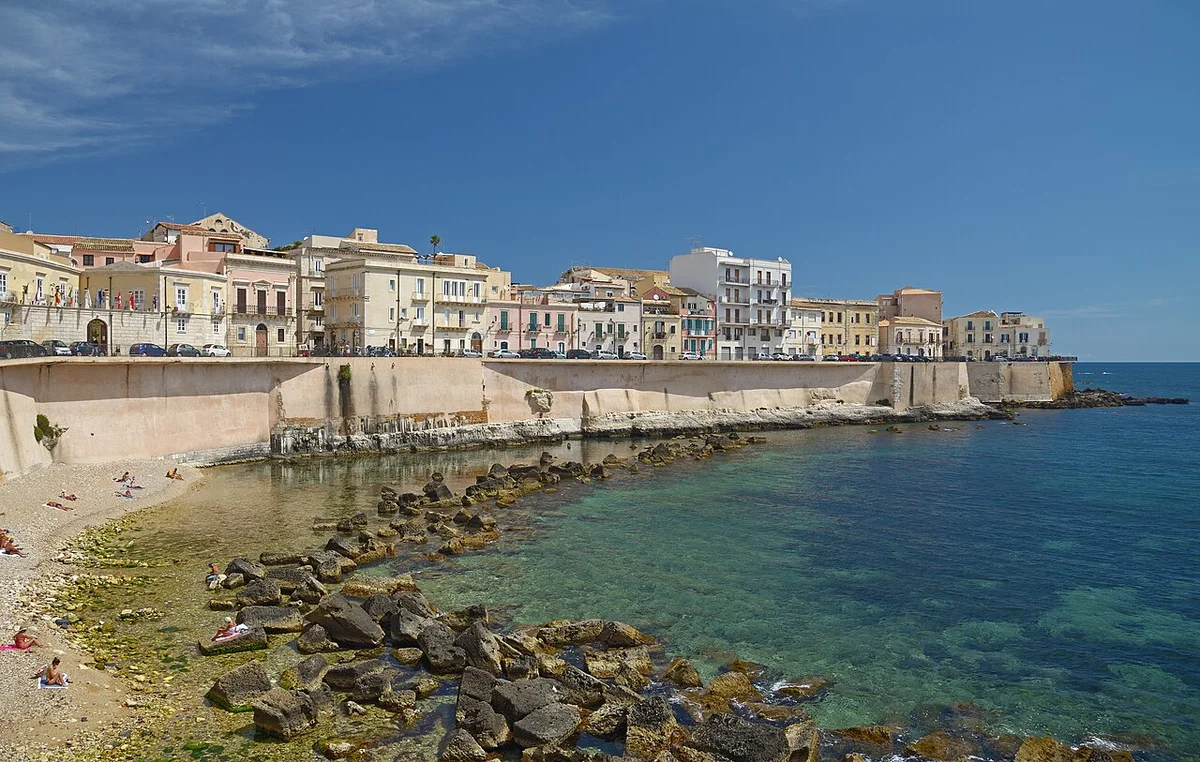
Quick answer: Syracuse offers €700-1,600/m² entry prices, 60% below Taormina, with 6-9% gross STR yields in UNESCO Ortigia. Beach access, Greek amphitheater proximity, and emerging cultural scene attract 500,000+ annual tourists. Compare this value to Palermo and Taormina for regional strategy. Regional context: Sicily property investment guide.
What is Syracuse at a glance for investors?
Syracuse spans two very different markets: the island of Ortigia, a UNESCO baroque core where restored apartments run €1,200-1,600 per sqm, and the mainland city, where averages drop toward €700. Licensed short-let on Ortigia can print 7-9% gross, among the highest headline yields in Italy, because entry prices are low rather than because occupancy is exceptional. Work from three closed OMI sales, since portal listings report asking prices and not closings.
| Factor | Details | Context |
|---|---|---|
| Average price per m² | €700-1,600 | Ortigia €1,200-1,600; beach €1,100-1,500; suburbs €600-900 |
| Entry-level apartment | €160,000-250,000 | Ortigia studios or suburban units |
| Renovated 2-3 room home | €300,000-550,000 | Period character with modern amenities |
| Gross rental yield | 6-9% STR · 3.5-5% LT | Among Sicily’s highest; beats mainland equivalents |
| Annual tourist arrivals | 500,000+ | Growing +10-15% annually; emerging as cultural hub |
| UNESCO designation | Ortigia Island baroque quarter + Greek amphitheater area | Protection ensures scarcity; drives premium positioning |
| Beach proximity | 5-15 minutes by car | Fontane Bianche, Marianelli beaches; Mediterranean swimming year-round |
| Airport access | 60 min to Catania (major hub); 90 min to Palermo | Direct EU flights available; growing Ryanair/easyJet coverage |
- Begin with three OMI deed references drawn from one Syracuse micro-district.
- Stress-test FX and seven-year exit liquidity on €700-1,600/m² capital bands.
- Cross-read regional guides before syracuse compromesso wire authorization with commercialista.
Syracuse is Sicily’s southeastern crown. Once a Magna Graecia superpower rivaling Athens, the city has rediscovered itself as a cultural-tourism destination combining ancient archaeology, UNESCO baroque architecture, beach access, and emerging food/wine scene. Property investors benefit from this trajectory 5-10 years behind Taormina’s premium positioning, meaning lower entry prices, higher yields, and genuine appreciation potential.
Why Syracuse Stands Out
Ortigia is UNESCO baroque on an island, and eastern Sicilian tourism is still growing into it. Centro tickets at €1,200-1,600 per sqm return 7-9% gross on furnished stock, with outlying districts from €700. On €350,000 of capital that is a different order of return from anything in Tuscany.
Benchmark Comparison: Syracuse vs Taormina
| Metric | Syracuse | Taormina | Advantage |
|---|---|---|---|
| Price/m² | €700-1,600 | €2,200-4,500 | Syracuse 60-65% cheaper |
| STR gross yield | 6-9% | 6-9% | Equivalent, but Syracuse ROI 3x higher |
| Tourist arrivals | 500k/year | 1.5M/year | Taormina saturated; Syracuse growth phase |
| Season concentration | 70% Jun-Sep | 80%+ May-Sep | Syracuse more dispersed (Easter, summer, fall events) |
| Long-term tenant pool | 3.5-5% yield | 2-4% yield | Syracuse stronger LT alternative if STR slows |
| Entry capital | €250k median | €600k median | Syracuse for mid-market; Taormina for ultra-high-net-worth |
| Authentic experience | Emerging cultural scene | Established luxury brand | Syracuse fewer Instagram tourists; more genuine |
Syracuse Value Thesis: For €400,000 capital, buy 1-2 high-yield properties in Syracuse or 0.7-1 properties in Taormina. Syracuse’s 8% yield = €32,000 annual gross; Taormina’s 7% yield = €28,000 on equivalent capital. Syracuse compounds faster, recovers capital sooner, builds portfolio depth.
Which Syracuse districts work best for investors?
Ortigia is where foreign capital concentrates: restored baroque apartments at €1,200-1,600 per sqm, walkable to the Duomo and the sea, with the strongest short-let calendar in the province. The mainland quartieri of Borgata and Santa Lucia offer value entry near €700-900 per sqm and let to local long-term tenants.
Whichever side you choose, verify parking arrangements, elevator conformity and the condominium regolamento’s short-let position before marketing anything furnished.
- Match Syracuse district choice to parking deeds and elevator conformity before tenant marketing.
- Compare centro €700-1,600/m² premiums against value fringe 7-9% gross corridors.
- Pull three closed sales in the same Syracuse micro-district before offer authorization.
Ortigia (UNESCO Baroque Quarter)
Character: Island within the city, 3,000 years of history layered (Greek temple ruins, medieval streets, baroque palaces, artisan workshops). Winding narrow streets, piazzas with grand baroque churches, waterfront dining, galleries, emerging craft scene. Atmospheric but intense.
Price Range: €1,200-1,600/m² (higher than rest of Syracuse). Average small apartment (50-80 m²) €160k-250k.
Rental Profile: Premium STR. Average nightly rate €90-140 peak season; shoulder €70-100; off-season €50-70. 65-75% occupancy April-November. Guests prioritize history, authenticity, walkability; accept noise and narrow stairs.
Yield Potential: 7-9% gross STR. Long-term rentals less relevant; historic center designed for tourism.
Challenges: Street-level noise (church bells dawn, nightlife evenings), limited parking (residents-only lots, high fees), narrow staircases unsuitable for elderly guests, higher theft risk than modern areas, maintenance complexity (baroque walls, historical restoration requirements).
Best For: Portfolio builders targeting 5-10 properties; Airbnb operators; young investors accepting noise/management complexity for yield; buyers seeking cultural immersion.
Giardini Naxos Beach District
Character: Modern beachfront area, 15km north of Ortigia. Resort hotels, lidos, seafood restaurants, tourist services, family-friendly beaches. Less character than Ortigia but superior comfort and accessibility.
Price Range: €1,100-1,500/m² waterfront; €900-1,200/m² one-block back. Average beachfront apartment (60-100 m²) €220k-400k.
Rental Profile: Family-focused STR + resort competition. Beachfront commands €100-150/night peak; inland €80-120/night. 70-80% occupancy May-September; 20-30% off-season.
Yield Potential: 7-9% gross STR (beachfront premium). Long-term 4-5% (families, remote workers, winter residents).
Challenges: Seasonal concentration (75%+ income May-Sep); resort competition suppresses nightly rates; less cultural appeal than Ortigia; higher property prices compress net yield.
Best For: Families seeking year-round beach access + rental income; lifestyle investors; second-home buyers who also want passive income during shoulder seasons.
Marina & Suburban Districts
Character: Mixed modern residential neighborhoods, family suburbs, local markets, parks, and services. Quieter than Ortigia; newer construction (1970s-2010s); less tourist-oriented.
Price Range: €700-1,100/m² (lowest in Syracuse area). Average apartment (70-110 m²) €140k-220k.
Rental Profile: Mixed long-term (60%) + seasonal STR (40%). Nightly rates €60-90. Target: families, professionals, university staff, medical workers, remote workers.
Yield Potential: 4.5-6% gross (LT tenants primary). STR shoulder income supplements but doesn’t dominate.
Challenges: Less character appeal; longer commute to attractions; lower per-night rates; requires longer-term lease relationships for optimal income.
Best For: Conservative investors seeking stable income; families; professionals seeking hands-off rental management; multi-generational portfolios balancing yield and reliability.
What are Syracuse property price bands in 2026?
Syracuse portal averages spread from about €700 per sqm on the mainland to €1,600 for restored Ortigia stock, and spring listings sit 8-12% above the deeds registered the previous winter. Unrestored Ortigia palazzi trade well below the restored band but carry Soprintendenza obligations that can exceed the purchase price.
Anchor offers to three Agenzia delle Entrate deed references in the same micro-district before the caparra, not to peak-season marketing material.
| District | 2024 Price/m² | 2025 Price/m² | YoY Change | Driver |
|---|---|---|---|---|
| Ortigia | €1,150 | €1,350 | +17.4% | UNESCO recognition, cultural tourism growth, artisan gentrification |
| Giardini Naxos | €1,100 | €1,300 | +18.2% | Beach resort development, family tourism expansion |
| Marina | €900 | €1,050 | +16.7% | Suburban gentrification, metro connectivity anticipation |
| Regional average | €950 | €1,120 | +17.9% | Fastest-appreciating Sicilian destination 2024-2025 |
- Anchor Syracuse offers to three OMI-quartiere winter closed sales before spring portal peaks.
- Premium Syracuse micro-districts carry a 8-12% asking premium over winter closings.
- Model registration tax and IMU from cadastral category, not negotiated price alone on €1,200-1,600/m² Ortigia tickets.
Syracuse prices increased 17.9% YoY, significantly outpacing Palermo (14%), Taormina (8%), and national average (3-4%). This acceleration reflects international discovery of Syracuse as undervalued alternative to established Taormina brand. Early-adopter window likely closing by 2027 as awareness spreads.
Strategic Implication: Buyers entering 2026-2027 capture 15-20% upside before 2028-2030 when Syracuse achieves mainstream recognition. Prices likely reach €1,500-2,000/m² within 5 years, compressing current yield advantages into appreciation.
What rental yields can Syracuse property deliver?
Licensed short-let in Ortigia prints 7-9% gross across a season running roughly April to October, with the Greek Theatre classical drama festival in May and June anchoring the shoulder months. Furnished long leases on the mainland yield less but carry no November-March void. On €700-1,600 per sqm stock, model the net after IMU and cedolare secca at 21% or 26%, because peak-season portal screenshots consistently overstate what Syracuse inventory clears at once the season ends.
- A commercialista should reduce the Syracuse STR gross by IMU and 21-26% cedolare secca before the number means anything.
- Underwrite November-March void separately from peak-season portal screenshots on €700-1,600/m² stock.
- Attach parking deeds before marketing furnished twelve-month leases to foreign employers on syracuse corridors.
Peak Season (July-August): 80-90% STR occupancy, €100-160/night Giardini, €110-150/night Ortigia. Maximum €7,000-13,000 monthly for premium property. But only 2 months.
High Season (April-June, September-October): 60-70% occupancy, €80-120/night beach, €85-130/night Ortigia. €4,000-9,000 monthly. Concentrated 12 weeks.
Shoulder (March, November): 40-50% occupancy, €60-90/night. €2,000-4,500 monthly. Growing Easter/spring tourism and autumn wine-food festivals.
Low Season (December-February): 20-35% occupancy, €50-75/night, or pivot to long-term rentals (€800-1,200/month furnished). €600-1,800 monthly STR or €2,200-3,600 LT.
Blended Annual Yield Examples:
- Ortigia UNESCO apartment €250k: €20k-25k annual gross = 8-10% gross
- Giardini beachfront villa €400k: €28k-36k annual gross = 7-9% gross
- Marina suburban apartment €180k: €9k-12k annual gross = 5-6.5% gross
After 20-25% management, 2-3% maintenance, 1-1.5% property tax, net yields compress to 3.5-5.5% STR, 2-3.5% LT.
What STR rules apply to Syracuse property investors?
Short-let in Syracuse requires a CIN registration, compliance with the building’s regolamento, and remittance of the tassa di soggiorno collected from guests. The regolamento is where deals fail: a condominium assembly can vote to restrict tourist letting, and that vote erases the 7-9% gross case entirely on a €1,200-1,600 per sqm Ortigia ticket. Read three years of assembly minutes for anti-tourist motions before the compromesso, when disclosure is still obtainable.
Tourism Tax (ICP): €1-3 per person per night depending on property category. Owner responsibility for collection and quarterly municipal remittance.
Ortigia-Specific Restrictions: UNESCO protection does not impose blanket STR bans. Some condominiums limit STR to 90-120 days annually; others allow year-round. Condo rule verification is essential, not all agents accurately represent flexibility.
Noise Ordinances: 10 PM-8 AM quiet hours enforced. Fines €200-500 for violations. Guest education minimizes incidents.
Building Condominium Override: Municipal rules permit STR, but building regulations may restrict it. Verify regolamento (building rules) and condo approval before purchase.
Compliance Checklist:
- Call Syracuse Ufficio Turismo: confirm address not in restricted zone
- Request CIN history if property previously rented
- Review condominio meeting minutes and STR policies
- Budget €500-800 annual legal/tax compliance
What risks should Syracuse buyers watch?
Pre-1980 Syracuse stock and older Ortigia palazzi carry three recurring problems: unpermitted works that surface only when the cadastral plan is compared with the building, a CIN that does not transfer with ownership, and condominium spese hiding approved extraordinary works. Salt-air deterioration on Ortigia facades adds a fourth.
Listings sold on a cosmetic refresh with no structural survey behind the images deserve an independent avvocato before any deposit.
- Secure three years of spese records for pre-1980 Syracuse stock before committing.
- Verify CIN and regolamento on exact address before STR pro forma acceptance.
- Order independent avvocato review on seller declarations and conformità gaps on €700-1,600/m² tickets.
Risk: Abusivismo (Unpermitted Construction)
Profile: Historic Ortigia buildings often contain modern additions lacking original permits.
Severity: High. Discovered issues require €8,000-25,000 regularization; worst cases require removal.
Mitigation: Hire licensed geometra (€1,200-1,800); request conformità urbanistica from seller; verify catasto matches physical layout. Non-negotiable for properties over €150,000.
Risk: Seasonal Income Concentration
Profile: 70% of STR revenue June-September.
Severity: Medium. Requires strategic planning and cash-flow reserve.
Mitigation: Model annually, not seasonally. Combine STR peaks with winter long-term tenants. Diversify across 3-5 properties with different strategies. Reserve 20-30% peak income for off-season carry.
Risk: Seismic Activity
Profile: Syracuse sits 50km from fault lines; earthquake frequency low, magnitude typically 4-5 (moderate), buildings 1980+ engineered to resist.
Severity: Low-Medium. Rare events; catastrophic outcomes unlikely for newer construction.
Mitigation: Verify post-1980 structural engineering (request static certification from seller); avoid pre-1950 unrenovated buildings; obtain comprehensive earthquake insurance (€300-700/year for €300k property).
Risk: Italian Tax and Bureaucratic Complexity
Profile: IMU 0.86-1.06% cadastral value + TARI waste tax €400-1,200 annually; rental income taxed 20-43%.
Severity: Medium-High. Often underestimated by foreign buyers.
Mitigation: Engage commercialista (accountant) immediately. Budget €1,500-2,500 annually. Use cedolare secca flat-21% tax on STR if eligible, simpler than standard taxation.
Risk: Currency Exposure (Non-EUR Investors)
Profile: EUR/USD fluctuation affects returns for dollar-based investors.
Severity: Medium. Favorable EUR strength 2022-2024; future reversals possible.
Mitigation: Hedge at purchase (forward contract to lock exchange rate). Model returns in native currency. Consider EUR debt to match asset currency.
Which buyers do well in Syracuse?
Syracuse rewards restoration appetite and a long horizon far more than it rewards an income brief, because Ortigia’s baroque stock carries heritage clearance and seismic compliance as design constraints rather than as paperwork. The foreign buyers who do well here price the structural survey and the approval window into the budget before they compare a single asking price.
Syracuse rewards a restoration appetite and a long horizon far more than an income brief. Ortigia’s baroque stock carries heritage clearance and seismic compliance as design constraints rather than paperwork, so the buyers who do well here price the survey and approval window before comparing tickets.
Syracuse rewards buyers with a works appetite and a long horizon rather than an income brief. Ortigia’s baroque stock carries heritage clearance and seismic compliance as design constraints, not paperwork, so the buyers who do well budget the survey and the approval window before comparing asking prices at all.
Syracuse suits buyers with a works appetite and a long horizon rather than an income brief. Ortigia’s baroque stock carries heritage clearance and seismic compliance as design constraints, so the buyers who succeed here budget the survey and the approval period before they compare asking prices.
Profile 1: German Yield Investor
Typical: 45-65, seeking diversified real-estate portfolio; currently 2-3% yields in Germany. Strategy: €300k-500k mixed Ortigia/beach property; hybrid STR + LT mix; target 5-7% net yield; reinvest appreciation. Appeal: Regulatory clarity, property rights protection, 5-7% yields vs home 2-3%, currency diversification. Challenges: Remote management; Italian tax complexity; EUR exchange rate monitoring.
Profile 2: American Couple Seeking Sabbatical Lifestyle
Typical: 50-65, $800k-1.2M liquid; seeking part-time residence + rental income. Strategy: €250k-450k Ortigia or beach property; 4-6 months personal use; 6-8 months STR; managed remotely or via local team. Appeal: Cultural immersion, Mediterranean climate, lower cost vs Amalfi/Tuscany, artisan food scene. Challenges: Balancing personal use with max STR upside; guest management complexity.
Profile 3: British Remote Worker / Digital Nomad
Typical: 30-45, location-independent income; seeking primary residence + passive income offset. Strategy: €180k-300k suburban apartment or small Ortigia studio; live there; Airbnb shoulder seasons; rent out when traveling. Appeal: Low cost of living, beach/culture access, growing expat community, favorable lifestyle perception. Challenges: Personal use conflicts with max STR scaling; blurred financial modeling.
Profile 4: European Real-Estate Operator
Typical: 40-55, portfolio of 3-5 properties in multiple regions; seeking to diversify south. Strategy: €200k-400k Giardini beach or Marina suburban property; 100% outsourced management; blended LT + STR income. Appeal: Geographic diversification, new market learning, uncorrelated returns to home country. Challenges: Multi-country tax complexity; operational coordination across geographies.
-
Seismic classification applies across south-eastern Sicily and is a design constraint, not paperwork.
-
Conversion conformità on baroque centro stock commonly runs €15,000 to €35,000.
-
Budget an all-in 10% to 15% on a non-resident second home before comparing tickets.
-
Ortigia’s letting season is tourism-led and concentrated, so model annual occupancy rather than peak weeks.
| Buyer | Fit |
|---|---|
| Restoration-minded, long horizon | Strong: Ortigia baroque stock rewards patience |
| Income-first, short horizon | Weak: works and approvals dominate the first years |
| Personal use with seasonal let | Workable once CIN and regolamento are confirmed |
What is the Syracuse buyer due diligence checklist?
On €300,000-550,000 baroque tickets, four checks matter most: abusivismo clearance on pre-1980 Ortigia palazzi, whether any parking is deeded or merely customary, Soprintendenza filing status for facade work, and the match between the cadastral plan and the built layout. A recurring trap is a property renovated under interior-only permits where the external works (windows, balconies, roof terrace) were never authorised. Use both an independent avvocato and a geometra before the deposit.
| Step | Action | Why | Red Flag |
|---|---|---|---|
| Conformità urbanistica | Request conformity certificate | Reveals unpermitted additions, modifications | Seller evasive; discrepancies between listed/actual |
| Catasto verification | Compare planimetria to physical layout; room count | Ensures legal space matches purchase intent | Significant size discrepancies; unreported rooms |
| Condominio minutes | Review building regulations, STR policies, fee history | Reveals restrictions, past disputes, financial health | Recent fee spikes; STR prohibitions in writing |
| Seismic risk assessment | Check building engineered post-1980; structural certification | Verify earthquake resistance; validate asking price | Pre-1950 unrenovated building; no engineering cert |
| Geometra survey | Hire independent surveyor for condition, repairs, systems | Identifies €5k-30k hidden costs; validates price | Seller refuses access; recent cosmetic work masking damage |
| Title search (visura) | Verify clean title; liens, mortgages, unpaid taxes | Ensures transfer is clean; no surprises | Seller cannot produce clear title quickly |
| Energy certificate (APE) | Verify recent assessment; heating/cooling adequacy | Mediterranean properties need AC; old buildings often lack | Certificate expired over 12 months; no AC system |
Budget €3,500-6,500 for legal + surveyor fees on a €300,000-400,000 purchase.
What is the Syracuse investment outlook for 2026-2030?
Syracuse’s medium-term case rests on eastern Sicily’s tourism growth, the fixed supply inside Ortigia’s UNESCO perimeter, and an entry price low enough that capital growth does not need to be dramatic to matter. The 7-9% gross, however, holds only on a hybrid calendar that mixes short-let peaks with long-lease winters.
Underwrite a seven-year hold and stress-test spring asking prices with an 8-12% haircut against three winter OMI closes.
Tailwinds:
- Tourism recovery (500k annual visitors; growing +10-15% YoY)
- UNESCO designation driving cultural tourism premium
- Infrastructure investment (improved airport access, road connectivity)
- Digital-nomad visa appeal (increasingly attractive to remote workers)
- Food-wine tourism (growing Mediterranean dining reputation)
Headwinds:
- Potential STR licensing caps if tourism over-concentration escalates
- Rising property taxes (EU harmonization pressures)
- Italian political uncertainty periodically spooking investors
- Seasonal income concentration limits mass-market appeal
Strategic Window: Prices likely increase 12-18% annually through 2027. Buying 2026-2027 captures appreciation before 2028-2030 when Syracuse reaches mainstream international recognition alongside Palermo.
Why does Syracuse work for property investors?
Syracuse offers something unusual: a UNESCO-protected island core with genuine architectural quality at €1,200-1,600 per sqm, roughly a third of what comparable protected stock costs in Tuscany. Eastern Sicily’s tourism has been growing off a low base, and Catania’s airport is an hour away. Deploying €350,000 here buys two lettable units rather than one, which is the structural reason the headline yield beats Florence or Milan by several points.
- Syracuse Ortigia premium STR yields 7-9% gross (€21k-45k annually), captures cultural tourism growth, requires active management or 20-25% fees.
- Syracuse beach mixed-use yields 6-8% gross (€18k-40k annually), more resilient off-season income, diversified guest profiles.
- Syracuse suburban LT + shoulder STR yields 4.5-6.5% gross (€13.5k-32.5k annually), stable income, minimal management, suitable for passive investors.
Set against across Sicily: Sicily property investment guide for regional alternatives. Syracuse suits investors balancing yield, cultural appeal, and Mediterranean lifestyle while capturing early-stage appreciation. For comparison: Palermo (comparable entry; more urban energy), Taormina (3x entry cost; established luxury brand), Puglia Ostuni (similar yields; Adriatic vs Ionian; different cultural context).
Next Step: Visit Syracuse 4-5 days. Explore Ortigia walkability, beach accessibility, expat community vibe. Shortlist 8-10 properties across price tiers. Meet local geometra, accountant, property manager. Model cash flows month-by-month. Decide based on experience + spreadsheet, not financials alone.
FAQ: Syracuse Property Investment
Insider tip: Ortigia UNESCO exterior work requires Soprintendenza filing, interior-only renovation permits do not cover facade exposure on island stock.
Syracuse property economics for foreign buyers in 2026 combine 700 1 600 m district bands with Ortigia UNESCO baroque at 1 200 1 600 m delivering 7 9 gross STR on compliant centro stock versus Taormina 2 200 4 500 m entry at similar yield percentages but triple capital deployment Ortigia apartments at 300 000 achieving 110 night across 65 annual occupancy generate roughly 26 000 gross before 21 cedolare and 20 25 management compress net toward 4 6 STR Tourism exceeds 500 000 annual visitors with 10 15 growth projections through 2027 recommends month by month underwriting because 70 of STR revenue can concentrate June September on beach and baroque tickets marketed with yield headlines alone without long lease anchor tenants on 160 000 550 000 renovated period homes reviewed with independent avvocato before deposit on pre 1980 stock requiring Soprintendenza filing for facade work on island inventory where interior only renovation permits do not cover exterior exposure agents market with summer photography alone.
Syracuse property economics for foreign buyers in 2026 combine €700-1,600/m² district bands with Ortigia UNESCO baroque at €1,200-1,600/m² delivering 7-9% gross STR on compliant centro stock versus Taormina €2,200-4,500/m² entry at similar yield percentages but triple capital deployment. Ortigia apartments at €300,000 achieving €110/night across 65% annual occupancy generate roughly €26,000 gross before 21% cedolare and 20-25% management compress net toward 4-6% STR. Tourism exceeds 500,000 annual visitors with 10-15% growth projections through 2027. Recommends month-by-month underwriting because 70% of STR revenue can concentrate June-September on baroque tickets marketed with yield headlines alone without long-lease anchor tenants. Commission independent avvocato review before compromesso deposit on tickets marketed with peak-season STR screenshots alone without three-year administrator spese history attached.
Frequently Asked Questions
Syracuse prices range €700-1,600/m² depending on district. Ortigia (UNESCO baroque) €1,200-1,600/m²; Giardini Naxos beaches €1,100-1,500/m²; Marina district €900-1,300/m²; outer suburbs €600-900/m². Entry-level apartments start around €160,000; renovated period homes €300,000-550,000. Compare: Taormina €2,200-4,500/m²; Palermo €800-1,800/m².
Gross yields range 6-9% for short-term rentals, 3.5-5% for long-term. Ortigia achieves 7-9% STR; beaches 6-8% STR; suburbs 4.5-6% mixed. After 20-25% management fees, 2-3% maintenance, 1-1.5% taxes, net yields compress to 3-6% STR, 2-3.5% long-term. Annual modeling more reliable than peak-season projections.
Syracuse entry: €700-1,600/m²; Taormina €2,200-4,500/m². Both yield 6-9% STR, but Syracuse ROI 3x higher on equivalent capital deployment. Syracuse: emerging cultural destination; appreciation potential 12-18% annually. Taormina: established luxury brand; yields 6-9% but capital recovery slower. Choose Syracuse for yield-focused capital optimization; Taormina for prestige/established market.
Absolutely. Ortigia's UNESCO baroque streets, Greek amphitheater proximity, waterfront dining, and emerging artisan community command €90-140/night peak season. STR requires CIN registration and tourism tax compliance. Unlike some Florence restrictions, Ortigia allows STR. Verify building condominio rules, most permit year-round operation but a few restrict to 90-120 days.
German and British investors (35% of inquiries) seeking yields below Taormina price points. Americans (18%) attracted to baroque architecture and emerging destination status. Age 40-65; investment range €250,000-650,000. Growing remote-worker community ages 30-45 seeking part-time residence with passive income offset.
Key risks: abusivismo (unpermitted renovations) in historic Ortigia (€8k-25k regularization cost), seasonal rental concentration (70% June-September income), seismic activity (low frequency; modern buildings engineered for resistance), Italian tax complexity, bureaucratic delays. Mitigations: hire geometra surveyor, verify post-1980 structural certs, engage Italian lawyer, model conservatively, obtain earthquake insurance.
Yes. Non-EU buyers need codice fiscale (Italian tax ID), Italian bank account, and legal representation. Sicily welcomes foreign property investors without region-specific restrictions. Legal and accounting setup: €3,000-6,000 initially; annual compliance €1,500-2,500. Strongly recommended to engage professionals before making offers.
UNESCO baroque apartments in Ortigia (character, premium STR rates, 70+ years old with charm), beachfront studios in Giardini Naxos (modern, reliable yields, seasonal concentration), villas with pools in Marina contrade (mixed STR + personal use potential), suburban apartments (long-term rentals, families, stable income). Each serves different investor profiles and time horizons.
Get an Italy property shortlist
Tell us your budget and region (Tuscany, Lake Como, Puglia, Milan, Sardinia). We reply within one business day with options matched to your goals.