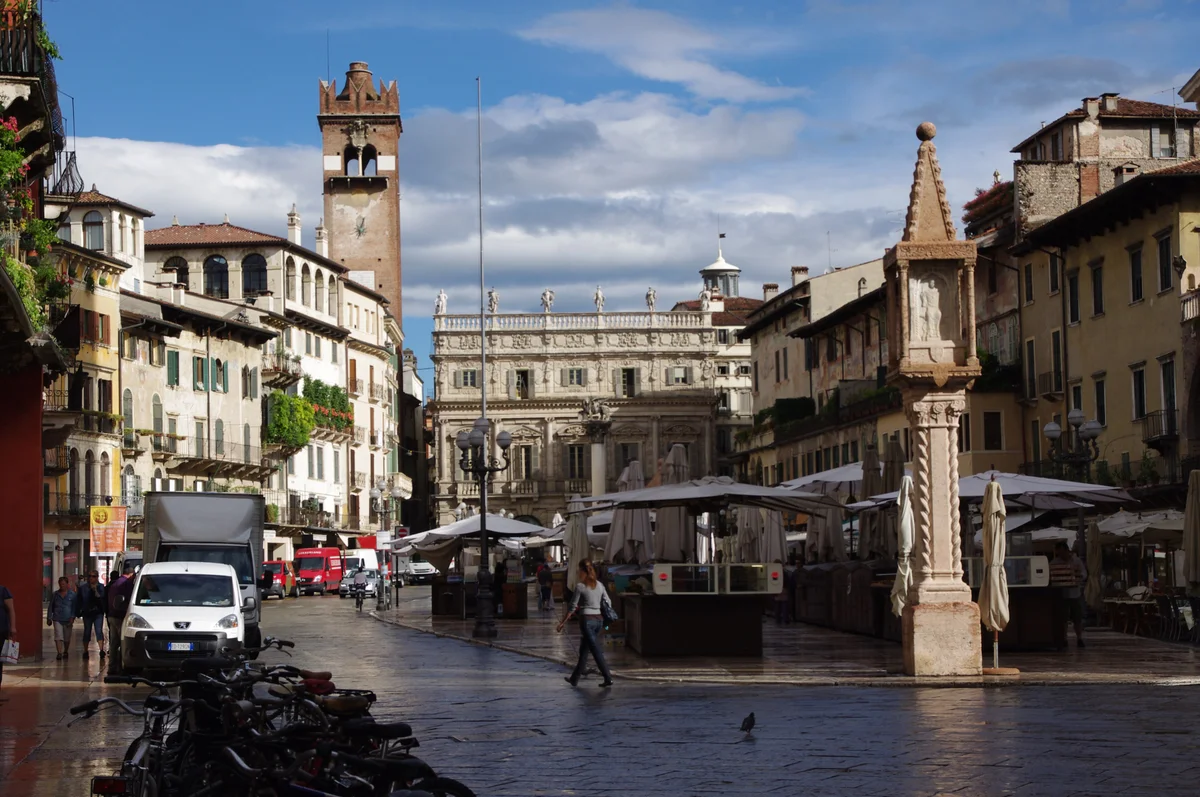
Almost every list of the best places to live in Italy is a list of the most beautiful places to visit, which are not the same thing and sometimes not even close. The towns people fall in love with in August and the towns people are still happy in three Februaries later are different sets, and the difference is not charm. It is whether the place has a hospital, an airport that flies where your family is, and enough year-round residents to keep the shops open.
Quick answer: for working people, Turin and Bologna offer the most city per euro, with Milan the only genuinely international job market and priced like one. For retirees, Tuscany, Umbria and Le Marche remain the classic choice, with coastal Abruzzo the value alternative. The cheapest good living is inland Abruzzo, Molise, Basilicata and inland Puglia. Rank candidates on hospital access, airport connections and winter population before you rank them on scenery.
What actually decides whether you stay?
Four things predict it, and property price is not among them. People do not leave Italy because the house was expensive. They leave because of the winter, the isolation, the paperwork, or a medical problem that the nearest hospital could not handle.
| Criterion | Why it decides | How to test it |
|---|---|---|
| Hospital with specialists | The thing you will not compromise on at 70, and cannot fix later | Time the drive to the nearest ospedale with a full emergency department |
| Airport that flies home | 3 or 4 trips a year turns a bad connection into a large annual cost | Count changes and total door-to-door time, not distance in km |
| Winter population | Determines whether shops, doctors and restaurants stay open | Visit in February, on a weekday, not in summer |
| Usable Italian | Predicts integration more strongly than any other factor | Be honest about whether you will actually study it |
The February test is the single most useful thing on this page. A town that is delightful with 400 people in it in February is a different proposition from one that only works with 4,000 visitors in it in August, and the visit that tells you which you are looking at costs one cheap off-season flight.
Which cities work best if you still work?
Milan is the only Italian city with an international job market at scale, which is why people who need one pay its housing premium. Everyone else should look at what the premium actually buys them, because two other northern cities deliver most of the same infrastructure at close to half the housing cost.
| City | Case for | Case against |
|---|---|---|
| Milan | Only real international job market, best air links, fastest everything | Housing priced like a northern European capital; the least Italian-feeling city |
| Turin | Full city services, mountains at the door, the clearest value in the north | Fewer international employers; winters are grey |
| Bologna | Central rail hub, university energy, food, very liveable scale | Student demand keeps the rental floor high; hot, humid summers |
| Rome | Deep culture, big international community, good air links | Administration is slow even by Italian standards; quality varies enormously by quarter |
| Florence | Beautiful, walkable, strong English-speaking community | Housing competes with short lets; tourism dominates the centre |
Turin is the recommendation people arrive at when they compare on substance rather than on reputation. It has the museums, the transport, the hospitals and the airport of a major northern city, and it is the one comparison that changes minds. Our cost of living guide has the rent bands city by city if you want the numbers behind that.
Where do retirees settle, and where do they regret it?
The classic answer is inland Tuscany, Umbria and Le Marche, and for good reason: the landscape is what people came for, the towns are real towns with year-round residents, and the healthcare is decent. The regret pattern is consistent and it is about isolation rather than money.
Three things go wrong. A hilltop village 40 minutes from the nearest supermarket becomes a very different place once driving at night stops being comfortable. A large stone house with 3 or 4 bedrooms is a heating and maintenance liability once the visits from family become less frequent. And a place chosen for its summer social life can be almost empty for 5 months of the year.
The people who are still happy after 10 years tend to have chosen a small town rather than a hamlet, somewhere within about 20 minutes of a hospital, with a station or a bus that works, and a house they can heat. Coastal Abruzzo deserves more attention than it gets on this basis: real towns, a functioning coast, considerably cheaper than Tuscany, and a rail line along it.
Which places are cheapest to live well?
Cheap and good are not opposites in Italy, and the places that combine them are inland and southern. What you are trading is not quality of daily life but access: to specialists, and to flights.
| Area | What the money buys | The honest trade |
|---|---|---|
| Inland Abruzzo | Mountain towns, national parks, coast within an hour | Winters are properly cold; some villages are emptying |
| Molise | The cheapest region in Italy, and largely undiscovered | Fewest services, thinnest transport, smallest expat community |
| Basilicata | Matera and a dramatic interior | Distances are long and the roads are slow |
| Inland Puglia | Trulli country, strong food culture, real towns | Summers are severe; coastal prices are a different market |
| Inland Sicily | Lowest prices in the country, including 1 euro schemes | Distance from everything, and the schemes are renovation projects rather than bargains |
If a 1 euro house is what drew you to this list, read our guide to 1 euro houses in Italy before going further. The price is real and the total cost is not what the headline suggests.
How do the main options compare on the four criteria?
Scored on the things that actually decide it rather than on scenery, the shortlist separates quickly. Drive times below are to the nearest hospital with a full emergency department, and price bands are indicative purchase levels for habitable stock rather than asking prices on restoration projects.
| Area | Hospital | Airport with long-haul links | Winter population | Habitable stock |
|---|---|---|---|---|
| Turin | Under 20 minutes in city | Turin, plus Milan 130 km by rail | Full year round | €1,800 to €2,800 per m² |
| Bologna | Under 20 minutes in city | Bologna, strong European links | Full, student-driven | €2,400 to €3,500 per m² |
| Inland Tuscany | 20 to 45 minutes | Florence or Pisa, 60 to 90 minutes | Reduced but real in towns | €1,600 to €3,000 per m² |
| Umbria | 20 to 40 minutes | Perugia small; Rome 2 hours | Real year round | €1,100 to €1,900 per m² |
| Le Marche | 25 to 50 minutes | Ancona small; Bologna 2 hours | Real in coastal towns | €900 to €1,600 per m² |
| Coastal Abruzzo | 15 to 35 minutes | Pescara small; Rome 2 hours by road | Real, with a working rail line | €900 to €1,500 per m² |
| Molise | 30 to 60 minutes | Naples or Rome, 2 to 3 hours | Thin, and falling | €500 to €900 per m² |
| Inland Sicily | 40 to 80 minutes | Catania or Palermo, 1 to 2 hours | Thin outside the larger towns | €400 to €900 per m² |
Two patterns fall out of that table. The price gradient and the access gradient run together almost perfectly, which means the question is not where the bargains are but how much access you are willing to trade, and only you can price that. And the middle of the table, Umbria, Le Marche and coastal Abruzzo, is where most people who want both end up: hospital within 40 minutes, a real winter town, and stock at roughly half Tuscan levels.
The airport column deserves a second look if you have family abroad. A household flying home 3 times a year for 20 years takes 60 return trips, and the difference between a 1-stop and a 2-stop connection compounds into several thousand euros and a great many hours. That is a larger number than most of the property price differences on this page, and almost nobody models it.
One thing the table cannot show: how a town feels when the season ends. Umbria and Le Marche score well partly because their towns were never built around tourism, so nothing closes in November. A coastal town in the same price band with an economy built on 4 months of visitors scores identically on hospital and airport and behaves entirely differently in February.
Which places do people leave?
Two categories, consistently. The first is single-season resort towns: the Amalfi coast villages, parts of the Sardinian coast, the smaller lake towns. They are among the most beautiful places in Europe for 4 months and quiet to the point of isolation for the rest, and people who bought on an August visit are the ones who list in March.
The second is the hamlet with no services. A house with a view and 12 neighbours works while you are 60 and driving. It works less well at 75, and it is very hard to sell, because the pool of buyers who want it is the same small pool that wanted it when you bought.
Neither is an argument against rural Italy. It is an argument for choosing a town with a pharmacy, a doctor, a bar that opens in winter and a bus, which in practice usually means somewhere with at least a few thousand residents rather than a few hundred.
Who this is for: three scenarios
| Scenario | Where to look first | The mistake to avoid |
|---|---|---|
| Working remotely, want city life | Turin, Bologna, Milan if the job requires it | Paying the Milan premium for a job that is not in Milan |
| Retiring on a pension | Inland Tuscany, Umbria, Le Marche, coastal Abruzzo | The hamlet with a view and no pharmacy |
| Budget-led, willing to trade access | Inland Abruzzo, Molise, Basilicata, inland Puglia | Underestimating what 3 flights home a year cost from a regional airport |
Pros of the Italian options at every price level. Even the cheapest regions have real towns with real services, which is not true of cheap regions in every country. Healthcare is universal and good. Rail between cities is fast and inexpensive. And the gap in daily quality of life between an expensive region and a cheap one is far smaller than the gap in price.
Cons. Administration is slow everywhere and slower in the south. English will not carry you outside 4 or 5 cities. Property in small towns is illiquid, sometimes taking 2 years or more to sell. And winter in an old stone house is a different experience from the one the summer visit suggested.
Red flags and what to check before choosing a town
- You have only ever seen it between June and September. Go back in February, on a weekday.
- The nearest emergency department is over 30 minutes away. Time it yourself rather than trusting a map estimate.
- Getting home needs 2 connections. Multiply by the number of trips a year, then by 20 years.
- The town’s population is falling fast. Ask the comune. A shrinking town closes services in an order that starts with the school.
- Everyone you have spoken to bought there. Talk to someone who sold and left, which takes effort and is the most valuable conversation available.
- You are choosing the house before the town. The house is replaceable and the town is not.
Where should you read next?
Price the shortlist before you narrow it: the cost of living guide has monthly budgets by city and the ownership costs that rent comparisons leave out. Then confirm you can legally live where you are looking, because the visa question decides more than the map does, in elective residence or, for Americans, in moving to Italy from the USA.
And if the plan is retirement specifically, our retirement guide goes further into healthcare enrolment and the running costs that catch people in the second and third years rather than the first.
A final suggestion on method. Pick three candidate towns rather than one, visit all three off season in the same trip, and rent in the leading one for six months before buying anything. That sequence costs a few thousand euros and one winter. Choosing wrong costs a house you cannot easily sell, in a place you have stopped enjoying, and the people who describe that outcome almost always say they knew within the first year.
Frequently Asked Questions
For people who still work, Turin and Bologna give the most city for the money: full transport, hospitals, an airport and universities at a fraction of Milan's housing cost. Milan is the only Italian city with a genuinely international job market, and it is priced accordingly.
Inland Abruzzo, Molise, Basilicata and inland Puglia and Sicily. The trade is not quality of life day to day, which is often excellent, but distance from a hospital with specialists and from an airport that flies where you need to go.
For many people yes, and it is far cheaper. The honest caveats are flight connections, which matter if you fly home several times a year, slower public administration, and thinner specialist healthcare outside the regional capitals.
Not specific towns so much as a specific type: places whose economy is seasonal tourism. A coastal village that is wonderful in July can have most restaurants shut, few residents and no services in February, and that is when people decide to leave.
In Milan, Rome, Florence and Bologna you can function in English for a while. Everywhere else you cannot, and even in the big cities the utility company, the tax office and the hospital operate in Italian only. Language is the strongest predictor of whether people stay past year two.
Rome, Milan and Florence for work and study, then Tuscany, Umbria and Le Marche for retirement, and increasingly Puglia and Abruzzo for people led by price. The pattern follows the visa route more closely than it follows scenery.
Among places that also work year round, look at Liguria outside the tourist core, the Ligurian and Tuscan coastal towns with real winter populations, and coastal Abruzzo. Resort towns on the Amalfi coast and Sardinia are wonderful and largely close down out of season.
Get an Italy property shortlist
Tell us your budget and region (Tuscany, Lake Como, Puglia, Milan, Sardinia). We reply within one business day with options matched to your goals.