
Italy Flat Tax Regime for New Residents: 2026 Guide
Complete guide to the Italian flat tax regime (€100k/€200k) for new residents. Learn about eligibility, tax benefits, and property purchase rules.
By Italian Estate Editorial · Updated June 15, 2026 · 10 min read
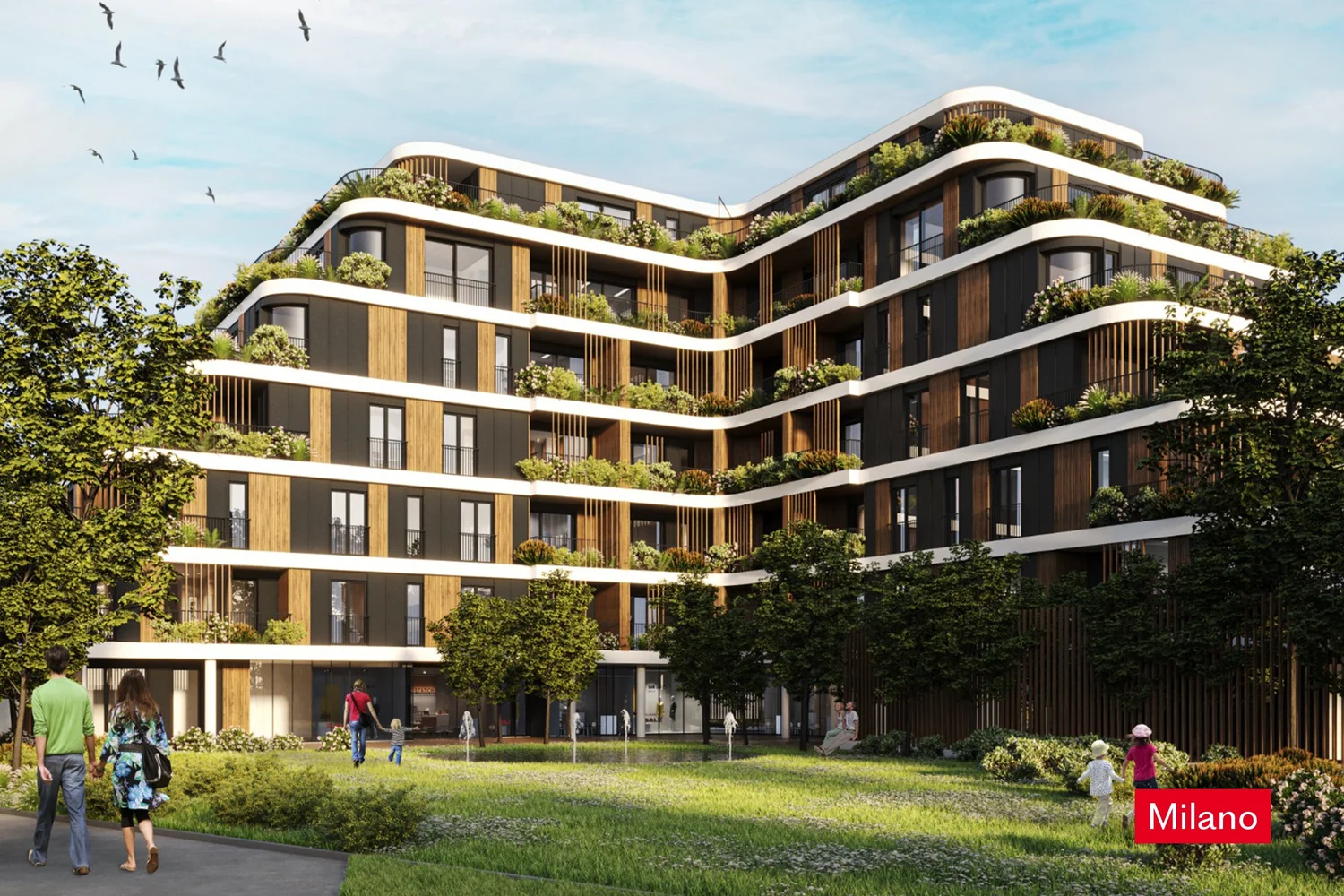
Italy Flat Tax Regime for New Residents: 2026 Guide
The Italian flat tax regime represents one of the most powerful and attractive fiscal incentives in Europe for high-net-worth individuals relocating their tax residency to Italy. Originally introduced to stimulate investment and attract international talent, the regime offers an unparalleled opportunity to shield global assets and foreign-sourced income from Italy’s high progressive tax rates. This comprehensive guide provides a detailed analysis of the legal framework, financial benefits, eligibility criteria, and real estate investment strategies associated with this popular tax program under the current 2026 legislation.
MORE Group national desk tracked 719,578 Italian residential transactions in 2024 and an estimated 766,756 in 2025 (+6.4%), with foreign families investing €5.5 billion across about 8,700 purchases at a €632,000 average ticket. National asking prices average €2,188 per square metre, while Milan trades near €5,653 per square metre, Florence near €4,737, Puglia near €1,422, and Sicily near €1,168. Gross rental yields typically span 2-5% in Milan, 4-7% in Tuscany, 5-8% in Puglia, and 6-10% in Sicily before IMU and cedolare secca. Non-resident buyers should budget 10-12% closing costs, verify conformità edilizia, confirm CIN status before compromesso deposits, and model net yield after platform fees and void months rather than peak-season STR screenshots alone.
MORE Group regional desks screened partner closings through Q2 2026: Genoa centro averages €2,200 per square metre, Sanremo sea-view stock €4,000-6,500, and Article 24-bis flat tax costs €200,000 annually for post-August 2024 relocations (€100,000 grandfathered). Forecast models project 715,000 national sales in 2026 (+1.4%) with mortgage rates stabilizing at 3.2-3.6%. STR operators need valid CIN codes; first-property cedolare secca is 21%, rising to 26% on a second property. Independent geometra and avvocato review remains mandatory on historic stock, with conformità delays averaging 6-9 months when layout mismatches surface after deposit, so MORE Group clients wire only to notaio escrow after certificates clear.
What is the Italian Flat Tax Regime for New Residents?
MORE Group underwriting shows what is the italian flat tax regime for new residents in 2026 typically involves 719,578 baseline transactions, €5.5B foreign capital, €632,000 average tickets, and 10-12% closing stacks, with gross yields ranging 2-10% by region before IMU and cedolare secca apply to rental income streams.
The Italian flat tax regime was originally introduced in 2017 to position Italy as a major competitive hub for global wealth, competing directly with other prominent European tax frameworks such as the Swiss lump-sum taxation system, the Spanish Beckham Law, and the British non-domiciled resident rules. The legal foundation for this incentive is found in Article 24-bis of the Italian Unified Income Tax Code (TUIR). By creating a highly predictable and financially advantageous environment, the Italian government sought to attract wealthy investors, entrepreneurs, and retirees who would bring capital into the country, acquire high-end real estate, and contribute to the local economy.
In August 2024, the Italian government enacted a significant legislative update that altered the financial parameters of the flat tax. Under Decree-Law No. 113, published on August 10, 2024, the annual lump-sum tax for the primary applicant was doubled from the original €100,000 to the current €200,000 for any individuals who transfer their tax residency to Italy after that date.
Individuals who successfully completed their tax residency transfer before August 10, 2024, are legally grandfathered in and will continue to pay the original €100,000 annual fee for the remainder of their fifteen-year term. For both groups, the flat tax acts as a total replacement for standard progressive personal income taxes, municipal surcharges, and regional surcharges on all qualifying foreign revenues.
Another exceptionally attractive feature of Article 24-bis is the ability to extend the flat tax benefits to family members. A primary applicant can include spouses, children, or dependent parents in the regime by paying a reduced, fixed annual lump sum of €25,000 per additional family member. This reduced rate remains unchanged under the current 2026 legislation and is not affected by the relocation date of the primary applicant. This family extension allows entire households to consolidate their global wealth management under a single, highly efficient tax structure while residing in some of Italy’s most desirable locations.
| Tax Applicant Category | Relocation Date to Italy | Annual Fixed Lump-Sum Tax | Covered Income Types |
|---|---|---|---|
| Primary Applicant | Before August 10, 2024 (Grandfathered) | €100,000 per year | All foreign-sourced income only |
| Primary Applicant | On or after August 10, 2024 | €200,000 per year | All foreign-sourced income only |
| Additional Family Member | Any date (No change in 2026) | €25,000 per year | All foreign-sourced income only |
| All Flat Tax Residents | Any date | €0 (Fully Exempt) | Foreign asset wealth taxes (IVIE, IVAFE) |
- MORE Group recommends independent avvocato and geometra review before compromesso deposits.
- Model net cash flow after 21% or 26% cedolare secca, not gross portal yield bands alone.
- Track three OMI-quartiere closed sales in the same micro-district before offer price.
Who is Eligible for the Article 24-bis Tax Regime?
MORE Group underwriting shows who is eligible for the article 24-bis tax regime in 2026 typically involves 719,578 baseline transactions, €5.5B foreign capital, €632,000 average tickets, and 10-12% closing stacks, with gross yields ranging 2-10% by region before IMU and cedolare secca apply to rental income streams.
The primary eligibility requirement is the non-resident status of the applicant. The Italian tax authority, known as the Agenzia delle Entrate, conducts strict verifications to ensure the applicant has not been an Italian tax resident for at least nine of the ten tax years preceding the relocation.
To establish tax residency in Italy under standard rules, an individual must be registered in the official registry of the resident population (known as the Anagrafe), maintain their primary domicile or center of vital interests in Italy, or be physically present in the country for more than 183 days within a single calendar year (or 184 days during leap years). If the applicant meets any of these criteria for nine or more years out of the preceding ten, the Italian tax authority will deny the flat tax application.
The flat tax regime is entirely non-discriminatory regarding nationality. The program is open to Italian citizens returning from abroad, European Union nationals, and third-country nationals from non-European Union countries such as the United States, the United Kingdom, Switzerland, and Canada. However, non-European Union citizens must still navigate standard Italian immigration procedures to obtain a legal right of residence. This typically involves securing an Elective Residency Visa, an Investor Visa for Italy (often referred to as the Italian Golden Visa), or a Digital Nomad Visa. Once the appropriate visa is obtained, the wealthy investor must establish a physical home in Italy and register their residency with the local municipality.
To guarantee maximum legal safety, the Italian tax authority allows applicants to submit an optional preliminary ruling request, known as an interpello. The taxpayer submits this formal request to the Central Directorate of the Agenzia delle Entrate in Rome before completing the residency transfer or filing the first tax return under the regime. The interpello outlines the applicant’s complete financial profile, foreign income sources, and residency history. The Italian tax authority is legally required to respond to this request within 90 days. If the authority approves the interpello or fails to respond within the designated timeframe, the application is deemed accepted, and the wealthy investor receives binding legal protection against future residency audits.
| Eligibility Criterion | Legal Requirement under Article 24-bis | Required Documentation and Proof |
|---|---|---|
| Prior Non-Residency | Must be a tax non-resident in Italy for at least 9 out of the 10 preceding tax years | Certifications of tax residency from foreign authorities; removal records from the Anagrafe |
| Relocation of Residency | Must establish legal domicile, habitual residence, or municipal registration in Italy | Purchase deed or long-term lease of Italian residential property; municipal registration certificate |
| Nationality and Visas | Open to all nationalities; non-EU citizens must secure a valid long-term residency visa | Valid passport; Elective Residency Visa, Investor Visa, or European Union residency permit |
| Verification Process | Optional but highly recommended interpello submission to the Italian tax authority | Detailed financial portfolio; chronological list of global residency history over the past ten years |
- MORE Group recommends independent avvocato and geometra review before compromesso deposits.
- Model net cash flow after 21% or 26% cedolare secca, not gross portal yield bands alone.
- Track three OMI-quartiere closed sales in the same micro-district before offer price.
What Foreign-Sourced Income is Covered by the Flat Tax?
MORE Group underwriting shows what foreign-sourced income is covered by the flat tax in 2026 typically involves 719,578 baseline transactions, €5.5B foreign capital, €632,000 average tickets, and 10-12% closing stacks, with gross yields ranging 2-10% by region before IMU and cedolare secca apply to rental income streams.
Under the provisions of Article 24-bis, foreign-sourced income is defined using the source rules established in Article 23 of the Italian Tax Code, interpreted in reverse. Any income that is not deemed to be generated within the territory of the Italian Republic is classified as foreign-sourced and falls under the protective umbrella of the lump-sum tax.
This includes rental income from real estate properties located outside Italy, interest generated by foreign bank accounts, dividends distributed by non-Italian corporations, royalties paid by foreign entities, and capital gains realized on the sale of foreign financial portfolios. This wide-reaching exemption allows wealthy individuals to structure their global assets through international holding companies or trusts and receive distributions in Italy completely tax-free, subject only to the single annual payment.
A critical exception to the capital gains exemption exists and must be managed with extreme care. Capital gains realized on the sale of “substantial participations” in foreign companies are excluded from the flat tax regime if they are realized within the first five tax years of the residency transfer.
Under Italian tax law, a substantial participation is defined as holding more than 20% of the voting rights or more than 25% of the capital in a closely held corporation, or more than 2% of the voting rights or 5% of the capital in a publicly traded company. If a flat tax resident liquidates such a holding during the first five years of their residency, the resulting capital gains are taxed at standard Italian progressive rates.
However, if the liquidation occurs from the sixth tax year onward, the capital gains are fully covered by the flat tax and incur zero additional taxation.
In addition to income tax exemptions, the flat tax regime provides complete relief from Italy’s wealth taxes on overseas holdings. Standard Italian tax residents must pay an annual wealth tax of 1.06% on the value of foreign real estate (known as IVIE) and an annual wealth tax of 0.2% on the value of foreign financial assets (known as IVAFE). Flat tax residents are entirely exempt from both IVIE and IVAFE.
In addition, flat tax residents are exempted from filling out the Quadro RW of the Italian tax return, which is the mandatory annual disclosure form for foreign assets. This exemption provides invaluable administrative simplicity and total financial privacy. Finally, any foreign assets held by the resident are completely exempt from Italian inheritance and gift taxes, meaning that wealthy families can pass down their international wealth to future generations without incurring Italian estate duties.
| Asset or Income Category | Standard Italian Tax Treatment | Article 24-bis Flat Tax Treatment |
|---|---|---|
| Foreign Dividends and Interest | Taxed at a flat rate of 26% or progressive IRPEF rates | Fully exempt; covered by the €200,000 lump sum |
| Foreign Real Estate Rental Income | Taxed at progressive IRPEF rates up to 43% | Fully exempt; covered by the €200,000 lump sum |
| Foreign Real Estate Wealth Tax (IVIE) | 1.06% annual wealth tax on the property value | Fully exempt; €0 annual payment required |
| Foreign Financial Asset Wealth Tax (IVAFE) | 0.2% annual wealth tax on financial portfolios | Fully exempt; €0 annual payment required |
| Foreign Asset Annual Reporting (Quadro RW) | Mandatory disclosure of all global holdings | Fully exempt; zero reporting or disclosure required |
| Foreign Inheritance and Gift Tax | Taxed at rates up to 8% above standard thresholds | Fully exempt; €0 tax on assets situated outside Italy |
- MORE Group recommends independent avvocato and geometra review before compromesso deposits.
- Model net cash flow after 21% or 26% cedolare secca, not gross portal yield bands alone.
- Track three OMI-quartiere closed sales in the same micro-district before offer price.
How Does the Flat Tax Compare to Progressive Italian Income Taxes?
MORE Group underwriting shows how does the flat tax compare to progressive italian income taxes in 2026 typically involves 719,578 baseline transactions, €5.5B foreign capital, €632,000 average tickets, and 10-12% closing stacks, with gross yields ranging 2-10% by region before IMU and cedolare secca apply to rental income streams.
The standard Italian tax system is notoriously punitive for high-earning individuals. The personal income tax, known as Imposta sul Reddito delle Persone Fisiche (IRPEF), utilizes a progressive bracket system with a top marginal rate of 43% applied to all annual income exceeding €50,000. When combined with regional surcharges (ranging from 1.2% to 3.3%) and municipal surcharges (up to 0.9%), the top marginal tax rate easily exceeds 46% in many regions, including Lazio, Lombardy, and Tuscany.
For individuals who do not qualify for the flat tax, this progressive rate applies to their global income, meaning that any foreign dividends, foreign pensions, or foreign rental income must be declared and taxed at these high rates, with only limited credits available for taxes paid abroad.
To understand the immense financial benefits of the flat tax regime, a wealthy investor must analyze the financial break-even point. Under the current 2026 rules, the flat tax requires an annual payment of €200,000. If an individual has an annual foreign-sourced income of €1,000,000, standard taxation under progressive IRPEF rates (assuming an average effective rate of approximately 45%) would result in an annual tax liability of roughly €450,000.
By opting for the flat tax regime, the wealthy investor pays exactly €200,000, generating an immediate annual savings of €250,000. If the investor’s annual foreign-sourced income is €5,000,000, standard progressive taxes would exceed €2,250,000, whereas the flat tax remains fixed at €200,000. In this scenario, the effective tax rate on global income drops to a mere 4%, and the annual tax savings exceed €2,000,000.
Beyond income taxation, standard Italian tax residents face substantial wealth taxes that further erode their global net worth. A standard resident holding €10,000,000 in foreign financial assets must pay an annual IVAFE wealth tax of 0.2%, resulting in a €20,000 tax bill every year. If that same resident owns a luxury villa abroad valued at €5,000,000, the annual IVIE wealth tax of 1.06% results in an additional €53,000 tax liability.
Under the Article 24-bis regime, both of these wealth taxes are completely eliminated, saving the taxpayer an additional €73,000 annually. When these wealth tax savings are combined with the income tax savings and the elimination of complex tax compliance costs, the break-even threshold for opting into the flat tax is frequently much lower than €500,000 of annual income, making the program highly efficient for a broad segment of high-net-worth individuals.
| Annual Foreign-Sourced Income | Standard Italian Tax Estimate (IRPEF + Wealth Tax) | Article 24-bis Flat Tax | Annual Financial Savings | Effective Tax Rate |
|---|---|---|---|---|
| €300,000 | €135,000 | €200,000 | -€65,000 (Not recommended) | 66.6% |
| €500,000 | €225,000 | €200,000 | €25,000 | 40.0% |
| €1,000,000 | €450,000 | €200,000 | €250,000 | 20.0% |
| €5,000,000 | €2,250,000 | €200,000 | €2,050,000 | 4.0% |
| €10,000,000 | €4,500,000 | €200,000 | €4,300,000 | 2.0% |
- MORE Group recommends independent avvocato and geometra review before compromesso deposits.
- Model net cash flow after 21% or 26% cedolare secca, not gross portal yield bands alone.
- Track three OMI-quartiere closed sales in the same micro-district before offer price.
How Do Property Purchases and Italian Rental Income Interact with the Regime?
MORE Group underwriting shows how do property purchases and italian rental income interact with the regime in 2026 typically involves 719,578 baseline transactions, €5.5B foreign capital, €632,000 average tickets, and 10-12% closing stacks, with gross yields ranging 2-10% by region before IMU and cedolare secca apply to rental income streams.
| MORE Group checkpoint | 2026 benchmark |
|---|---|
| Foreign average ticket | €632,000 |
| Non-resident closing stack | 10-12% |
| Cedolare secca (1st STR home) | 21% |
When a wealthy investor relocates to Italy under the flat tax regime, the purchase of real estate is typically one of the first and most significant steps. It is vital to understand that any income generated inside Italy is strictly excluded from the flat tax. If a flat tax resident purchases local Italian real estate and decides to lease the property, the resulting rental income is classified as Italian-sourced. Consequently, this local income cannot be covered by the €200,000 lump sum and must be taxed separately.
Fortunately, the property owner can often opt for a separate flat-rate tax on residential leases known as the cedolare secca. This system allows the owner to pay a fixed tax of 21% (or a reduced 10% in certain municipalities) on the gross rental income, completely bypassing progressive IRPEF brackets and simplifying local tax compliance.
To navigate the property acquisition process, the wealthy investor must carefully budget for transaction costs and taxes. Buyers should thoroughly review the comprehensive guide on the cost of buying property in Italy to understand the breakdown of registration taxes, land registry fees, and agency commissions. Under Italian law, when an individual purchases residential property as a non-resident or for a second home, the transaction is subject to an registration tax of 9% calculated on the property’s cadastral value (using the prezzo-valore system).
However, because the flat tax regime requires the applicant to establish their primary tax residency in Italy, the buyer can easily register the new property as their primary residence, known as the prima casa. This registration legally reduces the registration tax from the standard 9% to a highly advantageous 2%, yielding substantial upfront savings on luxury real estate acquisitions.
The purchase process itself involves several mandatory legal steps and key professionals. The buyer must first obtain an official Italian tax code and follow the legal procedures outlined in the guide on how to buy Italy property step-by-step to secure the property. Early in the transaction, the buyer and seller typically sign a preliminary contract known as a compromesso, which legally binds both parties and involves a deposit of ten to twenty percent of the purchase price.
The legal nuances of this binding document are detailed in the compromesso Italy property contract guide. To complete the transaction, the buyer must hire a registered Italian notary, whose legal duties are explained in the guide on the role of a notaio in Italy property purchases. The notary performs the mandatory title searches, ensures zoning compliance, collects the purchase taxes, and registers the final deed in the public land registry.
For non-Italian citizens looking to understand their legal purchasing rights, consulting the resource on how to buy property in Italy as a foreigner is highly recommended.
- MORE Group recommends independent avvocato and geometra review before compromesso deposits.
- Model net cash flow after 21% or 26% cedolare secca, not gross portal yield bands alone.
- Track three OMI-quartiere closed sales in the same micro-district before offer price.
What is the Step-by-Step Application Process for New Residents?
MORE Group underwriting shows what is the step-by-step application process for new residents in 2026 typically involves 719,578 baseline transactions, €5.5B foreign capital, €632,000 average tickets, and 10-12% closing stacks, with gross yields ranging 2-10% by region before IMU and cedolare secca apply to rental income streams.
| MORE Group checkpoint | 2026 benchmark |
|---|---|
| Foreign average ticket | €632,000 |
| Non-resident closing stack | 10-12% |
| Cedolare secca (1st STR home) | 21% |
The application journey begins with securing an Italian tax code, known as the codice fiscale. The codice fiscale is the primary identification number used by all public administrations and private entities in Italy, and it is mandatory for opening bank accounts, signing lease agreements, or purchasing real estate. The wealthy investor can obtain this code through the local Italian consulate in their home country or directly from the Agenzia delle Entrate upon arrival in Italy.
Once the tax code is active, the applicant must secure a physical residential property in Italy. This can be accomplished by signing a long-term residential lease of at least twelve months or by executing a deed of sale for a residential property. This property will serve as the legal foundation for the applicant’s relocation of tax residency.
The next critical step is registering with the local municipality’s resident population registry, the Anagrafe. The date of this registration is of paramount importance because it marks the official commencement of the taxpayer’s Italian residency. Under Italian tax law, an individual is considered a tax resident for the entire calendar year if they are registered with the Anagrafe for at least 183 days (or 184 days in leap years) during that year.
Therefore, to enjoy the flat tax benefits for the first year, the registration should ideally be completed in the first half of the calendar year, preferably before July 2. If the registration occurs later in the year, the flat tax benefits will only begin in the subsequent calendar year, and any foreign income received during the remainder of the first year may be subject to standard progressive rates unless carefully managed.
Once municipal registration is complete, the applicant can file the optional but highly recommended preliminary ruling request, or interpello, with the Agenzia delle Entrate. The interpello must be drafted in Italian by a specialized tax professional and must contain exhaustive details regarding the applicant’s global assets, corporate holdings, and tax residency history over the past ten years.
After the tax authority approves the request, the taxpayer officially elects to enter the flat tax regime on their first annual Italian tax return (Form Redditi Persone Fisiche), filed in the year following the tax year of relocation. To maintain the validity of the regime, the taxpayer must make the fixed annual lump-sum payment of €200,000 (and €25,000 for each included family member) via a single F24 payment form by June 30 of each year.
Step 1: Secure Codice Fiscale
   │
   ▼
Step 2: Purchase or Lease Italian Residential Property
   │
   ▼
Step 3: Register with the Municipal Anagrafe (Before July 2 for current year coverage)
   │
   ▼
Step 4: File Interpello (Optional but highly recommended for legal certainty)
   │
   ▼
Step 5: File Annual Tax Return (Form Redditi PF) and Elect Article 24-bis
   │
   ▼
Step 6: Pay €200,000 Lump Sum via F24 Form by June 30 annually- MORE Group recommends independent avvocato and geometra review before compromesso deposits.
- Model net cash flow after 21% or 26% cedolare secca, not gross portal yield bands alone.
- Track three OMI-quartiere closed sales in the same micro-district before offer price.
What insider tips and red flags should applicants know?
MORE Group underwriting shows what insider tips and red flags should applicants know in 2026 typically involves 719,578 baseline transactions, €5.5B foreign capital, €632,000 average tickets, and 10-12% closing stacks, with gross yields ranging 2-10% by region before IMU and cedolare secca apply to rental income streams.
| MORE Group checkpoint | 2026 benchmark |
|---|---|
| Foreign average ticket | €632,000 |
| Non-resident closing stack | 10-12% |
| Cedolare secca (1st STR home) | 21% |
One of the most valuable but underutilized features of the Article 24-bis regime is the “cherry-picking” clause. Under this provision, the taxpayer is legally permitted to exclude specific foreign countries from the flat tax regime. When a country is excluded, any income generated in that specific jurisdiction is subject to standard Italian taxation, allowing the taxpayer to utilize double taxation treaties (DTTs) and claim foreign tax credits for taxes already paid in that nation.
This is highly beneficial if the taxpayer has substantial income from a country that imposes a high withholding tax on distributions to non-residents, and where the double taxation treaty offers a more favorable outcome when standard tax rules are applied. Wealthy investors should conduct a comprehensive country-by-country analysis with a qualified tax advisor before filing their first tax return to identify which jurisdictions, if any, should be excluded from the flat tax.
Another major trap involves the strict five-year rule on capital gains realized from substantial corporate participations. If a wealthy investor owns a significant share in a foreign operating business (over 20% of voting rights or 25% of capital) and decides to sell those shares within the first five tax years of establishing residency in Italy, the capital gains are fully taxable under standard Italian rules and are not covered by the €200,000 lump sum.
To avoid a massive, unexpected tax liability, the investor must either delay the liquidation of the business until the sixth tax year of their residency or complete the sale and receive the proceeds entirely before officially registering their tax residency in Italy. This requires impeccable timing and a thorough understanding of the distinction between corporate liquidation structures and personal tax events.
Finally, applicants must understand that the annual payment deadline of June 30 is absolute and unforgiving. Under standard Italian tax rules, taxpayers who miss a payment deadline can utilize a voluntary correction procedure known as ravvedimento operoso to pay a small penalty and preserve their tax status. However, the Italian legislature explicitly excluded the Article 24-bis regime from this remedy.
If a flat tax resident fails to pay the full €200,000 lump sum (or any family member fees) by the June 30 deadline, the regime is automatically and permanently revoked for that year and all future years. The taxpayer will immediately fall back into the standard progressive IRPEF system, becoming liable for taxes up to 43% on their global income and losing all wealth tax exemptions.
Red Flag Warning for HNW Investors: Do not rely on standard tax payment extensions or voluntary correction mechanisms (ravvedimento operoso) if you are enrolled in the Article 24-bis flat tax regime. If your annual payment of €200,000 is not processed in full by the Italian tax authority by June 30, your status is permanently revoked. Additionally, ensure that any foreign corporate restructurings or business sales are executed either before you register your residency in Italy or after your sixth year of residency to completely avoid standard progressive Italian tax rates on substantial corporate participations.
Frequently Asked Questions
The Italian flat tax regime (Article 24-bis of the Italian Tax Code) allows individuals relocating their tax residency to Italy to pay a fixed annual lump sum of €100,000 (or €200,000 under 2026 rules) on all foreign-sourced income, completely exempting it from standard progressive tax rates.
Any individual who has not been a tax resident in Italy for at least 9 out of the 10 years preceding their relocation is eligible to apply for the flat tax regime.
The flat tax regime is valid for a maximum of 15 years from the first year of tax residency, and the applicant can opt out of the regime at any time.
No, the flat tax only applies to foreign-sourced income. Any income generated within Italy (such as local employment, business, or local rental income) is subject to standard Italian progressive tax rates (IRPEF).
Yes, family members can be added to the regime, paying a reduced fixed annual lump sum of €25,000 per additional family member on their foreign-sourced income.
- MORE Group recommends independent avvocato and geometra review before compromesso deposits.
- Model net cash flow after 21% or 26% cedolare secca, not gross portal yield bands alone.
- Track three OMI-quartiere closed sales in the same micro-district before offer price.
Get an Italy property shortlist
Tell us your budget and region (Tuscany, Lake Como, Puglia, Milan, Sardinia). We reply within one business day with options matched to your goals.