
Sicily vs Puglia Property Investment Compared 2026
Sicily vs Puglia property comparison: €1,168/m² vs €1,422/m², yields 6-10% interior vs 5-8%, liquidity, STR, buyer profiles, infrastructure 2026.
By Italian Estate Editorial · Updated June 14, 2026 · 10 min read
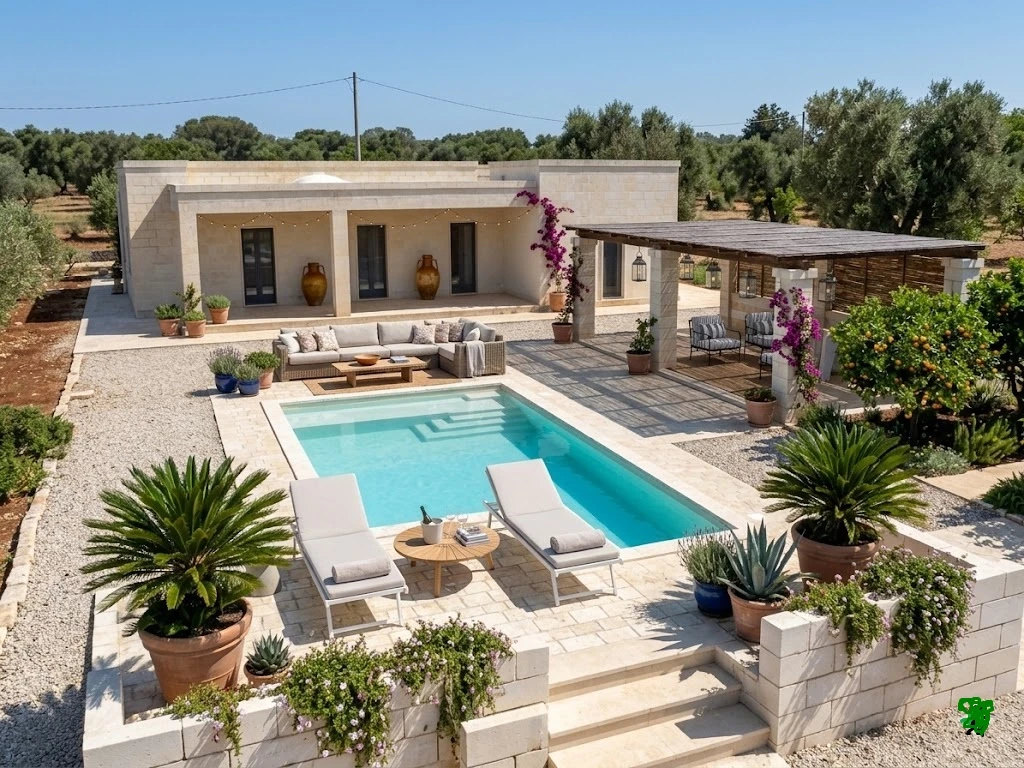
Sicily versus Puglia represents Italy’s most compelling value debate, pitting the Mezzogiorno’s frontier energy against the Adriatic region’s established infrastructure. Both offer compelling investment cases, but fundamental differences in pricing, yields, infrastructure maturity, and buyer support systems create distinct value propositions that require clear-eyed assessment of personal risk tolerance and operational capacity.
Sicily’s raw economics favor yield-focused investors comfortable navigating infrastructure limitations, complex regulations, and active property management. The region’s lower property costs relative to tourism demand deliver 6-10% gross yields in interior locations, substantially exceeding northern Italy or Puglia alternatives. Yet realizing superior returns demands understanding Sicily’s diverse regulatory environment (varies dramatically by comune), developing local networks for contractor and management support, and accepting operational friction that discourages passive investors.
Puglia offers complementary advantages through established international infrastructure, reliable property management availability, English-speaking service providers, and Ostuni’s global recognition creating measurable liquidity premiums. Yield potential (5-8%) lags Sicily but proves more consistent and less operationally demanding. Puglia suits investors prioritizing predictability and liquidity over maximum returns.
This comprehensive comparison examines investment fundamentals across both regions, analyzing yields, entry costs, infrastructure, regulatory environments, buyer demographics, and optimization strategies to guide decision-making based on operational capacity and investment objectives.
Investment Performance Comparison: Yield Gap Analysis
Gross yield on portal listings excludes IMU, cedolare secca at 21% or 26%, condominium spese, and realistic vacancy — model net cash flow with commercialista before comparing tickets across communes. Furnished twelve-month contracts and licensed STR paths carry different tax bands and compliance filings that can shift net returns by 150-200 basis points on identical purchase prices.
The yield differential between Sicily and Puglia represents the market’s core value distinction, reflecting fundamental differences in pricing, tourism demand, and cost structures.
Interior Sicily properties command 6-10% gross yields through accessible pricing relative to short-term rental demand. Palermo apartments in prime rental locations achieve €950-1,200/m² purchase prices against €800-1,200 monthly rental rates, creating immediate yield visibility. Conversion to gross yield (€1,000/month ÷ €1,000/m² ÷ 100 m² property = 10% gross annualized) demonstrates why yield-focused investors target interior Sicily.
Coastal Taormina properties yield 5-7% despite premium €2,800/m² pricing, as tourism premium elevates both purchase costs and rental rates in tandem. Central Taormina apartment €320,000 (€4,000/m² ÷ 80m²) renting €1,800/month calculates to 6.75% gross yield before expense deductions.
Puglia coastal properties deliver 5-8% yields through moderate pricing at €1,800-2,200/m² combined with established STR infrastructure. Ostuni apartments €280,000 (€3,500/m² ÷ 80m²) renting €1,400-1,800/month produce 6-7.7% gross yields before managing expenses.
Capital appreciation patterns diverge significantly between regions. Sicily demonstrates higher volatility with emerging market potential but greater downside risk during recessions. Palermo recorded 8-12% appreciation 2015-2020 but flat-to-negative performance 2020-2023 during pandemic disruptions and tourism decline. Coastal Taormina shows steadier 3-5% appreciation reflecting premium brand stability.
Puglia appreciation trends show consistency at 4-7% annually as international awareness builds. Ostuni prices increased 6-9% annually 2018-2025, reflecting replicable appeal and growing international buyer networks. This steadier appreciation pattern creates superior risk-adjusted returns despite lower gross yields.
| Performance Metric | Interior Sicily | Coastal Taormina | Puglia (avg) |
|---|---|---|---|
| Gross rental yield | 6-10% | 5-7% | 5-8% |
| Capital appreciation (annual) | 4-12% (volatile) | 3-5% (stable) | 4-7% (consistent) |
| Total return potential | 10-18% | 8-12% | 9-15% |
| Occupancy rates | 50-70% | 60-75% | 60-75% |
| Cash flow predictability | Moderate | High | High |
Total return potential (yields plus appreciation) appears favorable across regions, but cash flow predictability differs critically. Sicily’s superior gross yields compress significantly when modeling occupancy volatility and management complexity. A 70% occupied Palermo property (realistic given infrastructure) yields 4.2% net (6% gross × 70% occupancy). After 21% cedolare secca tax, 15% management fees, and €1,500-2,500 annual maintenance, net yield drops below 2% in many scenarios.
Puglia’s lower gross yields prove more resilient through superior occupancy rates (65-75% achievable) and operational efficiency. Same 80 m² Ostuni property at 5-8% gross yield, 70% occupancy, produces 3.5-5.6% before-tax returns. After equivalent deductions, net yield holds at 2-3.5%, only marginally below pessimistic Sicily scenarios while accepting lower gross volatility.
Risk-adjusted returns favor Puglia for predictable cash flow and Sicily for yield-focused operators with active management capacity.
Entry Prices and Regional Accessibility
Commute and airport access shape tenant pools and resale depth: properties within walkable services and rail links command premium rents versus car-only hill or coastal fringe stock. High-speed rail and motorway corridors often reprice peripheral tickets when corporate tenants accept 45-70 minute schedules instead of centro walkability premiums.
Sicily offers Europe’s most accessible entry pricing for vacation rental investors, with habitable properties starting under €100,000 in secondary locations and €150,000-400,000 in prime Palermo neighborhoods or coastal towns.
Interior Sicily pricing geography reflects tourism accessibility and development intensity. Palermo centro properties €800-1,400/m² create accessible €80,000-200,000 entries for small apartments. Provincial towns (Monreale, Mondello, Mondello suburbs) trade €400-800/m² supporting €40,000-120,000 entries for basic properties or projects. Rural inland areas trade €200-500/m² representing extreme value but limiting tourism rental potential.
Coastal Taormina pricing reflects international brand premium at €2,000-4,500/m² for restored properties, creating €160,000-360,000 entries for modest apartments and €400,000-1,500,000+ for premium villas. This pricing compression occurs despite lower yields, reflecting lifestyle investor demand and supply constraints in the UNESCO-protected town.
Puglia entry pricing moderates between Sicily and Tuscany. Ostuni centro €2,200-3,800/m² creates €180,000-300,000 entries for 80-100 m² apartments. Emerging coastal areas €1,600-2,400/m² support €130,000-240,000 entries. Valley towns (Cisternino, Locorotondo) €1,400-2,200/m² offer €110,000-220,000 entries. Regional average €1,422/m² reflects coastal premium balanced against abundant rural availability.
Restoration requirements compound total investment substantially. Sicily interior properties often need €30,000-80,000 restoration work (basic systems, cosmetics), while Taormina historic properties require €60,000-150,000 (specialized craftsmanship, regulatory approval delays). Puglia renovations average €40,000-100,000 reflecting accessible materials and contractor availability.
| Cost Category | Interior Sicily | Coastal Taormina | Puglia Average |
|---|---|---|---|
| Entry properties €/m² | €600-1,200 | €2,800-4,500 | €1,422 avg |
| Entry property price (80m²) | €48,000-96,000 | €224,000-360,000 | €114,000-184,000 |
| Renovation requirements | €30,000-80,000 | €60,000-150,000 | €40,000-100,000 |
| Transaction costs | 7-10% | 8-12% | 8-12% |
| Total deployment (ready-to-rent) | €96,000-248,000 | €376,000-636,000 | €188,000-420,000 |
Financial accessibility favors Sicily for minimum capital investors (€100,000 achieves fully renovated entry), Puglia for moderate budgets (€300,000+ unlocks quality properties), and Taormina for affluent lifestyle buyers (€500,000+ required).
Foreign Buyer Profiles and Investment Motivations
EU citizens purchase on equal terms with Italians; non-EU buyers from reciprocity countries need codice fiscale, notary-led rogito, and typically 10-15% closing costs on second homes. Non-resident mortgage LTV often caps at 50-60% through Italian banks with income verified abroad — budget equity before negotiating off-plan or renovation-heavy rural tickets.
Sicily and Puglia attract distinct investor profiles with different risk tolerances, operational capacities, and return expectations.
Sicily buyers (60-65% yield-focused, 25-30% lifestyle, 10-15% developers): German investors dominate Sicily purchases (40-45%), followed by Dutch (15-20%) and British (10-15%), reflecting northern European yield-focused cultures and budget-travel familiarity with Sicily. Primary motivations include maximum gross yield (prioritizes 6-10% target), emerging market upside potential, and personal lifestyle (Italian countryside authenticity).
Typical Sicily buyer profile: Age 45-65, professional background (engineers, architects, physicians, business owners), €150,000-400,000 capital allocation, accepting 2-3 year operational timelines to optimize management and maximize returns. These investors typically operate 2-5 properties, developing local networks and contractor relationships creating operational leverage.
Success requires patience developing Italian business relationships, comfort navigating complex regulations varying by municipality, and willingness to troubleshoot property management issues remotely. Properties often operate under owner-hired local managers or third-party management companies, though personal involvement typically improves returns 1-2% through quality control.
Puglia buyers (45-50% balanced investors, 30-40% lifestyle, 15-20% luxury): British investors lead Puglia purchases (25-30%), followed by Germans (20-25%), Americans (15-20%), and Dutch (10-15%), reflecting preferences for established infrastructure and established international buyer networks. Primary motivations include balanced returns (5-8% yields), reliable liquidity, established vacation rental infrastructure, and Mediterranean lifestyle amenities.
Typical Puglia buyer profile: Age 40-70, mixed professional backgrounds, €250,000-600,000 capital allocation, preferring established markets with existing management infrastructure. These investors often operate 1-2 properties with professional management, balancing personal enjoyment with passive income generation.
Success requires less active management as professional infrastructure handles booking, maintenance, and guest communication. Absentee ownership proves viable in Puglia through established contractor networks and property management companies. Lower yields (5-8%) versus Sicily offset by operational efficiency and predictability.
Investment approach differences: Sicily buyers allocate 70-75% capital to property acquisition and 25-30% to renovation/management infrastructure development, expecting operational improvements drive returns. Puglia buyers allocate 65-70% to property and 30-35% to professional management, premium furnishing, and operational positioning, accepting operational predictability over maximum yield.
Budget differential reflects market maturity: Sicily offers raw opportunity requiring entrepreneurial energy, while Puglia provides established frameworks supporting passive management.
Short-Term Rental Regulations and Compliance Framework
Short-term rental income requires valid CIN registration, commune SCIA or SUAR paths where applicable, Alloggiati Web guest filing, and tourist tax collection remitted to comune. First-property STR income may use 21% cedolare secca; a second property triggers 26% — model net after platform fees, cleaning, and void months not peak-event screenshots alone.
Sicily and Puglia short-term rental regulations diverge dramatically, with Sicily’s municipal fragmentation creating complexity versus Puglia’s relative uniformity.
Sicily regulatory landscape (varies dramatically by comune): National CIN registration applies to all STRs. Individual municipalities determine additional requirements, with Palermo and Taormina implementing most restrictive frameworks while interior towns often lack detailed oversight.
Palermo requires SCIA registration with municipal tourism office (€300-500, 20-30 days completion). Daily caps don’t exist formally, though residential zone restrictions limit continuous tourist activity. Cedolare secca taxation applies at 21% for non-residents.
Taormina enforces provincial daily rental limits (120-180 days annually depending on zone classification), CIN registration, SCIA, and compliance with UNESCO building restrictions. These limits reduce annual revenue potential 30-40% compared to unlimited rental assumptions.
Interior Sicily towns (Monreale, Mondello suburbs, Palermo outskirts) often lack formal regulations beyond CIN requirement, enabling quasi-unlimited STR operation though tourist tax collection remains mandatory (€1-2/night/person).
Puglia regulatory landscape (relative uniformity with municipal variations): National CIN registration plus comune SCIA requirements apply universally. Regional policies maintain liberal STR frameworks compared to northern Italy, with few formal daily rental caps outside historic centers.
Ostuni and established coastal areas permit continuous STR operation subject to CIN/SCIA compliance and tourist tax collection (€1-2/night). Inland towns similarly permit unlimited STR operation. This regulatory uniformity enables consistent return modeling across Puglia properties.
Cedolare secca 21% non-resident taxation applies universally across Puglia communes.
| STR Factor | Interior Sicily | Taormina | Puglia Average |
|---|---|---|---|
| CIN requirement | Yes, all properties | Yes | Yes, all properties |
| Municipal licensing | Varies by comune | SCIA + cap 120-180 days | Varies, generally permissive |
| Daily rental limits | Generally unlimited | 120-180 days (seasonal) | Generally unlimited |
| Tourist tax | €1-2/night | €2-3/night | €1-2/night |
| Cedolare secca | 21% non-resident | 21% non-resident | 21% non-resident |
| Enforcement level | Low-Moderate | Moderate-High | Low-Moderate |
Regulatory uniformity favors Puglia for absentee foreign investors requiring predictable operational frameworks. Sicily’s municipal variation requires detailed investigation per-property basis.
Market Liquidity and Resale Prospects
Puglia maintains superior market liquidity through established international buyer networks and global brand recognition (Ostuni particularly), while Sicily liquidity remains developing with concentration in Palermo and Taormina.
Puglia liquidity advantages: Ostuni established as #1 search globally for Italian property per Italian Estate research, creating consistent buyer demand across market cycles. Properties in prime Ostuni centro locations sell within 8-12 months at fair market prices. Secondary Ostuni locations require 12-18 months. Emerging Puglia towns (Carovigno, Cisternino) achieve 12-18 month sale timelines reflecting growing international awareness.
Diverse buyer segments (yield-focused investors, lifestyle buyers, developers, Italian domestic purchasers) create market depth supporting liquidity across property types and price points.
Sicily liquidity dynamics: Palermo maintains moderate liquidity through established tourism brand and developer activity, with 12-18 month typical sale timelines for well-positioned properties. Secondary Palermo neighborhoods or interior towns face extended timelines (18-36 months) or require 10-20% price reductions achieving liquidity.
Taormina liquidity remains strong (8-12 months) through luxury buyer positioning and international brand recognition, but supply constraints limit transaction volume. Coastal areas outside Taormina show developing liquidity (18-24 months).
Market depth varies substantially by location, with Palermo and Taormina attracting professional operators and international investors creating transaction flow. Interior Sicily towns depend on regional Italian buyers (less numerous) or long-distance foreign investors (requiring extended marketing).
Pricing stability: Puglia demonstrated superior price stability during 2020-2021 pandemic tourism disruption, as diversified buyer base maintained demand. Palermo and Taormina prices declined 8-15% during pandemic before recovering 2022-2023. Interior Sicily prices proved most volatile, declining 15-25% during downturns and recovering slowly.
Risk-adjusted returns favor Puglia’s liquidity premium over Sicily’s yield potential when incorporating multi-year holding horizons and exit flexibility requirements.
Infrastructure Quality and Foreigner Support Services
Infrastructure differences substantially impact operational success for absentee foreign owners, favoring Puglia’s established service ecosystem.
Sicily infrastructure gaps: Interior Sicily outside Palermo lacks reliable English-speaking contractors, property management companies, and professional service providers. Road access to rural properties proves challenging during winter weather. Internet connectivity limited in remote areas affects online booking platform management. Electrical infrastructure sometimes requires upgrades supporting STR demand. Water systems in inland areas may require treatment (lime content, seasonal supply).
Professional property management in Sicily concentrates in Palermo and Taormina, with interior towns relying on family networks or less-formal arrangements. Management quality variance runs high, with no standardized professional organizations regulating conduct.
Contractor availability varies dramatically by region. Palermo maintains sufficient competition supporting fair pricing. Interior towns limit competition, enabling price gouging and quality shortcuts. Vetting contractors requires local networks or hiring professional scouts (€1,500-3,000 commission).
Puglia infrastructure advantages: Established international buyer communities (particularly Ostuni) created professional service ecosystems, English-speaking property managers, vetted contractor networks, design professionals familiar with international standards, and professional organizations maintaining standards.
Ostuni especially benefits from concentrated international buyer base creating critical mass supporting professional services. Smaller Puglia towns less developed but trending toward similar infrastructure as foreign investment grows.
Internet connectivity and utilities generally reliable across Puglia with standard European infrastructure. Road access excellent throughout region. Technical systems (electrical, water, heating) align with northern Italy standards requiring no special modifications.
Professional property management companies operate across Puglia with transparent fee structures (typically 15-20% of rental revenue), detailed accounting, and professional conduct standards. Multiple options enable competitive pricing and quality selection.
| Infrastructure Factor | Interior Sicily | Taormina | Puglia |
|---|---|---|---|
| English-speaking services | Rare-Limited | Established | Established |
| Property management availability | Limited | Professional | Professional |
| Contractor networks | Variable quality | Good | Good-Excellent |
| Internet reliability | Moderate-Good | Excellent | Excellent |
| Electrical/water infrastructure | Upgrades often required | Modern | Modern |
| Professional organization standards | Minimal | High | Moderate-High |
Infrastructure quality advantages favor Puglia for absentee foreign investors requiring minimal hands-on management. Sicily suits operators comfortable troubleshooting and developing local relationships.
Investment Strategy Recommendations: Decision Framework
Choose Sicily (interior) for maximum gross yield when:
- Primary motivation is yield maximization (6-10% target)
- Budget €150,000-400,000 enables meaningful properties
- Operating capacity permits 2-3 year optimization timeline
- Comfort managing regulatory complexity across municipalities
- Able to develop Italian networks or hire professional scouts
- Multi-property portfolio strategy creates operational leverage
- Risk tolerance accepts 15-25% pricing volatility
- Timeline 5+ years enables appreciation and stabilization
Optimal Sicily strategies target Palermo primo/secondo rings for established STR markets, provincial coastal towns (Mondello, Cefalù) for tourism demand, or interior Valle d’Itria trulli equivalents (Modica, Ragusa area). Focus on unique architecture and authentic experiences differentiating from generic accommodations.
Choose Puglia for predictable income when:
- Balanced return target (5-8%) acceptable with operational simplicity
- Preferring established infrastructure and English-speaking support
- Budget €250,000-600,000 enables quality property selection
- Seeking 1-2 property portfolio with professional management
- Comfort with absentee ownership and external management
- International buyer networks valuable for resale liquidity
- Risk tolerance accepts 5-10% pricing volatility
- Timeline 5-7 years acceptable for appreciation accumulation
Optimal Puglia strategies prioritize Ostuni or emerging established towns (Carovigno, Cisternino) for international buyer recognition, coastal areas (Polignano, Monopoli) for lifestyle properties, or Valle d’Itria towns for authentic experiences and value access.
Portfolio diversification strategies might combine Palermo interior property (yield generation, operator involvement) with Ostuni coastal villa (lifestyle benefit, resale appreciation) balancing return profiles and operational intensity. This approach captures Sicily’s yield advantage while leveraging Puglia’s infrastructure and liquidity.
Sicily vs Puglia Investment Pros and Cons
Sicily (Interior) Investment Advantages:
- Maximum gross rental yields 6-10% exceeding alternatives
- Accessible entry pricing (€100,000-250,000) enabling modest capitalization
- Emerging market appreciation potential (4-12% annually during growth)
- Authentic cultural experiences and unique architecture
- Lower renovation costs than northern Italy
- Significant upside if infrastructure development accelerates
Sicily (Interior) Investment Challenges:
- Complex regulatory environment varying dramatically by municipality
- Lower operational infrastructure requiring active management or local networks
- Limited professional property management availability outside Palermo
- Seasonal tourism concentration creating cash flow volatility
- Language barriers complicate property management
- Higher volatility during economic downturns or tourism disruptions
- Extended sale timelines in secondary locations (18-36 months)
Sicily (Taormina) Competitive Positioning:
- Premium coastal brand and tourism infrastructure
- Superior liquidity through international recognition
- Established luxury buyer positioning
- Lower volatility than interior Sicily
- Higher entry costs (€224,000-360,000) reduce accessibility
- Lower yields (5-7%) offset premium stability
- Lifestyle investment positioning dominates financial return calculations
Puglia Investment Advantages:
- Predictable rental yields 5-8% with less volatility
- Established English-speaking infrastructure and management
- Professional contractor networks and service providers
- Moderate entry pricing (€114,000-184,000 average)
- Superior liquidity through international buyer networks
- Ostuni established as #1 Italian search creating demand consistency
- Absentee ownership viable through professional management
- Regulatory uniformity simplifying property management
Puglia Investment Challenges:
- Lower gross yields (5-8%) versus interior Sicily (6-10%)
- Higher entry costs than interior Sicily
- Established market limits explosive appreciation potential
- Seasonal tourism concentration in coastal areas
- Professional management fees reduce net returns 2-3%
- Limited value opportunity versus emerging development
Regional Investment Verdict: Sicily vs Puglia Decision Matrix
Neither region universally superior, as optimal choice depends on operational capacity, yield requirements, timeline horizon, and comfort with active management responsibilities. Financial optimization follows distinct paths:
Yield-focused investors (6+ year timeline, €200,000+ capital, operational comfort): Sicily interior properties typically deliver superior risk-adjusted returns through gross yield advantage (6-10% vs 5-8%) offsetting operational complexity and liquidity discounts. Palermo properties particularly attractive if investor comfortable developing local networks or hiring professional managers.
Expected returns: €200,000 property yielding 5% net (after management, taxes, maintenance) = €10,000 annual income. Over 6 years: €60,000 income + €280,000 appreciation (estimate 4% annually) = €340,000 total return vs. €200,000 capital (70% IRR).
Balanced investors (5-7 year timeline, €300,000+ capital, professional management preference): Puglia coastal or Ostuni-area properties typically deliver superior risk-adjusted returns through operational simplicity, professional infrastructure, and liquidity premiums offsetting yield disadvantage. Enables absentee ownership with predictable annual distributions.
Expected returns: €300,000 property yielding 3% net (after management, taxes, maintenance) = €9,000 annual income. Over 6 years: €54,000 income + €324,000 appreciation (estimate 5.4% annually) = €378,000 total return vs. €300,000 capital (26% IRR).
Lifestyle investors (7+ year timeline, €500,000+ capital, personal enjoyment priority): Taormina coastal properties or Ostuni premium properties deliver capital appreciation with lifestyle benefits, accepting 3-4% net yields as return driver secondary to personal enjoyment, social positioning, and Mediterranean lifestyle value.
Portfolio optimization: Consider Sicily interior property for yield generation combined with Puglia coastal villa for lifestyle benefit and appreciation, creating portfolio-level diversification and balanced return profile across cycles.
For detailed Sicily analysis, consult Sicily Property Investment Guide. For Puglia depth, see Puglia Property Investment Guide. Continue exploring with Taormina Area Guide, Ostuni Area Guide, and Italy Rental Yield Guide.
The Sicily versus Puglia decision ultimately reflects personal investment philosophy: maximum cash-return focus with operational engagement (Sicily) versus balanced returns with infrastructure support (Puglia). Both regions offer compelling investment cases within properly diversified Italian property portfolios. Insider tip: Model both cities with identical capital and hold period before choosing — per sqm gaps often reverse after IMU, cedolare secca, and vacancy assumptions.
Frequently Asked Questions
Interior Sicily delivers 6-10% gross yields versus Puglia's 5-8%, with coastal Taormina lower at 5-7%. Sicily's lower property costs (€600-1,200/m² interior) relative to rental demand create superior yield potential. However, Puglia's stronger liquidity and established infrastructure offset some yield advantage for capital-preservation investors.
Sicily regional average €1,168/m² with interior properties starting €600-1,400/m² while coastal Taormina reaches €2,800+/m². Puglia averages €1,422/m² with coastal areas €1,800-3,200/m² and Ostuni €2,200-3,800/m². Sicily offers lower entry for yield-focused investors, Puglia better for established market access.
Sicily favors yield-focused investors seeking highest gross returns (6-10%) and willing to absorb infrastructure limitations. Puglia suits balanced investors prioritizing reliability, liquidity, and 5-8% consistent yields with less volatility. Sicily rewards operators with local networks; Puglia accommodates absentee foreign owners.
Both require CIN registration. Puglia maintains more liberal municipal policies with few daily rental caps. Sicily varies dramatically by comune, Taormina limits seasonal rentals, Palermo encourages tourism, interior towns have minimal oversight. Always verify specific municipality rules before purchase.
Sicily attracts German and Dutch yield-focused investors, developers seeking flip opportunities, and adventurous lifestyle buyers. Puglia draws British and American buyers seeking balanced returns with infrastructure access, established STR markets, and Ostuni's international network. Sicily requires more active management; Puglia suits passive income strategies.
Puglia maintains superior infrastructure with established English-speaking services, reliable contractor networks, and professional property management. Sicily services concentrate in Palermo and Taormina with gaps in interior towns. Puglia better for absentee foreign owners; Sicily requires local presence or trusted Italian partners.
Get an Italy property shortlist
Tell us your budget and region (Tuscany, Lake Como, Puglia, Milan, Sardinia). We reply within one business day with options matched to your goals.