
Puglia Property Investment Guide: Yields & Areas 2026
Complete Puglia property investment guide. 2,300 foreign purchases, Ostuni #1 comune nationally, 5-8% yields, trulli restoration, coastal opportunities.
By Italian Estate Editorial · Updated June 14, 2026 · 20 min read
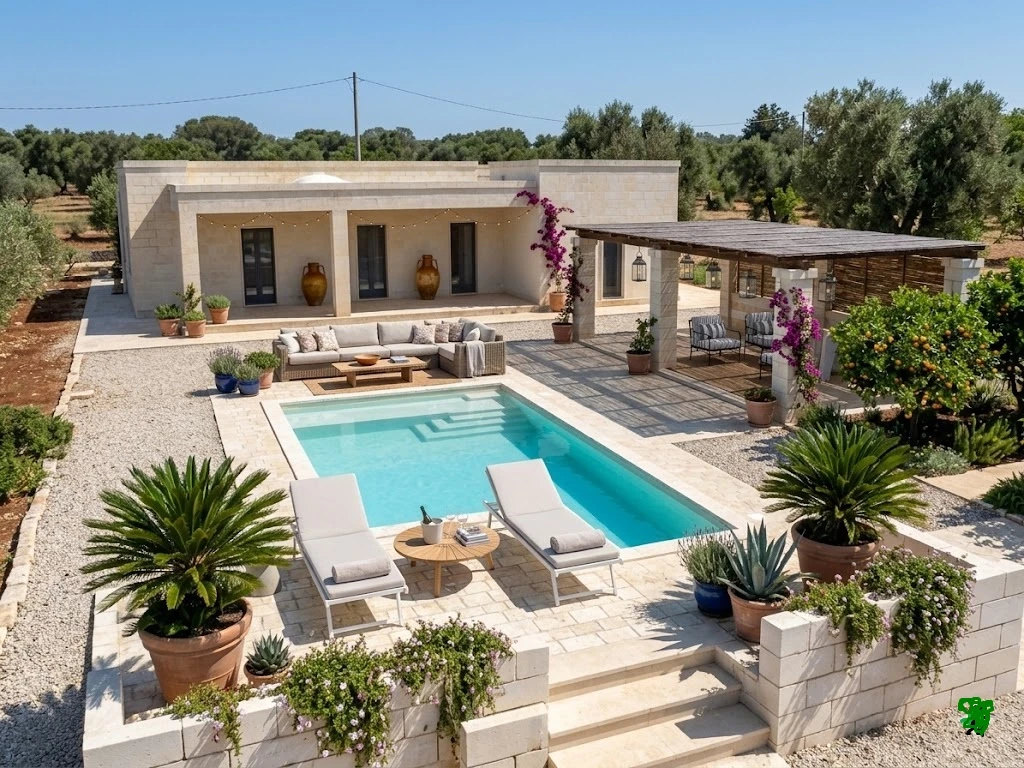
Quick answer: Puglia recorded 2,300 foreign property purchases out of 8,600 total transactions according to FIAIP data, making it the leading region for international buyers. Ostuni ranked #1 comune nationally for the second consecutive year, while Carovigno placed #2. Regional average pricing sits at €1,422/m² with gross yields ranging 5-8%. The region benefits from growing tourism, PNRR infrastructure investment, and authentic southern Italian appeal at compelling valuations compared to Tuscany or northern markets.
The Puglian property market represents Italy’s most compelling value-to-yield equation for foreign investors. Unlike Tuscany’s premium pricing or Sicily’s frontier complexity, Puglia offers established tourism infrastructure, authentic cultural experiences, and investment fundamentals that reward both yield-seeking and lifestyle buyers. But success requires understanding local regulations from olive tree protection to trullo restoration permits, plus modeling seasonal tourism patterns that drive rental returns.
What Do FIAIP Numbers Show About Puglia Investment in 2026?
Puglia investment data means 2,300 foreign purchases among 8,600 regional transactions in FIAIP 2025 figures, with Ostuni ranked number one nationally for two years and Carovigno second. Regional pricing averages €1,422 per square metre while gross yields typically range 5% to 8% on €425,000 foreign tickets.
Puglia has emerged as Italy’s premier destination for foreign property investment, combining authentic southern Italian culture with compelling investment metrics and accessible infrastructure development.
| Investment metric | 2025-2026 data | Investor significance |
|---|---|---|
| Foreign purchases (FIAIP) | 2,300 of 8,600 total | Highest foreign participation rate nationally |
| Regional avg pricing | €1,422/m² | 60-70% below Tuscany equivalent locations |
| Ostuni search ranking | #1 comune nationally (2nd consecutive year) | Established international buyer demand |
| Carovigno ranking | #2 comune nationally | Emerging opportunity adjacent to Ostuni |
| Gross yield range | 5-8% | Premium to northern Italy, competitive to Sicily |
| Airport connectivity | Brindisi 45min, Bari 90min | Direct flights major European cities |
| Tourism growth trajectory | +15-20% annually selected areas | STR demand expansion |
| PNRR infrastructure allocation | €4.2B for Puglia region | Transport and digital connectivity |
| Average foreign transaction value | €425k vs €632k national | Accessible entry points |
| Restoration timeline average | 18 months to rental-ready | Project planning requirement |
The Gate-away research confirms Ostuni’s sustained appeal, while Bari enquiries increased +35.7% year-over-year, indicating expanding interest beyond the established Valle d’Itria triangle toward urban and coastal opportunities.
Methodology: Compare foreign share (2,300 of 8,600) against your target commune before assuming Tuscany-level liquidity.
- FIAIP reports 2,300 foreign purchases among 8,600 regional transactions in 2025 filings.
- Ostuni retained the number one national comune search rank for two consecutive years.
- Carovigno ranked second nationally, signaling adjacent value corridors for yield buyers.
Where Does Foreign Capital Concentrate in Puglia?
Regional geography means foreign capital clusters in Valle d’Itria at €1,400 to €3,800 per square metre, coastal Polignano at €2,800 to €4,500, and Bari enquiries up 35.7% year over year. Micro-market choice drives 150 to 200 basis point yield gaps on identical €350,000 trulli tickets.
Puglia’s investment opportunities cluster around several distinct areas, each offering different risk-return profiles and buyer experiences.
Checklist: Match UNESCO centro premiums against peripheral yield math before comparing headline €1,422 regional averages.
- Valle d’Itria trulli trade at €1,400 to €3,800 per square metre depending on commune and condition.
- Coastal Polignano stock commands €2,800 to €4,500 per square metre with stronger summer STR rates.
- Bari enquiries rose 35.7% year over year as buyers diversify beyond the white-city triangle.
| Location | Characteristics | Price range €/m² | Investment thesis |
|---|---|---|---|
| Ostuni centro | White city, trulli authenticity, established STR | €2,200-3,800 | Premium pricing, proven demand |
| Cisternino | Traditional trulli, 20-30% below Ostuni pricing | €1,600-2,800 | Value opportunity, growing recognition |
| Locorotondo | Authentic experiences, emerging foreign interest | €1,400-2,600 | Early-stage development, cultural appeal |
| Alberobello | UNESCO site, tourist concentration | €2,500-4,000 | Tourist premium, regulatory complexity |
Investment rationale: Established infrastructure, proven STR markets, authentic architecture, manageable renovation projects.
Key risks: Premium pricing from foreign demand concentration, seasonal tourism dependency, trullo restoration complexity.
Coastal corridor: tourism and lifestyle focus
| Location | Characteristics | Price range €/m² | Investment thesis |
|---|---|---|---|
| Polignano a Mare | Clifftop drama, Instagram appeal, luxury tourism | €2,800-4,500 | Premium coastal positioning |
| Monopoli | Historic port, growing tourism, good transport | €2,200-3,500 | Balanced tourism/residential demand |
| Savelletri | Luxury resort area, golf course proximity | €3,500-6,000 | High-end tourism focus |
| Torre Canne | Thermal springs, coastal access, developing | €1,800-3,200 | Emerging opportunity, wellness tourism |
Investment rationale: Year-round tourism potential, luxury positioning, coastal lifestyle appeal, airport accessibility.
Key risks: Seasonal concentration, higher infrastructure costs, coastal regulations, weather exposure.
Urban opportunities: Lecce and Bari
| Location | Characteristics | Price range €/m² | Investment thesis |
|---|---|---|---|
| Lecce centro | Baroque architecture, university city, cultural hub | €1,800-3,200 | Year-round demand, local rental market |
| Bari centro | Regional capital, business district, transport hub | €2,200-4,000 | Mixed residential/business demand |
| Bari periphery | Residential areas, transport links, value positioning | €1,200-2,500 | Local rental focus, yield opportunity |
Investment rationale: Diversified demand beyond tourism, transport connectivity, university and business rental markets.
Key risks: Less foreign buyer appeal, different cultural experience, urban management complexity.
Which Buyer Profiles Does Puglia Reward?
Puglia buyer profiles typically split restoration enthusiasts budgeting €150,000 to €600,000, coastal STR investors at €300,000 to €800,000, and value seekers in Carovigno at 15% to 25% discounts versus Ostuni centro pricing. Non-resident mortgage loan-to-value often caps at 50% to 60% before renovation draws.
Different investor types find success in Puglia’s varied markets, but matching strategy to regional strengths determines outcome quality.
| Buyer profile | Budget range | Primary focus | Typical gross yield |
|---|---|---|---|
| Trulli restoration | €150k-€600k | Valle d’Itria | 6-8% post-renovation |
| Coastal STR | €300k-€800k | Polignano, Monopoli | 5-7% |
| Value seeker | €200k-€500k | Carovigno, inland | 6-9% emerging |
- EU citizens purchase on equal terms with Italians; reciprocity-country non-EU buyers need codice fiscale and notary-led rogito.
- Non-resident closing costs typically run 10% to 15% on second homes before renovation contingencies.
- Budget equity before negotiating off-plan or renovation-heavy rural tickets when LTV caps at 50% to 60%.
The trulli restoration enthusiast
Target properties: Historic trulli requiring renovation, masserie conversion projects, traditional stone properties with character.
Best locations: Valle d’Itria triangle, rural areas between Ostuni-Cisternino-Locorotondo.
Investment range: €150k-600k total including restoration.
Success requirements:
- Restoration expertise or reliable local contractor network
- 18-24 month project timeline tolerance
- Understanding of trullo-specific building regulations
- Patience for permit processes and olive tree compliance
Return expectations: 6-8% gross yields post-restoration, significant lifestyle value, good resale appeal to foreign buyers.
Case study insight: €280k trullo purchase + €120k restoration = €400k total, generating €28k annual STR income (7% gross yield) while providing personal southern Italy base.
The coastal tourism investor
Target properties: Modern apartments and villas with sea access, established STR operations, turnkey opportunities.
Best locations: Polignano a Mare, Monopoli, Savelletri, emerging coastal developments.
Investment range: €300k-800k for quality coastal properties.
Success requirements:
- STR management capability or professional service
- Understanding of seasonal demand patterns
- Coastal maintenance and weather protection planning
- CIN and local tourism license compliance
Return expectations: 5-7% gross yields, strong summer occupancy, year-round potential for premium properties.
Insider tip: Shoulder season (April-May, September-October) increasingly profitable as Puglia extends tourism season beyond peak July-August concentration.
The emerging market value seeker
Target properties: Properties in secondary locations, early-stage development areas, undervalued assets with improvement potential.
Best locations: Carovigno, inland valle areas, developing coastal segments, urban periphery opportunities.
Investment range: €200k-500k for positioned-for-growth assets.
Success requirements:
- Market timing skills and patience for area development
- Renovation and improvement capabilities
- Understanding of infrastructure development timeline
- Tolerance for lower initial yields while market develops
Return expectations: 6-9% gross yields in emerging areas, capital appreciation potential as markets mature.
Market intelligence: Carovigno’s #2 national ranking suggests early-stage premium positioning opportunity at 15-25% discount to Ostuni equivalent properties.
What Gross Yields Should Puglia Investors Expect by Property Type?
Gross yield marketing typically means 5% to 8% on Puglia listings, but net cash flow after 21% cedolare secca, IMU, and 50% to 75% STR operating loads can fall near 1% on a €350,000 Ostuni trullo with 32 weeks occupancy. Model commercialista scenarios before comparing commune headline portal averages across Valle d’Itria.
Puglia property returns vary significantly by location, property type, and management approach. The data below provides conservative yield estimates based on current market conditions.
Red flag: Marketing a 7% gross yield without deducting platform fees, management, and vacancy often overstates cash returns by 500 to 600 basis points.
- Ostuni centro trulli typically market at 5% to 7% gross before 21% non-resident rental tax.
- Net cash on a €350,000 trullo with 32 weeks occupancy often lands near 1% after STR costs.
- Furnished long-term contracts can shift net returns by 150 to 200 basis points versus licensed STR paths.
| Property category | Gross yield range | Key factors affecting returns | Management requirements |
|---|---|---|---|
| Ostuni centro trulli | 5-7% | Tourism concentration, restoration quality, booking platform presence | Professional STR management essential |
| Valle d’Itria rural | 6-8% | Authenticity premium, seasonal patterns, access/infrastructure | Owner-manager or trusted local contact |
| Coastal modern apartments | 5-7% | Sea access, resort proximity, weather protection | Property management service recommended |
| Emerging area trulli | 6-8% | Market development trajectory, tourism growth rate | Hands-on management or local partnership |
| Urban rental properties | 4-6% | University/business demand, transport links, local competition | Traditional rental management |
| Luxury coastal villas | 4-6% | High-end tourism market, seasonal concentration | Concierge-level management services |
Net yield calculation example: €350k Ostuni trullo
| Income/expense item | Annual amount | Calculation basis |
|---|---|---|
| Gross rental income | €24,500 | 7% of purchase price, 32 weeks occupancy |
| Less: Vacancy periods | -€4,200 | 20 weeks shoulder/off season |
| Less: Platform commissions | -€2,940 | 12% Airbnb/Booking.com fees |
| Less: STR management | -€3,675 | 15% professional service |
| Less: Cleaning and turnover | -€2,800 | €175 per booking, 16 turnovers |
| Less: Utilities and WiFi | -€1,800 | Year-round connectivity requirements |
| Less: Maintenance and repairs | -€2,100 | 6% of gross, trullo-specific needs |
| Less: Property insurance | -€800 | STR coverage, rural property |
| Less: IMU property tax | -€1,050 | Municipal property tax |
| Less: Tourist tax collection | -€320 | Administrative burden |
| Net operating income | €4,815 | Before income tax |
| Less: Italian income tax (21%) | -€1,011 | Non-resident rate |
| Net after-tax return | €3,804 | Cash flow to investor |
| Net yield on purchase price | 1.09% | €3,804 ÷ €350,000 |
| If including €80k restoration | 0.88% | €3,804 ÷ €430,000 total invested |
This realistic calculation demonstrates the gap between gross yield marketing (7%) and actual cash returns (0.88-1.09% net). Puglia investment appeal lies in lifestyle value, cultural experience, and long-term appreciation potential rather than pure cash yield maximization.
Which Puglia Property Types Fit Different Investment Goals?
Puglia property types means trulli at €800 to €2,500 per square metre, masserie conversions at €500 to €2,000, and coastal turnkey stock at €2,000 to €5,000 with restoration timelines averaging 18 months. Each category carries distinct CIN, olive-tree, and coastal permit rules for foreign buyers.
Puglia offers distinct property categories, each with different investment profiles, renovation requirements, and regulatory considerations.
| Property type | Price band €/m² | Renovation timeline | Best buyer fit |
|---|---|---|---|
| Traditional trulli | €800-2,500 | 12-24 months | Restoration enthusiast |
| Masserie | €500-2,000 | 18-36 months | Luxury developer |
| Coastal modern | €2,000-5,000 | 0-6 months | Turnkey STR investor |
- Trulli marketing leans on authenticity premiums but seasonal demand still concentrates on July and August peaks.
- Masserie conversions need agricultural land-use checks before tourism licensing on tickets above €500,000.
- Coastal apartments require condominium spese modeling alongside STR management at 10% to 20% of gross rent.
Checklist: Match property type to permit timeline before assuming 18-month rental-ready dates on unrestored trulli.
Traditional trulli: the signature opportunity
Structural characteristics:
- Conical stone roofs, thick walls, typically 40-150m² internal
- Historical protection requirements, specific restoration regulations
- Natural cooling properties, energy efficiency benefits
- Unique architectural appeal for STR marketing
Investment considerations:
- Purchase prices €800-2,500/m² depending on condition and location
- Restoration costs €300-800/m² for habitable standard
- Specialized contractors required, longer timeline than modern properties
- Strong rental appeal but seasonal demand concentration
Regulatory requirements:
- Building permits for structural changes
- Compliance with trullo-specific architectural guidelines
- Olive tree protection compliance for rural properties
- Water rights verification for wells and irrigation
Best for: Investors seeking authentic experience, tolerance for renovation complexity, strong STR management capabilities.
Masserie: the luxury conversion opportunity
Structural characteristics:
- Traditional farmhouse complexes, often 300-1,000m² potential
- Multiple buildings, courtyards, agricultural land included
- Conversion opportunities to boutique accommodations
- Premium positioning potential for luxury tourism
Investment considerations:
- Purchase prices €500-2,000/m² depending on condition
- Conversion costs €800-2,000/m² for luxury standard
- Longer development timeline, complex planning processes
- Higher investment requirements but premium returns potential
Regulatory requirements:
- Agricultural land use regulations
- Conversion permits for tourism/residential use
- Environmental impact assessments for larger projects
- Heritage protection compliance
Best for: Experienced developers, luxury tourism focus, substantial capital availability, long-term investment horizon.
Modern coastal properties: the turnkey option
Structural characteristics:
- Contemporary construction, sea views/access, modern amenities
- Typically 80-200m² apartments or 200-400m² villas
- Pool facilities, parking, established infrastructure
- Ready for immediate STR operation
Investment considerations:
- Purchase prices €2,000-5,000/m² depending on location and quality
- Minimal renovation requirements, faster income generation
- Professional property management essential
- Higher purchase costs but lower complexity
Regulatory requirements:
- Coastal construction compliance
- STR licensing and CIN registration
- Condominium regulations for apartment properties
- Environmental protection zone compliance
Best for: Hands-off investors, immediate income requirement, professional management approach, premium positioning focus.
How Does PNRR Infrastructure Affect Puglia Property Values?
PNRR infrastructure means €4.2 billion allocated to Puglia through 2028, including Brindisi airport expansion by 2027 and high-speed rail to Bari by 2028. Fiber coverage targets 95% of coastal communes by 2026, supporting remote-work STR premiums of 10% to 15% on April and October shoulder season rates.
The National Recovery and Resilience Plan (PNRR) allocated €4.2B specifically for Puglia infrastructure development, creating investment tailwinds for property markets.
Buyer scenario: A €380,000 Monopoli flat benefits when Brindisi airport cuts transfer time below 45 minutes for UK guests booking shoulder-season weeks.
- Brindisi airport expansion targets completion by 2027 with shorter international transfer windows.
- High-speed rail to Bari is scheduled for 2026 to 2028, linking Puglia to Rome business travel.
- Fiber rollout toward 95% coastal coverage by 2026 supports remote-work STR pricing premiums.
| Infrastructure project | Timeline | Investment impact |
|---|---|---|
| Brindisi airport expansion | 2025-2027 | Improved international connectivity, shorter transfer times |
| High-speed rail to Bari | 2026-2028 | Enhanced connection to Rome/Milan, business traveler access |
| SS16 coastal highway upgrades | 2024-2026 | Better coastal property accessibility |
| Local road improvements | Ongoing | Rural property access enhancement |
Investor significance: Better connectivity reduces isolation factors that previously limited Puglia appeal, expanding target rental markets beyond traditional tourists to business travelers, remote workers, and extended-stay visitors.
Digital infrastructure development
| Digital project | Timeline | Property impact |
|---|---|---|
| Fiber optic coverage expansion | 2024-2026 | Essential for STR operations, remote work appeal |
| 5G network deployment | 2025-2027 | Enhanced guest experience, property management efficiency |
| Digital tourism platforms | Ongoing | Improved marketing reach, booking platform integration |
Investment advantage: Properties with reliable high-speed internet command rental premiums and attract longer-stay guests, particularly important for shoulder season occupancy optimization.
What Legal Rules Apply Specifically to Puglia Property?
Puglia legal compliance requires trullo restoration permits averaging 4 to 8 months, mandatory CIN codes with fines to €8,000, and olive-tree protection checks on rural tickets above 2 hectares for foreign buyers. Water-rights verification on wells is essential before any 10% compromesso deposit on €250,000 masserie purchases.
Puglia property investment involves several unique legal requirements beyond standard Italian property law, particularly for trulli and rural properties.
Checklist: Verify CIN eligibility, SCIA quotas, olive-tree certificates, and well rights before paying a 10% deposit on rural trulli.
Trulli-specific regulations
| Regulatory area | Requirements | Compliance importance |
|---|---|---|
| Architectural preservation | Maintain traditional construction methods, materials | Structural integrity, resale value |
| Restoration permits | Approved plans before renovation work | Legal protection, avoid demolition orders |
| Heritage compliance | Respect historical character, approved modifications only | Cultural value preservation, tourist appeal |
| Structural engineering | Specialized knowledge of trullo construction | Safety, insurance, guest liability |
Rural property considerations
| Legal aspect | Verification requirements | Risk mitigation |
|---|---|---|
| Olive tree protection | Compliance with regional olive cultivation laws | Avoid agricultural violation penalties |
| Water rights | Confirm well rights, irrigation permissions | Essential for garden maintenance, pool operation |
| Access roads | Verify legal access, maintenance responsibilities | Property accessibility, guest arrival |
| Land use restrictions | Agricultural vs residential vs tourism use permissions | Operational legality, expansion possibilities |
Short-term rental compliance
| Regulatory level | Specific requirements | Penalty risks |
|---|---|---|
| National (CIN) | Mandatory identification code for all STR properties | Fines up to €8,000 per violation |
| Regional Puglia | Safety standards, registration with regional tourism authority | Operating license suspension |
| Municipal variations | SCIA requirements vary by comune, tourist tax collection | Local fines, closure orders |
Due diligence checklist:
- Verify existing permits match current property condition
- Confirm STR licensing eligibility and requirements
- Check olive tree compliance for rural properties
- Validate water rights and well permissions
- Ensure legal access roads and easements
- Review any outstanding municipal charges or violations
What Do FIAIP and Search Data Show About Puglia Demand?
FIAIP partner data means foreign buyers averaged €425,000 tickets versus €632,000 nationally, with €95,000 average renovation budgets and 18-month rental-ready timelines after full permit clearance nationally. Peak July occupancy hits 85% to 95% on licensed Ostuni stock while winter months fall to 15% to 25%.
Gate-away search rankings and transaction patterns highlight where international demand concentrates before you commit to a micro-market.
| Signal | 2025-2026 reading | Investor takeaway |
|---|---|---|
| Ostuni search rank | #1 nationally | Premium liquidity |
| Carovigno rank | #2 nationally | Adjacent value play |
| Foreign avg ticket | €425k vs €632k national | Lower entry than north |
| Renovation add-on | €95k average | Budget beyond purchase |
Methodology: Weight commune search rank and FIAIP ticket size before assuming Ostuni-level resale depth in rural trulli communes.
Gate-away search rankings (updated monthly)
Top 10 Puglia comuni by foreign buyer searches:
- Ostuni (maintains #1 national position, 2nd consecutive year)
- Carovigno (#2 nationally, emerging market leader)
- Cisternino (consistent top-10, value positioning)
- Polignano a Mare (coastal premium, Instagram effect)
- Locorotondo (authentic appeal, growing recognition)
- Monopoli (balanced tourism/residential demand)
- Alberobello (UNESCO tourism concentration)
- Lecce (cultural/university market, diverse demand)
- Fasano (luxury positioning, golf/resort proximity)
- Martina Franca (emerging interest, architectural appeal)
Transaction intelligence (FIAIP partner network)
Foreign buyer transaction patterns 2025:
- Average purchase price: €425k (vs €632k national foreign average)
- Renovation budget average: €95k additional (restoration projects)
- Time to rental-ready: 18 months average (including permit processes)
- Financing usage: 35% of foreign buyers (vs 28% in Tuscany)
Seasonal rental performance:
- Peak season occupancy (July-August): 85-95% established properties
- Shoulder season (April-June, September-October): 60-75%
- Winter months (November-March): 15-25% selected properties
Restoration project insights:
- Cost overruns average: 25-40% above initial estimates
- Timeline extensions: 6-12 months beyond original schedule
- Quality contractor availability: 3-6 month booking lead time
- Permit processing: 4-8 months for complex renovations
How Can Foreign Buyers Finance Puglia Property?
Puglia mortgage terms typically allow 70% to 80% loan-to-value on modern coastal flats at 3.2% to 4.0% rates, while unrestored trulli cap at 50% to 60% at 4.0% to 4.8%. Foreign income files need 3 years of tax returns plus bank-approved trullo appraisals costing €300 to €800.
Italian lenders offer competitive mortgage products for Puglia properties, though terms vary based on property type and borrower profile.
Methodology: Secure written pre-approval before compromesso when LTV falls below 60% on renovation-heavy trulli tickets.
Mortgage availability by property category
| Property type | Typical LTV | Rate range | Special considerations |
|---|---|---|---|
| Modern coastal properties | 70-80% | 3.2-4.0% | Standard residential mortgage terms |
| Restored trulli (turnkey) | 65-75% | 3.5-4.2% | Appraisal complexity, specialized valuation |
| Trulli requiring restoration | 50-60% | 4.0-4.8% | Construction loan conversion required |
| Rural masserie projects | 40-50% | 4.5-5.2% | Development/construction financing |
| Urban Lecce/Bari properties | 75-85% | 3.0-3.8% | Standard residential, better terms |
Regional banking relationships
Primary lenders active in Puglia:
- Banca Popolare di Puglia e Basilicata: Local market expertise, trulli renovation experience
- UBI Banca (Intesa Sanpaolo): International buyer programs, English-speaking service
- Banco di Napoli: Southern Italy focus, competitive rates for quality properties
- Deutsche Bank Italy: German buyer specialization, good coverage in coastal areas
Typical documentation requirements:
- Income verification (3 years tax returns, employment contracts)
- Bank statements (6-12 months showing savings capacity)
- Property appraisal by bank-approved surveyor familiar with trulli/regional properties
- Italian fiscal code and legal representation
- Construction budget and timeline for renovation projects
How Does Puglia Compare to Other Italian Markets?
Regional comparison means Puglia averages €1,422 per square metre versus Tuscany at €4,737 with gross yields of 5% to 8% against 4% to 7%. Sicily posts 6% to 10% yields but higher infrastructure risk, while northern Italy entry starts near €3,000 per square metre with 2% to 5% yields.
Understanding Puglia’s positioning relative to other Italian regions helps align investment expectations and regional strategy.
Red flag: Chasing Sicily’s 10% gross headlines without modeling infrastructure gaps often understates carrying costs by 2% to 3% of value annually.
| Comparison factor | Puglia | Tuscany | Sicily | Northern Italy |
|---|---|---|---|---|
| Entry pricing | €1,422/m² avg | €4,737/m² | €800-2,000/m² | €3,000-8,000/m² |
| Gross yields | 5-8% | 4-7% | 6-10% | 2-5% |
| Foreign buyer interest | High, concentrated | Highest, established | Moderate, growing | Moderate, business-focused |
| Tourism infrastructure | Developing rapidly | Mature, premium | Emerging, variable | Business/urban tourism |
| Renovation complexity | Moderate-high (trulli) | High (historic properties) | High (infrastructure gaps) | Low-moderate |
| Seasonal dependency | Moderate-high | Moderate | High | Low |
| Resale liquidity | Good, improving | Excellent | Variable | Good |
| Infrastructure quality | Improving (PNRR) | Excellent | Developing | Excellent |
Puglia investment advantages:
- Compelling value-to-yield ratio compared to Tuscany
- Less operational complexity than Sicily
- Growing tourism market with room for expansion
- Authentic cultural experience with modern accessibility
- PNRR infrastructure investment tailwinds
Puglia investment challenges:
- Seasonal tourism concentration vs northern Italy year-round demand
- Renovation complexity and cost overrun risks
- Less established foreign buyer resale market than Tuscany
- Regional infrastructure still developing vs northern maturity
How Do Seasonal Patterns Affect Puglia Rental Income?
Seasonal STR patterns means 70% to 75% of annual revenue concentrates in May through September on established Ostuni stock, with July occupancy at 90% to 95% and January at 15% to 25%. Shoulder months April and October now contribute 12% to 15% each when marketed with local food-tourism packages.
Understanding Puglia’s seasonal tourism patterns is essential for realistic yield projections and cash flow planning.
Checklist: Model cash reserves for November through March when occupancy often sits below 35% on coastal STR stock.
Monthly occupancy and rate patterns (established STR properties)
| Month | Avg occupancy | Rate premium | Guest profile | Revenue contribution |
|---|---|---|---|---|
| January | 15-25% | -60% vs peak | Extended stays, locals | 3-5% |
| February | 20-30% | -50% vs peak | Early tourists, locals | 4-6% |
| March | 35-45% | -30% vs peak | Shoulder season, hiking | 8-12% |
| April | 60-70% | -10% vs peak | Easter tourism, mild weather | 15-18% |
| May | 70-80% | Peak rates | Optimal weather, pre-summer | 18-22% |
| June | 80-90% | Peak rates | Family holidays begin | 20-24% |
| July | 90-95% | Peak rates | Peak season, highest demand | 22-26% |
| August | 85-95% | Peak rates | Italian holidays, ferragosto | 20-24% |
| September | 75-85% | -5% vs peak | Ideal weather, harvest season | 17-20% |
| October | 55-65% | -20% vs peak | Shoulder season, food tourism | 12-15% |
| November | 25-35% | -50% vs peak | Local tourism, olive harvest | 5-8% |
| December | 20-30% | -40% vs peak | Holiday season, limited | 4-7% |
Revenue concentration: 70-75% of annual STR income typically generated in May-September period, requiring careful cash flow management for off-season expenses.
Optimization strategies:
- Extend shoulder season through food/cultural tourism marketing
- Target remote workers for extended winter stays
- Partner with local olive mills and cooking schools for off-season programming
- Develop relationships with university programs for student housing
What Are the Full Costs and Taxes of Owning in Puglia?
Puglia ownership costs typically range 3.8% to 8.1% of value annually before STR operations, with IMU at €300 to €900 per €100,000 and maintenance reserves at 1.0% to 2.0% on trulli roofs. STR add-ons consume 50% to 75% of gross rent on €300,000 coastal tickets.
Puglia property ownership involves multiple cost layers that significantly impact net returns, particularly for STR operations.
Methodology: Stack IMU, TARI, insurance, and 21% rental tax on a €24,500 gross STR base before comparing Ostuni versus Carovigno tickets.
- Annual holding costs often run 3.8% to 8.1% of value before any STR revenue hits the account.
- STR operators should budget 50% to 75% of gross rent for platforms, cleaning, and management on €300,000 stock.
- IMU on €100,000 of cadastral value commonly falls between €300 and €900 depending on comune class.
| Cost category | Annual amount | Percentage of property value | Notes |
|---|---|---|---|
| IMU property tax | €300-900 | 0.3-0.9% | Based on cadastral value, varies by comune |
| TARI waste tax | €200-600 | 0.2-0.6% | Property size and location dependent |
| Property insurance | €400-800 | 0.4-0.8% | STR coverage, rural property risks |
| Utilities (if vacant) | €600-1,200 | 0.6-1.2% | Basic connectivity, security systems |
| Maintenance reserve | €1,000-2,000 | 1.0-2.0% | Trulli-specific, stone repair, roof maintenance |
| Management/caretaking | €800-1,500 | 0.8-1.5% | Key holding, basic maintenance checks |
| Professional services | €500-1,000 | 0.5-1.0% | Accounting, legal, annual compliance |
| Total annual holding costs | €3,800-8,100 | 3.8-8.1% | Before rental income and taxes |
STR operational costs (additional for rental properties)
| STR cost category | Annual amount (€300k property) | Percentage of gross rental income | Impact on net yield |
|---|---|---|---|
| Platform commissions | €2,400-3,600 | 10-15% | Direct revenue reduction |
| Professional STR management | €3,000-4,500 | 12-18% | Essential for quality service |
| Cleaning and turnover | €2,800-4,200 | 12-18% | Per-booking expense |
| Linen and consumables | €600-1,200 | 2-5% | Ongoing replacement costs |
| Utilities (occupied) | €1,800-2,400 | 7-10% | Guest usage, premium service |
| Marketing and photography | €500-1,500 | 2-6% | Annual refresh requirements |
| Guest services/concierge | €1,200-2,400 | 5-10% | Competitive differentiation |
| Total STR operational costs | €12,300-19,800 | 50-75% | Significant yield impact |
Tax obligations (non-resident foreign owners)
| Tax type | Rate/Amount | Application | Optimization opportunities |
|---|---|---|---|
| Rental income tax | 21% on net income | All rental income after allowable deductions | Maximize deduction documentation |
| Cedolare secca (alternative) | 21% standard, 26% luxury | Flat rate on gross rental income | Sometimes beneficial for high-expense properties |
| Capital gains tax | Variable by holding period | Sale proceeds minus purchase/improvement costs | Hold period optimization |
| Inheritance tax | 4-8% depending on relationship | Property transfer at death | Estate planning structures |
What Risks Should Puglia Investors Mitigate First?
Puglia investment risk means renovation overruns average 25% to 40% above contractor quotes, permit delays extend timelines 6 to 12 months, and unlicensed STR fines reach €8,000 per letting event. Abusivismo discovery and olive-tree violations remain top legal loss drivers on rural €200,000 trullo restoration tickets for foreign buyers.
Puglia property investment involves several specific risk categories that require active management and mitigation planning.
| Risk category | Typical impact | Mitigation priority |
|---|---|---|
| Renovation overrun | +25% to 40% budget | High on trulli |
| STR compliance | Fines to €8,000 | High before launch |
| Abusivismo | Deal failure | Critical in due diligence |
| Seasonal cash flow | 70% revenue in 5 months | Medium with reserves |
- Budget 30% to 50% contingency above contractor quotes on Valle d’Itria restoration projects.
- Confirm CIN and SCIA status before underwriting STR yields on centro storico flats.
Red flag: Buying without olive-tree and water-rights files on rural trulli above €200,000 often triggers six-figure remediation after rogito.
Construction and renovation risks
Risk factors:
- Cost overruns average 25-40% above initial estimates
- Timeline extensions common due to permit delays
- Specialized trullo contractors in limited supply
- Material sourcing challenges for authentic restoration
Mitigation strategies:
- Budget 30-50% contingency above contractor estimates
- Use contractors with verified trulli restoration experience
- Obtain multiple quotes and detailed material specifications
- Secure permits before purchase completion when possible
- Establish relationships with local material suppliers
Regulatory and compliance risks
Risk factors:
- STR regulations changing at municipal level
- Olive tree protection law violations
- Abusivismo (illegal construction) discovery
- Water rights complications for rural properties
Mitigation strategies:
- Use Italian legal counsel familiar with Puglia regulations
- Conduct thorough due diligence on existing permits
- Verify olive tree compliance certificates
- Confirm water rights documentation for rural properties
- Maintain current STR licensing and CIN registration
Market and operational risks
Risk factors:
- Seasonal tourism concentration
- Infrastructure development delays
- Competition from new STR supply
- Management quality for remote properties
Mitigation strategies:
- Diversify target markets (tourism, business, extended stays)
- Maintain strong local management relationships
- Monitor municipal STR licensing for supply constraints
- Develop multiple revenue streams (events, experiences)
- Build relationships with local tourism operators
Financial and currency risks
Risk factors:
- Euro exposure for non-Euro zone buyers
- Italian tax law changes
- Interest rate changes for leveraged properties
- Seasonal cash flow management
Mitigation strategies:
- Consider currency hedging for major exposures
- Maintain reserves for seasonal cash flow gaps
- Use fixed-rate financing where possible
- Diversify income sources beyond pure STR
Which Puglia Strategy Matches Your Capital and Time?
Investment framework means matching €200,000 to €500,000 restoration budgets to Valle d’Itria trulli for 6% to 8% post-renovation gross yields, or €300,000 to €600,000 turnkey coastal flats for 5% to 7% immediate income. Hold 30% contingency cash for 18-month renovation cycles before signing any compromesso deposit.
Successful Puglia property investment requires matching personal investment thesis with regional opportunities and realistic capability assessment.
Buyer scenario: A €450,000 turnkey Monopoli investor with low time commitment should avoid 24-month trullo permits unless yield uplift exceeds 200 basis points net.
Decision matrix by investment profile
| Investor type | Capital range | Time commitment | Best locations | Property types | Expected returns |
|---|---|---|---|---|---|
| Hands-on renovation | €200k-500k | High, project management | Valle d’Itria, rural trulli | Restoration projects | 6-8% post-renovation |
| Turnkey income | €300k-600k | Low, professional management | Coastal, established areas | Modern apartments/villas | 5-7% immediate |
| Luxury positioning | €500k+ | Medium, quality focus | Premium coastal, boutique | High-end properties/masserie | 4-6% plus appreciation |
| Emerging market | €200k-400k | Medium, market timing | Carovigno, developing areas | Undervalued opportunities | 6-9% as market develops |
| Portfolio diversification | €150k-300k | Low, hands-off | Urban Lecce/Bari | Residential rental focus | 4-6% steady income |
Pre-purchase evaluation checklist
Financial readiness: - [ ] Total budget including 30% contingency for restoration projects
- 18-24 month cash flow coverage for renovation timeline
- Professional team budget (legal, surveyor, architect, contractor)
- Currency risk assessment for non-Euro investors
Operational capability: - [ ] STR management approach (self, local, professional service)
- Renovation project management capability or contractor relationships
- Understanding of Italian bureaucracy and permit processes
- Language capability or reliable local support
Market alignment: - [ ] Investment timeline matches regional development trajectory
- Target returns realistic for chosen location and property type
- Exit strategy aligned with foreign buyer appeal in area
- Seasonal patterns acceptable for cash flow planning
What Are Practical Next Steps for a Puglia Purchase?
Practical Puglia steps requires codice fiscale within 4 weeks, avvocato review before 10% compromesso wires, and conservative net-yield models using 21% non-resident tax on €24,500 gross STR income. Budget 10% to 12% closing costs plus €95,000 average restoration on typical €425,000 foreign buyer tickets in 2026.
Moving from research to actual investment requires systematic approach and local relationship building.
| Phase | Duration | Priority action |
|---|---|---|
| Market validation | 2-3 months | Commune selection, team hire |
| Due diligence | 3-6 months | Permits, renovation quotes |
| Acquisition | 6-24 months | Rogito, CIN, STR launch |
- Spend 1 to 2 weeks on-site in Ostuni or Carovigno before signing any compromesso.
- Model net yield using the €350,000 trullo example in this guide, not portal gross percentages alone.
Red flag: Skipping on-site due diligence on olive-tree and water-rights files causes most rural deal failures above €250,000.
Phase 1: Market validation and preparation (2-3 months)
- Regional selection: Choose primary focus area based on investment thesis
- Professional team assembly: Identify Italian lawyer, surveyor, accountant
- Financing arrangement: Secure mortgage pre-approval if leveraging
- Local market visit: Spend 1-2 weeks in target areas, meet professionals
- Regulatory research: Understand specific municipal STR and construction rules
Phase 2: Property identification and due diligence (3-6 months)
- Property search: Work with local agents familiar with foreign buyer needs
- Due diligence process: Full legal, technical, and regulatory verification
- Renovation assessment: Detailed quotes and timeline for improvement projects
- Financial modeling: Conservative net yield calculation including all costs
- Negotiation and contracts: Secure terms reflecting due diligence findings
Phase 3: Acquisition and development (6-24 months)
- Purchase completion: Final legal checks and ownership transfer
- Renovation execution: Project management with regular milestone reviews
- Licensing and compliance: Secure all required permits and STR registration
- Marketing preparation: Professional photography and platform setup
- Management structure: Establish reliable local management relationships
Phase 4: Operations and optimization (ongoing)
- Performance monitoring: Track occupancy, rates, costs vs projections
- Guest experience optimization: Continuous improvement based on reviews
- Seasonal strategy refinement: Adjust pricing and marketing for shoulder seasons
- Portfolio expansion: Consider additional properties based on initial success
- Exit strategy preparation: Maintain property condition and market positioning
What Is the Puglia Market Outlook for 2026 to 2028?
Puglia market outlook means tourism demand grew 15% to 20% annually in selected communes, UK enquiries rose 23% year over year, and USA buyers hold 25% of foreign search share on Gate-away rankings. STR supply caps in Ostuni centro tighten licensed bed counts while PNRR transport projects finish through 2028.
Several infrastructure and demand trends will shape Puglia investment returns over the next 3 to 5 years.
| Driver | 2026-2028 signal | Property impact |
|---|---|---|
| PNRR transport | €4.2B allocation | Better access premiums |
| Tourism growth | +15% to 20% in pockets | STR rate support |
| Foreign search | Ostuni #1, Carovigno #2 | Resale liquidity |
| STR regulation | Tighter centro quotas | Yield caps in UNESCO cores |
- Short-term buyers should favor turnkey stock while contractor lead times run 3 to 6 months.
- Medium-term restorers benefit as Brindisi airport expansion completes in 2027.
Checklist: Track municipal STR bed caps quarterly if you underwrite Ostuni centro flats above €400,000.
Growth drivers supporting investment thesis
Infrastructure development: - Brindisi airport capacity expansion completing 2027
- High-speed rail connection to Bari operational 2028
- Fiber optic coverage reaching 95% of coastal areas by 2026
- €4.2B PNRR investment specifically allocated for Puglia region
Tourism market expansion: - International tourism +15-20% annually in selected areas
- Shoulder season extension through cultural and food tourism
- Corporate retreat and remote work market developing
- Luxury tourism segment showing strong growth trajectory
Foreign buyer demand sustainability: - Ostuni maintaining #1 national search position indicates established appeal
- Carovigno emergence (#2 nationally) creates adjacent opportunity
- UK buyer interest +23% year-over-year despite Brexit complications
- USA buyers maintaining 25% share of foreign enquiries
Risk factors requiring monitoring
Regulatory environment: - STR regulations tightening in some municipalities
- Olive tree protection enforcement increasing
- Construction permit processes becoming more stringent
- Tax compliance requirements for foreign owners expanding
Market saturation concerns: - STR supply increasing in established areas like Ostuni
- Quality standards rising as competition intensifies
- Professional management becoming essential for competitive returns
- Seasonal concentration presenting cash flow challenges
Infrastructure limitations: - Rural property accessibility still challenging in some areas
- Water supply reliability issues for some rural properties
- Specialist contractor availability limiting restoration timeline
- Municipal service capacity constraints in peak season
Investment timeline implications
Short-term (1-2 years): Focus on turnkey properties in established areas, avoid complex restoration projects with current contractor availability constraints.
Medium-term (3-5 years): Infrastructure improvements and tourism growth support value appreciation, good timing for restoration projects as contractor capacity expands.
Long-term (5+ years): Regional development maturity should support premium positioning and easier exit liquidity as foreign buyer market deepens.
How Does This Guide Connect to Broader Italy Coverage?
Italy coverage links means this Puglia guide sits beside national FIAIP data showing 2,300 foreign purchases, Ostuni number one search rank, and €1,422 regional averages in 2025 filings. Cross-read yield, foreign-buyer, and due-diligence guides before underwriting any €350,000 Valle d’Itria trullo ticket in 2026.
This Puglia-specific analysis builds upon our comprehensive Italy property investment framework. For broader context and related regional analysis:
| Topic | Related guide | Why it matters |
|---|---|---|
| National fundamentals | Italy Property Investment Guide | Transaction baselines |
| Net yields | Italy Rental Yield Guide | After-tax modeling |
| Foreign ownership | Buy Property Italy Foreigner | Reciprocity and tax |
| Due diligence | Due Diligence Italy Property | Abusivismo screening |
| Tuscany comparison | Puglia vs Tuscany Property | Regional positioning |
- Italy Property Investment Guide provides national market fundamentals and transaction data.
- Italy Rental Yield Guide offers detailed net yield calculations across all regions.
- Buy Property Italy Foreigner covers ownership rules and legal processes.
Methodology: Read area pages for Ostuni, Lecce, and Polignano after national guides when underwriting a €350,000 ticket.
- Due Diligence Italy Property details verification processes and risk mitigation.
- Puglia vs Tuscany Property compares investment fundamentals directly.
- Ostuni, Lecce, and Polignano a Mare provide commune-level pricing context.
MORE Group underwriting snapshot
MORE Group Puglia screening (Q2 2026): 2,300 foreign purchases of 8,600 regional transactions (FIAIP); regional average ~€1,422/m²; Ostuni #1 national search ranking, Carovigno #2. Ostuni centro €2,200-3,800/m²; coastal €1,800-3,200/m²; rural trulli €800-2,500/m². Gross yields 5-8% on well-bought stock; average foreign ticket ~€425k versus €632k national. PNRR €4.2B infrastructure supports Bari enquiry growth (+35.7% YoY on Gate-away desk). Typical closing costs 10-12%.
Insider tip: Shoulder season (April-May, September-October) increasingly profitable as Puglia extends tourism beyond July-August peaks. Model net on shoulder months, not peak-week extrapolation alone.
Frequently Asked Questions
Puglia offers strong fundamentals with 2,300 foreign purchases of 8,600 total transactions (FIAIP data). Ostuni ranked #1 comune nationally for foreign interest. Average yields 5-8% gross, pricing around €1,422/m² regional average. Growth trajectory strong with PNRR infrastructure investment.
Ostuni maintains #1 position as most-searched Italian comune by international buyers for the second consecutive year. The white city offers authentic trulli architecture, established STR market, 45min to Brindisi airport, and yields 5-7% while retaining strong resale appeal.
Puglia delivers 5-8% gross yields depending on location and property type. Ostuni area: 5-7%, emerging areas 6-8%, coastal properties 5.5-7.5%. These are before Italian taxes (21% for non-residents), management, and seasonal vacancy costs.
Regional average €1,422/m² but varies dramatically. Ostuni centro €2,200-3,800/m², coastal areas €1,800-3,200/m², rural trulli projects €800-2,500/m². Add 8-12% transaction costs plus renovation budgets for restoration projects.
Yes, no restrictions for EU or non-EU buyers. Key risks: ensure proper restoration permits exist, verify structural integrity, check olive tree protection compliance, confirm water rights for rural properties. Always use independent Italian legal counsel.
Ostuni: established foreign market, premium pricing. Carovigno: emerging, ranked #2 nationally. Cisternino/Locorotondo: trulli opportunities 20-30% below Ostuni. Coastal: Polignano, Monopoli for tourism. Valle d'Itria: authentic experiences, growing market.
CIN (national ID) mandatory for all STRs. Check individual comune SCIA requirements - varies by municipality. Cedolare secca tax 21% for non-residents, 26% for residents on tourist rentals. Verify local tourism licenses before purchase.
Restoration costs vary widely: €300-800/m² for basic, €800-1,500/m² for high-end finishes. Include structural work, modern systems, furniture, permits. Factor 18-month average timeline from purchase to rental-ready. Always get multiple quotes.
Puglia: higher yields (5-8% vs 4-7%), lower entry costs (€1,422/m² vs €4,737/m²), emerging market growth. Tuscany: established demand, easier resale, lower yields. Puglia rewards yield-focused investors, Tuscany suits capital preservation.
Key risks include abusivismo (illegal construction), complex trullo restoration permits, olive tree protection laws, water rights on rural land, seasonal tourism concentration, infrastructure limitations in remote areas, and higher renovation cost overruns than northern Italy.
Get an Italy property shortlist
Tell us your budget and region (Tuscany, Lake Como, Puglia, Milan, Sardinia). We reply within one business day with options matched to your goals.