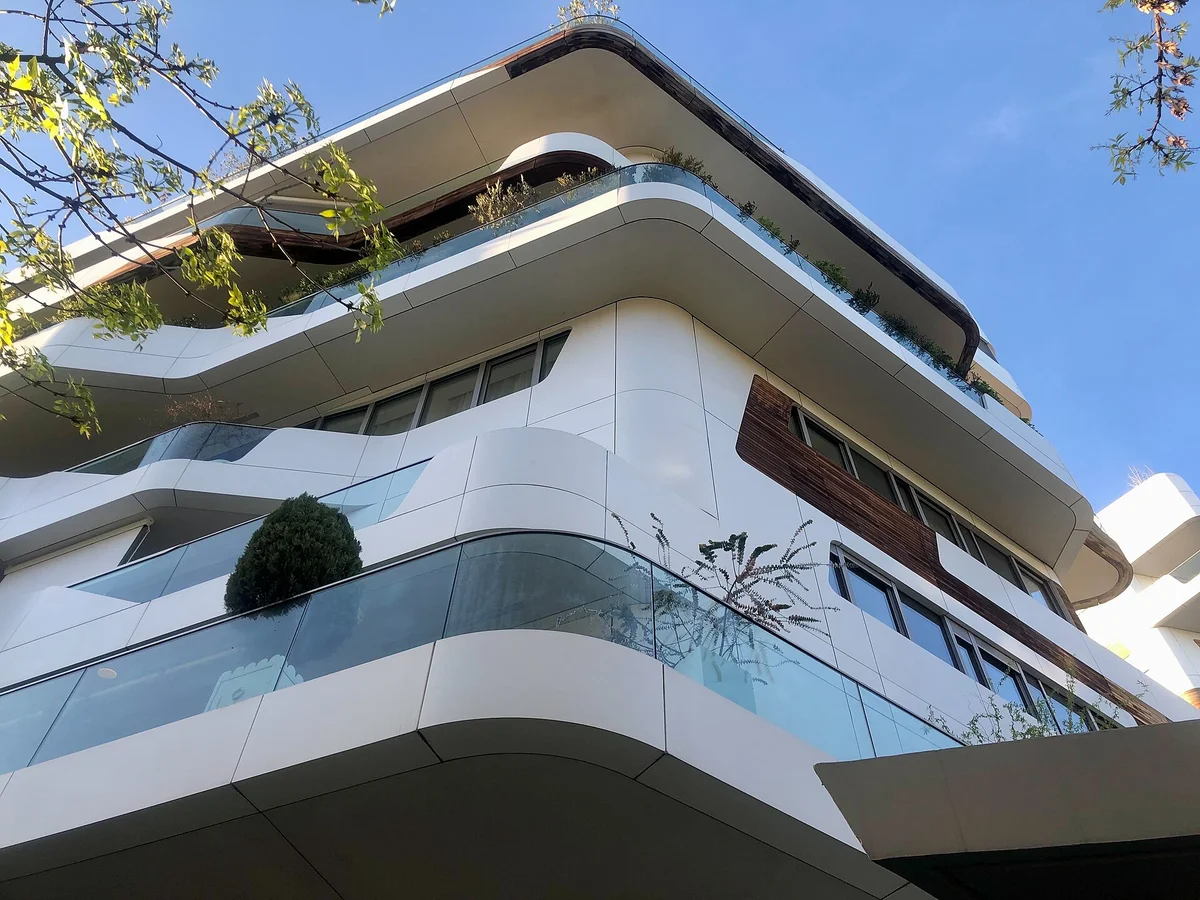
Quick answer: buying an Italian apartment means joining a condominio, the mandatory co-ownership regime whose rules decide 3 things that never appear in listings: your share of every bill (millesimi), what you may do with the unit (the regulation, which can ban short lets), and the works you will fund (the assembly, which votes valid decisions without you). Fees run €400 to €10,000+ a year by building class, and the buyer inherits joint liability for 2 years of the seller’s arrears. This guide covers the machinery, the money, the votes and the 5-document pre-purchase check, with fee benchmarks detailed in the management costs guide.
What is a condominio and how does it govern your apartment?
A condominio is the automatic legal regime of any Italian building with multiple unit owners: no incorporation, no opt-out, no fee to create it and 0% discretion about joining. From the first deed the stairs, roof, façades, lift and courtyard are common property whose costs and decisions follow civil-code rules (articles 1117-1139) binding every owner, foreign or Italian, present or absent.
The three instruments that run the building:
| Instrument | What it does | Where you find it |
|---|---|---|
| Regolamento di condominio | rules of use, services, sometimes restrictions | attached to deeds; contractual if accepted by all |
| Tabelle millesimali | each unit’s thousandths of the building | annexed to the regulation |
| Assemblea | votes budgets, works, the amministratore | minutes book, held by the amministratore |
Two structural facts orient everything else:
- Buildings above 8 owners must have a professional amministratore; smaller ones may self-manage, which cuts fees and multiplies disputes.
- The civil code’s owner protections are mandatory: no regulation can strip your vote, bar you from the assembly, or change your millesimi without consent.
Scale makes the regime worth learning before the first viewing: Italy counts over 1 million condominios administering the majority of its urban housing, roughly 70% of Italians live in apartment buildings governed this way, and every foreign buyer of city stock joins the system at the deed with the same rights and the same exposure as a Milanese pensioner two floors down. Nothing about the regime is negotiable at purchase: you cannot contract out of the assembly, the millesimi or the arrears rule, only inform yourself about the specific building’s version of each. That asymmetry (fixed law, variable building) is why the pre-purchase document check at the end of this guide outperforms any legal cleverness afterwards: the law is identical everywhere, while buildings range from frugal self-managed palazzine to €10,000-a-year litigation clubs.
How do millesimi split costs and votes?
Millesimi are the building expressed in thousandths: a table annexed to the regulation assigns each unit its share, typically drawn from surface, floor and exposure, and that single number then drives 90% of your financial relationship with the building, because most costs and all vote weights follow it.
Worked Milan example on a 45-millesimi apartment in a €120,000-budget building:
| Line | Building total | Your 45/1000 |
|---|---|---|
| Ordinary budget (cleaning, lift, admin) | €38,000 | €1,710 |
| Heating (consumption-corrected) | €52,000 | per meters + fixed share |
| Facade project voted this year | €30,000 | €1,350 |
| Year’s exposure | €120,000 | ≈€3,500 |
Exceptions to pure millesimi splits, worth knowing before the first bill:
- Consumption items: heating and water follow metered use plus a fixed quota since the thermoregulation reforms.
- Service-specific tables: lifts and stairs often carry their own tables weighted by floor; a ground-floor unit may owe 0% of the lift.
- Sole-benefit works: what serves one unit alone is that owner’s cost entirely.
Table errors are not academic: units altered over decades (merged flats, closed balconies) often carry stale millesimi, and a table revision requires unanimity or a court, so a buyer inheriting 52 millesimi for what is now a 45-millesimi unit inherits a 15% overcharge on every future euro. The due diligence pass should compare the table against today’s reality, not just file it.
What do condominio fees actually cost, and what is the real exposure?
Ordinary fees are the visible number and the smaller risk: €400-1,500 a year in simple palazzine, €1,500-4,000 in serviced urban buildings, €4,000-10,000+ with doormen, central plants or pools, figures the management costs guide breaks down by city. The real exposure is extraordinary works, voted by assemblies you may not attend.
The exposure ladder, from routine to painful:
| Works class | Typical building cost | Your 45/1000 share |
|---|---|---|
| Lift refit | €40,000-80,000 | €1,800-3,600 |
| Roof renewal | €60,000-150,000 | €2,700-6,750 |
| Facade + balconies (Milan norm) | €150,000-400,000 | €6,750-18,000 |
| Seismic/energy deep retrofit | €400,000-1,000,000+ | €18,000-45,000+ |
Three rules govern who pays what and when:
- The vote binds dissenters: a validly passed works resolution obliges every owner, including the one who voted no from abroad.
- Ownership at the resolution date decides liability in the default reading, which is why the minutes check before buying matters more than any fee statement: a voted-but-unbilled facade is the seller’s economics dressed as yours.
- Instalment practice varies: big works commonly bill over 1-3 years, and a unit’s sale mid-plan needs the split written into the deed.
Facade cycles are the predictable shock absentee buyers keep failing to predict: Italian urban buildings run refurbishment cycles of roughly 25-35 years on façades and balconies, municipal safety rules force netting and surveys the moment render starts falling, and a typical Milan palazzina of 20 units routinely votes €150,000-400,000 of works when its own cycle finally arrives. On 45 millesimi that is €6,750-18,000 of one owner’s money, billed over 1-3 years, decided at a meeting that needed only a second-call majority. The minutes telegraph the cycle years ahead (surveys commissioned, quotes requested, netting installed), which is why the 24-month minutes check is the cheapest forecasting instrument in the market: buildings announce their next €300,000 long before they invoice it.
Superbonus-era projects added a modern layer to this exposure: buildings that ran 110% works carry credit positions, contractor disputes and occasionally unfinished sites, a due-diligence topic deep enough to have its own guide.
Insider tip: ask the amministratore one written question before the offer: «delibere approvate o in discussione per lavori straordinari negli ultimi 24 mesi?». The answer, on record, either clears the building or hands you a number to negotiate with. Verbal reassurance from the selling agent covers neither.
How does the assembly work, and how does an absentee owner keep power?
The assembly is the condominio’s parliament and it functions without you: second-call meetings (the ones that actually happen) pass ordinary decisions with a majority of attendees holding at least 333 millesimi, appoint the amministratore and approve works with defined quorums, and impose the result on 100% of owners, attendance notwithstanding.
The majorities that matter, simplified to the working cases:
| Decision | Second-call requirement |
|---|---|
| Ordinary budget, maintenance | majority of present + ≥333 millesimi |
| Amministratore appointment, major repairs | majority of present + ≥500 millesimi |
| Innovations (new services, structures) | ≥667 millesimi |
| Change of use restrictions in contractual regulation | unanimity |
The absentee owner’s toolkit, in effectiveness order:
- Standing proxy: a written delega to a local property manager, lawyer or trusted co-owner; caps exist in larger buildings but one reliable proxy covers the standard case.
- Video attendance: widespread since 2020 where the regulation or practice admits it; ask the amministratore to include the link as standard.
- PEC correspondence: convocations and minutes by certified email create the paper trail that makes challenges possible.
- Challenge rights: contrary or absent owners may challenge unlawful resolutions within 30 days (from the meeting if present, from receipt of minutes if absent), a deadline that forgives nothing.
Challenge economics explain why the 30-day deadline dominates condominio litigation: an unlawful resolution (wrong quorum, matter beyond the assembly’s powers, unequal treatment) is voidable, not void, so it becomes binding on day 31 exactly as if it had been perfect, and Italian courts dismiss late challenges without reading their merits. For an absentee foreign owner the challenge clock runs from receipt of the minutes, which makes the PEC delivery address the real defence perimeter: minutes that sit 6 weeks in an unchecked Italian mailbox extinguish rights their reader never knew existed. The fix costs almost nothing, a certified email address on the amministratore’s records and a €200-500-a-year local proxy who reads what arrives, and it preserves 100% of the challenge rights that distance would otherwise quietly waive.
Foreign owners lose assemblies by logistics, not law: convocations posted to an Italian address nobody checks, meetings held in February, minutes unread until the bill arrives. Every failure in that chain is fixable with the toolkit above, and none of it costs more than €200-500 a year of a manager’s time.
Can the condominio restrict short lets and other uses?
Use restrictions are a two-tier system with a bright line: a contractual regulation, accepted in 100% of the building’s purchase deeds, validly bans or limits short lets, professional uses and pets, and courts enforce clear clauses. An assembly majority, by contrast, generally cannot impose new use bans on dissenting owners, because that touches property rights, not administration.
The buyer’s verification sequence for any income plan:
- Read the regulation’s use clauses verbatim: «è vietata la destinazione ad affittacamere o case vacanze» is a ban; silence is permission at building level.
- Confirm the regulation’s nature: contractual (binds all, changes only by unanimity) versus assembleare (administrative rules only); the deed chain shows which.
- Scan 2 years of minutes for hostility signals: noise complaints, key-box disputes, attempted bans; litigation you would be buying into.
- Then check the city layer: building-level permission means nothing where municipal rules restrict, the domain of the short-term rental rules guide.
Enforcement reality behind the law: buildings win against clear contractual bans, owners win against majority-imposed novelties, and the expensive cases are the ambiguous clauses («uses contrary to the building’s decorum») that consume 2-4 years of litigation either way. A buyer pricing a Milan unit on €30,000 of projected short-let income against an ambiguous clause is carrying that litigation risk at 100% and should either price it or buy a building whose paper is unambiguous.
What is the pre-purchase condominio check?
Five documents, one written request, roughly a week: the regulation with millesimi tables, 2 years of assembly minutes, the amministratore’s balance statement for the unit, the building’s insurance policy, and any works plan in progress. The set costs €0-100 in administrative fees and reprices more purchases than any other check at its price point.
What each document answers:
| Document | Question it answers |
|---|---|
| Regolamento + tables | what may I do, what share do I pay, are the tables current |
| Minutes (24 months) | voted and looming works, disputes, building culture |
| Unit balance statement | arrears you would co-owe (current + previous year, art. 63) |
| Insurance policy | globale fabbricati cover, catastrophe extensions, deductibles |
| Works-in-progress file | superbonus tails, contractor claims, instalments outstanding |
Buyer scenarios calibrate how deep to read. The single-flat holiday buyer needs the balance statement and a scan of the minutes for voted works: 2 documents, 1 evening. The STR investor adds the regulation’s use clauses read verbatim, since the whole business case hangs on them. The buyer of 2+ units in one building reads everything and then the millesimi tables twice, because concentration doubles both the vote weight and the exposure to the same facade.
Arrears deserve their own arithmetic because the law is specific: article 63 makes the buyer jointly liable with the seller for the current and the preceding accounting year, so a unit with €4,800 of unpaid fees converts to your debt on day 1, recoverable from the seller in theory and at the closing table in practice. Standard machinery handles it cleanly: the amministratore’s statement quantifies the position, the notary retains the sum from the price, and the deed allocates it, the same retention logic the closing-costs guide applies to other seller debts. A seller resisting the statement request is answering a question you had not asked yet.
For sellers, the mirror advice in the selling guide applies: the statement, minutes and regulation assembled before listing turn a week of buyer suspicion into a same-day email, and buildings with clean condominio paper measurably outsell their neighbours on time-to-close. The regime the foreign buyer joins at the rogito is, in the end, a small parliament with a budget: read its laws and its votes before buying a seat.
Frequently Asked Questions
The Italian legal regime for buildings with multiple owned units sharing structures: it arises automatically, with no incorporation, the moment a building has more than one owner. Stairs, roof, façades, lifts and courtyards become common property, costs split by millesimi, and decisions run through the assembly under civil-code rules that no regulation can override in the owner's disfavour.
Each unit's share of the building expressed in thousandths, set out in tables attached to the condominio regulation. Millesimi decide two things: your share of most costs and the weight of your vote in the assembly. A 45-millesimi apartment pays 4.5% of common expenses and votes with 4.5% of the building. Check the tables before buying: they price every future bill.
Ordinary spese run €400-1,500 a year for a lift-less palazzina, €1,500-4,000 in serviced urban buildings, and €4,000-10,000+ where doorman, central heating or pools appear. Milan doorman buildings cluster at €2,500-6,000. The number that hurts is never the ordinary fee: it is the extraordinary works vote you did not attend.
Yes, within a fixed window: the buyer is jointly liable with the seller for arrears of the current and the preceding accounting year (article 63 of the civil code's implementing provisions). Standard protection is a pre-closing statement from the amministratore showing the unit's balance, and a price retention where anything is owed.
A contractual regulation (one accepted in every deed, usually written by the original developer) can restrict uses including short lets, and courts enforce clear bans. An assembly majority alone generally cannot impose a new ban on dissenting owners. Before buying for Airbnb income, read the regulation and two years of minutes, then verify the city rules in our STR guide.
Second-call ordinary decisions pass with a majority of those present holding at least one third of millesimi. Bigger items (major repairs, amministratore appointment) need 500+ millesimi logic at first call and lighter quorums at second. Innovations require two thirds. The practical translation: absentee foreign owners lose votes they never knew were scheduled.
Yes: written proxy to any person (max caps apply in larger buildings), and video attendance where the regulation or unanimous practice allows it, which post-2020 is widespread. A standing proxy to a trusted local (your property manager, lawyer, or a co-owner) is the single most effective governance tool an absentee owner has.
Five documents: the regulation (contractual clauses, use restrictions), millesimi tables, the last two years of assembly minutes (voted and looming works), the amministratore's balance statement for the unit, and the building's insurance policy. Minutes are the goldmine: a €200,000 facade project appears there months before it appears in anyone's fees.
Get an Italy property shortlist
Tell us your budget and region (Tuscany, Lake Como, Puglia, Milan, Sardinia). We reply within one business day with options matched to your goals.