
Italy Property Capital Gains Tax: 26% and 5-Year Rule (2026)
Plusvalenza at 26% if you sell within 5 years. Primary home exemption, prezzo-valore cost basis and notary withholding at the rogito.
By Italian Estate Editorial · Updated July 10, 2026 · 11 min read
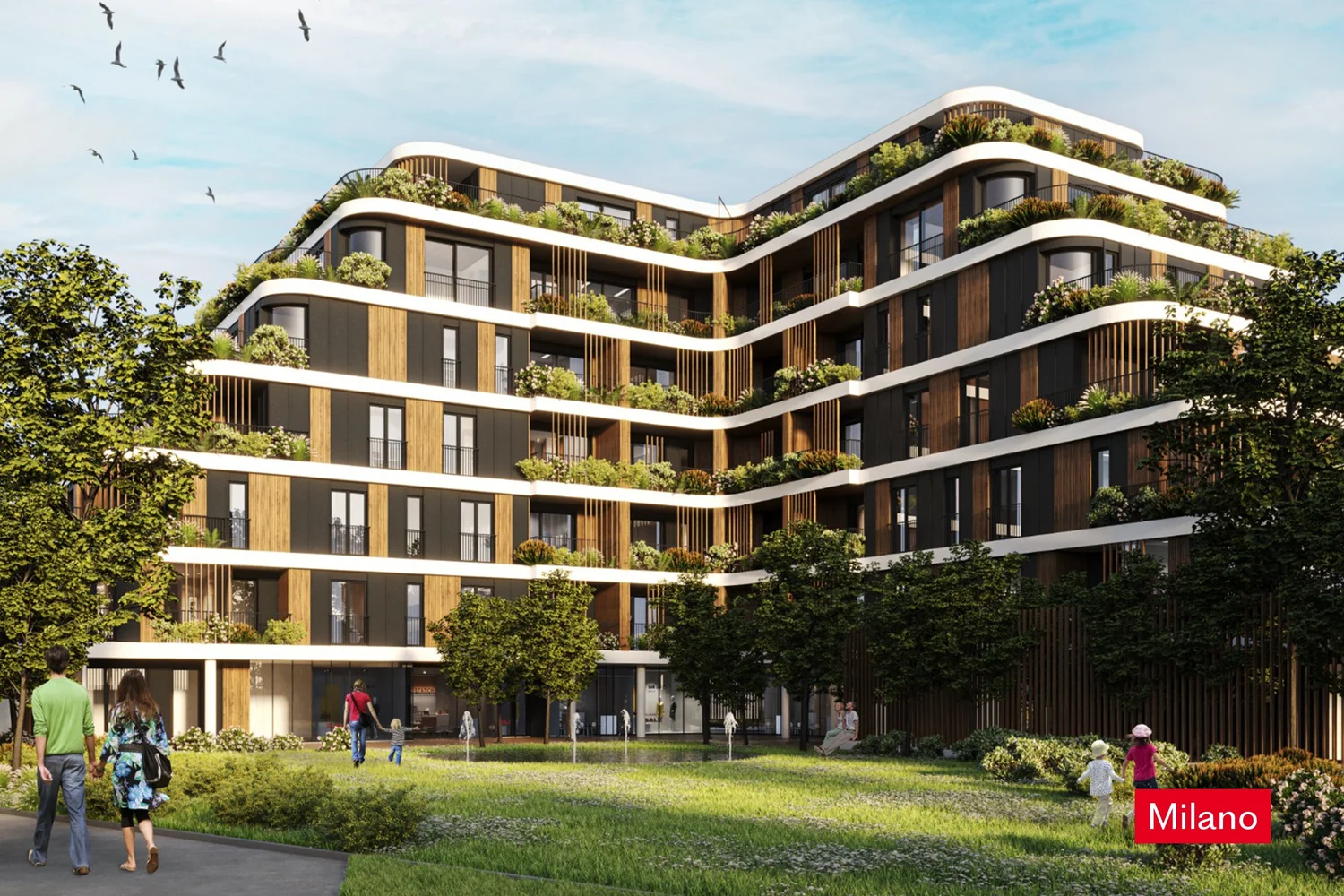
Italy Capital Gains Tax on Property: 2026 Seller Guide
Selling a villa in Tuscany, an apartment in Rome, or a restored trullo in Puglia can deliver a strong return, but the exit tax position determines how much of that profit you actually keep. Italy capital gains tax on property, known domestically as plusvalenza immobiliare, applies only in specific scenarios governed by Article 67 of the Italian Tax Code (TUIR). For international owners who bought with reduced registration tax on a second home or who hold assets subject to annual IMU property tax, understanding the seller-side rules before listing is as important as modelling purchase costs.
What is Italy capital gains tax on property?
Italy capital gains tax on property is the levy on profit (plusvalenza) when you sell real estate for more than your tax-recognised acquisition cost. For individuals not acting as property traders, this gain is classified as redditi diversi under TUIR Article 67 and is taxable only when statutory conditions are met, not on every profitable sale.
The Italian system deliberately limits CGT to short holding periods. Parliament assumes that selling within five years signals investment intent rather than long-term personal use. After that window, private sellers generally pay zero CGT on residential buildings and agricultural land, regardless of profit size. Buildable land (terreni edificabili) is treated differently and remains taxable even after long holding periods.
This framework matters for foreign buyers who acquired under the cost structure for buying property in Italy expecting a quick renovation flip. A €150,000 purchase resold at €220,000 within three years can trigger tax on the €70,000 gain before agency fees and notary costs are deducted from net proceeds. Planning the sale date and documenting acquisition costs from day one is therefore a core part of exit strategy.
When does capital gains tax apply to a property sale?
Capital gains tax applies when you sell a property acquired for consideration within five years of purchase or construction completion, unless an exemption applies. Inherited property, primary residence used for most of the holding period, and sales after the five-year threshold are outside the taxable perimeter.
The five-year clock starts from the date of the final deed (rogito) for purchases, or from the date the building was completed and habitable for new construction. A registered preliminary contract (compromesso) signed years earlier does not reset the clock, the legal acquisition date controls. If you signed a compromesso in Italy in 2020 but closed the rogito in 2021, the five-year period runs from 2021.
| Holding period | Property type | CGT status | Typical rate if taxable |
|---|---|---|---|
| Under 5 years | Second home / investment | Taxable (unless exempt) | 26% substitute or IRPEF 23–43% |
| Under 5 years | Primary residence (majority of period) | Exempt | 0% |
| Under 5 years | Inherited property | Exempt | 0% |
| Over 5 years | Residential / agricultural land | Exempt for individuals | 0% |
| Any period | Buildable land | Taxable | IRPEF (substitute tax not available) |
| Under 5 years | Gift received (donor held under 5 years) | Taxable | 26% or IRPEF |
Buildable land is the major exception to the five-year relief. Gains from selling terreni edificabili must always be declared in the annual tax return at ordinary IRPEF rates. The 26% substitute tax option does not apply to this category since legislative reforms effective from 2007.
Who qualifies for capital gains tax exemptions in Italy?
Italian holding costs include IMU on cadastral value, condominium spese, insurance, and flat rental tax under cedolare secca or ordinary IRPEF regimes. Second-home registration tax at 9% on cadastral lines often exceeds notary fees on mid-market tickets — commercialista should confirm election before compromesso deposit authorization.
Exemptions depend on holding period, property use, and acquisition route, not on nationality or residency status. The three main exemption paths for residential sellers are the five-year rule, primary residence use, and inheritance.
Five-year exemption. Once you have owned the property for more than five full years from purchase or construction, the capital gain is excluded from IRPEF for individual sellers. This applies to second homes, holiday lets, and investment units. A British owner who bought a Ligurian apartment in 2019 and sells in 2026 owes no Italian CGT on the gain, though other sale costs (agency, notary, mortgage cancellation) still apply.
Primary residence exemption. Under Article 67 TUIR, gains from selling a unit used as abitazione principale for the majority of the period between acquisition and disposal are exempt even within five years. The test is actual use, not the prima casa label on the purchase deed. You must demonstrate habitual residence through residenza anagrafica registration and supporting records. A family member up to the third degree of kinship living in the property can also satisfy the use test in certain cases.
Inheritance exemption. Property received through succession (successione) is excluded from CGT regardless of how quickly you sell. The exemption covers the inherited share. If you later improve the property substantially, only the post-inheritance enhancement value may affect future calculations in complex restructuring scenarios, specialist advice is recommended.
| Exemption type | Core requirement | Documentation typically required |
|---|---|---|
| Five-year hold | Sale date at least 5 years after rogito or completion | Final deed dates, land registry extract |
| Primary residence | Main home for majority of ownership period | Residency certificate, utility bills, tax registry |
| Inheritance | Property acquired by succession | Certificate of inheritance, notarial succession deed |
| Buildable land | Not available for standard exemption | N/A, always taxable |
Non-resident sellers qualify for the same exemptions. An American owner who established Italian residency in a Milan apartment for three years before selling within five years may claim the primary residence exemption if use is documented. Conversely, a non-resident who never registered residency cannot claim primary residence relief on a holiday home sold within five years.
What is the 26% flat rate on property capital gains?
The 26% substitute tax (imposta sostitutiva) is a flat levy on the taxable capital gain, collected by the notary at the rogito as withholding agent. It replaces ordinary IRPEF taxation on that specific gain and requires an explicit election in the deed, you cannot switch to it after closing.
Introduced under Law 266/2005 and refined by subsequent reforms including Law 213/2023, the substitute tax simplifies compliance for sellers who would otherwise face progressive rates. IRPEF on the gain alone can reach 43%, plus regional (addizionale regionale) and municipal (addizionale comunale) surcharges that push the effective marginal rate toward 47% for high earners.
The substitute tax is almost always preferable when your marginal IRPEF bracket exceeds 26%, roughly when total annual income exceeds approximately €28,000. Lower-income resident sellers with marginal rates at 23% may pay less under ordinary IRPEF, but must declare the gain in the modello Redditi PF by the November deadline of the year following the sale.
| Tax method | Rate structure | Payment mechanism | Best suited for |
|---|---|---|---|
| 26% substitute tax | Flat 26% on net gain | Notary withholds at rogito; F24 within 16 days | Non-residents, HNW sellers, marginal IRPEF over 26% |
| Ordinary IRPEF | 23% / 35% / 43% + surcharges | Declared in annual tax return | Lower-income residents with marginal rate under 26% |
| Exempt sale | 0% | No payment; retain supporting documents | Over 5 years, primary residence, inheritance |
The election is irrevocable for that transaction. If you omit the substitute tax request in the deed, the gain falls into ordinary IRPEF automatically. Incorrect reporting exposes the seller to reassessment penalties of 90% to 180% of tax due under D.Lgs. 471/1997.
How is the taxable capital gain calculated?
Taxable gain equals the sale price minus the tax-recognised cost basis (costo fiscalmente rilevante), which includes documented purchase price plus eligible acquisition and improvement costs. Undocumented expenses cannot reduce the gain.
The formula under Article 68 TUIR:
Taxable gain = Sale price − (Purchase price + documented eligible costs)
Eligible costs that increase the cost basis include:
- Registration tax, VAT, mortgage tax, and cadastral tax paid at purchase
- Notary fees attributable to the acquisition deed (not the sale deed)
- Real estate agency commission on purchase, if documented by invoice
- Extraordinary maintenance and renovation with VAT invoices (manutenzione straordinaria and capital improvements, not routine repairs)
- Construction costs for properties you built, supported by contractor invoices
Costs that do not reduce CGT include IMU payments, ordinary condominium fees, furnishing, sale-side agency commission, and the seller’s notary fees for the disposal deed.
Worked example: second home sold within five years
An investor bought a Puglia masseria for €380,000 in 2023. Documented costs: registration tax €28,500, purchase notary €4,200, agency €11,400, renovation €45,000. Total cost basis: €469,100. Sale price in 2026: €520,000.
Taxable gain = €520,000 − €469,100 = €50,900
At 26% substitute tax: €50,900 × 0.26 = €13,234
At 43% marginal IRPEF (plus surcharges): potentially over €22,000 on the same gain.
Keeping every purchase invoice, notary statement, and renovation receipt in a dedicated file avoids disputes when the Italian notary calculates withholding at closing.
What is the prezzo-valore method and how does it affect sellers?
Prezzo-valore is a buyer-side purchase tax mechanism that calculates registration tax on cadastral value rather than declared price. Sellers cannot use cadastral value to understate their cost basis for capital gains, the full declared sale price and actual documented acquisition cost govern CGT.
When a buyer elects prezzo-valore on a private sale, the registration tax applies at 2% or 9% to the revalued cadastral base, which is often far below market price. This reduces the buyer’s upfront tax but does not change the seller’s CGT calculation. The Agenzia delle Entrate expects the seller to report the real sale price in the deed.
The distinction between cadastral value and market price in Italy matters at both ends of ownership. Cadastral values typically sit at 30% to 50% of market value in popular regions. A seller who bought in 2022 for €400,000 (deed price) cannot substitute the €180,000 cadastral equivalent as cost basis to shrink CGT. Attempting to declare a lower sale price triggers audit risk, mortgage issues for the buyer, and criminal exposure for tax evasion.
For properties acquired before 1993 under legacy rules, specific revaluation options once existed for cost basis. Modern acquisitions since 2006 follow documented price plus eligible costs. If you inherited property, the cost basis is generally the value declared in the succession process, not the current cadastral yield.
| Calculation element | Prezzo-valore (buyer purchase tax) | Capital gains (seller exit tax) |
|---|---|---|
| Price base | Cadastral value (revalued rendita) | Actual deed purchase price |
| Sale price | Not applicable at purchase | Full declared sale price in rogito |
| Documentation | Cadastral extract | Deeds, invoices, tax payments |
| Who benefits | Buyer (lower registration tax) | Neither party - CGT uses real economics |
Insider tip from Italian Estate transaction reviews: sellers who under-declared purchase price years ago, common before tighter enforcement, often face reconstructed cost bases in audits, eliminating expected exemptions and triggering penalties. Always declare full values at both purchase and sale.
What are non-resident seller obligations for CGT?
Non-resident sellers face identical plusvalenza rules to Italian residents: the five-year test, exemption categories, and 26% substitute tax option all apply without modification. Tax residency abroad does not exempt you from Italian CGT on Italian real estate disposed within the taxable window.
Practical obligations for non-residents include:
- Codice fiscale: An Italian tax code remains required for the sale deed and F24 payments even if you live abroad. See our guide on obtaining a Codice Fiscale before listing.
- Substitute tax election: Non-residents almost always elect 26% at the notary to avoid filing Italian annual returns for a single gain. Confirm the election language in the draft deed before signing.
- Power of attorney: Sellers abroad typically grant a notarised procura speciale to complete the rogito without travel. CGT calculation is fixed at that deed.
- Home-country reporting: United States citizens, UK residents post-2025, and other jurisdictions may owe additional tax on the same gain after foreign tax credits. Italy’s 26% may not be the final liability.
Italy has tax treaties with over 90 countries. Treaties do not eliminate Italian CGT on Italian property but may affect double taxation and reporting forms. EU residents selling Italian second homes must also consider DAC7 and national cross-border reporting of property disposals in their home state.
How does notary withholding work at the sale deed?
The notary (notaio) acts as substitute tax agent (sostituto d’imposta) when the seller elects the 26% regime. The notary computes the gain from deed declarations and supporting documents, withholds the tax from sale proceeds, and pays Agenzia delle Entrate via model F24 within 16 days of the rogito.
The workflow at closing:
- Seller submits purchase deed, improvement invoices, and tax payment receipts to the notary before rogito.
- Seller signs a written request for 26% substitute tax in the deed text.
- Notary calculates: sale price − cost basis = taxable gain.
- If gain is positive and tax applies: notary deducts 26% from net proceeds payable to seller.
- Notary files F24 and issues withholding certificate.
If the seller is exempt (over five years, primary residence, inheritance), the notary records the exemption basis in the deed but does not withhold. Retain the final deed and F24 receipt for at least six years, the statute of limitations for tax audits on capital gains aligns with standard IRPEF assessment periods.
When substitute tax is not elected, the seller declares the gain in the Redditi PF by 30 November of the following year (or extended deadline if applicable). Non-residents without other Italian income may still need to file a limited return for the gain. Missing the declaration triggers late-filing penalties starting at 120% of tax due.
Buyers are not liable for the seller’s CGT unless specific withholding rules apply in cross-border corporate structures. Standard residential sales place the compliance burden entirely on the seller and notary.
Do reinvestment rules eliminate capital gains tax?
Reinvesting sale proceeds in another prima casa within one year preserves first-home purchase tax benefits but does not automatically exempt capital gains. CGT and prima casa purchase tax operate on separate legal tracks.
When you sell a prima casa within five years of buying with reduced 2% registration tax or 4% VAT, you must either:
- Purchase a new primary residence within one year (before or after the sale under current rules), applying a tax credit to offset the prior benefit, or
- Repay the difference between preferential and standard purchase tax plus a 30% penalty on the recovered amount.
This reinvestment rule protects the state’s purchase-tax subsidy, it does not replace the CGT primary residence exemption. If you lived in the property as your main home for most of the ownership period, CGT is exempt regardless of reinvestment. If you never established residency and treated the unit as a rental investment, reinvesting in another home does not remove CGT even if you qualify for future prima casa on the next purchase.
| Scenario | CGT on gain | Prima casa purchase tax clawback |
|---|---|---|
| Sell within 5 years, primary residence use documented | Exempt | May apply if new prima casa not bought within 1 year |
| Sell within 5 years, second home / no residency | 26% or IRPEF | Not applicable (no prior prima casa benefit) |
| Sell after 5 years | Exempt | Not applicable |
| Reinvest in new prima casa within 1 year | Depends on use test above | Credit offsets prior reduced registration/VAT |
Coordinate reinvestment timing with your commercialista before signing the sale compromesso. The one-year window is strict, and municipal residency registration on the replacement property must align with prima casa declarations.
How does capital gains tax compare to IMU and registration tax?
Registration tax, IMU, and capital gains tax operate at different stages of ownership with separate bases and rates. Conflating them leads to budgeting errors on both acquisition and exit.
Registration tax (imposta di registro) is a one-time buyer charge at purchase on private sales, calculated at 2% (prima casa) or 9% (second home) of cadastral value under prezzo-valore. It is not refunded on sale and forms part of the seller’s CGT cost basis if documented.
IMU is the annual municipal property tax on ownership, ranging from roughly 0.46% to 1.14% of cadastral value depending on commune and property class. IMU is deductible as a property expense for rental income under certain regimes but does not reduce CGT cost basis. See the full IMU property tax guide for payment deadlines.
Capital gains tax hits once at sale on profit within the taxable window. It is unrelated to how much IMU you paid annually or whether you bought with 9% registration tax.
| Tax | When due | Who pays | Base | Typical rate |
|---|---|---|---|---|
| Registration tax | Purchase (rogito) | Buyer | Cadastral value (prezzo-valore) | 2% or 9% |
| IMU | Annual (June and December) | Owner | Cadastral value | 0.46%–1.14% |
| Capital gains tax | Sale (if taxable) | Seller | Sale price minus cost basis | 0%, 26%, or IRPEF |
A foreign buyer who pays 9% registration on a €300,000 cadastral base (€27,000) and sells within four years adds that €27,000 to cost basis, partially offsetting CGT. The same owner pays IMU every year regardless of eventual sale tax.
What about EU and OECD reporting for property sales?
Cross-border property disposals trigger reporting layers beyond the Italian notary withholding. EU platforms, tax authorities, and OECD automatic exchange frameworks increase visibility of sale prices and ownership transfers.
DAC7 and platform reporting. If the property was listed on certain digital platforms for rental or sale intermediation, platform operators may report transaction data to EU tax authorities. Direct private sales through a notary are outside DAC7 platform rules but remain visible through cadastral and land registry updates.
OECD CRS and bilateral exchange. Italian financial institutions and tax authorities exchange information with partner jurisdictions. Large sale proceeds wired through Italian banks to foreign accounts may appear in cross-border reporting. US persons must still file FATCA-related forms and report worldwide income to the IRS, claiming foreign tax credit for Italian CGT paid.
Modello RW (foreign asset monitoring). Italian tax residents holding foreign assets above thresholds file annual RW monitoring. Selling Italian property does not directly trigger RW, but reinvesting proceeds abroad does. Non-residents without Italian tax residency generally have no RW obligation.
Document the full compliance chain: Italian deed price, F24 withholding receipt, home-country return, and any treaty position. Penalties for omitting foreign reporting often exceed the Italian CGT itself.
Planning your exit: timing, documents, and professional support
Successful exits combine holding-period planning, complete documentation, and coordinated notary and tax advice. Four actions reduce surprises:
- Map the five-year date from your rogito or completion certificate before marketing the property.
- Assemble the cost basis file: purchase deed, registration tax F24, purchase notary invoice, agency invoice, renovation VAT invoices.
- Confirm exemption eligibility with residency certificates if claiming primary residence relief.
- Draft substitute tax election into the deed template at least two weeks before rogito.
For buyers still in acquisition mode, understanding exit tax at purchase prevents locked-in short-term gains. Review the complete guide to buying property in Italy as a foreigner alongside this seller guide to model a full hold-to-exit cycle.
Ready to buy or sell with clear tax visibility? Get a curated shortlist of Italian investment properties matched to your hold period, residency plans, and net yield targets, with due diligence support from our editorial team.
Frequently Asked Questions
You pay capital gains tax (plusvalenza immobiliare) only if you sell within five years of purchase or construction and no exemption applies. Sales after five years are generally tax-free for individual owners. Inherited properties are exempt regardless of timing.
Taxable gains are subject either to a flat 26% substitute tax withheld by the notary at closing, or to ordinary IRPEF progressive rates from 23% to 43% plus regional and municipal surcharges declared in your annual tax return.
Yes. If the property was used as your main residence (abitazione principale) for the majority of the period between purchase and sale, the capital gain is exempt even when sold within five years, provided residency can be documented.
Prezzo-valore lets buyers pay registration tax on cadastral value instead of purchase price. For capital gains, the seller must still use the actual documented purchase price plus eligible costs as the tax cost basis, not the lower cadastral figure.
Non-resident sellers follow the same plusvalenza rules as Italian residents: five-year rule, primary residence exemption where applicable, and 26% substitute tax or IRPEF on taxable gains. The notary acts as withholding agent when substitute tax is elected.
Reinvesting in another prima casa within one year can preserve first-home purchase tax benefits but does not automatically exempt capital gains. CGT exemption depends on actual use as primary residence, not on reinvestment alone.
If you elect the 26% substitute tax at the rogito, the notary calculates the gain, withholds the tax from sale proceeds, and remits it via F24 to Agenzia delle Entrate within 16 days. The choice must be made in the deed itself.
No. Registration tax is a one-time purchase levy. IMU is an annual property ownership tax. Capital gains tax applies only at sale on profit realized within five years (subject to exemptions). Each has separate rates, bases, and deadlines.
Get an Italy property shortlist
Tell us your budget and region (Tuscany, Lake Como, Puglia, Milan, Sardinia). We reply within one business day with options matched to your goals.