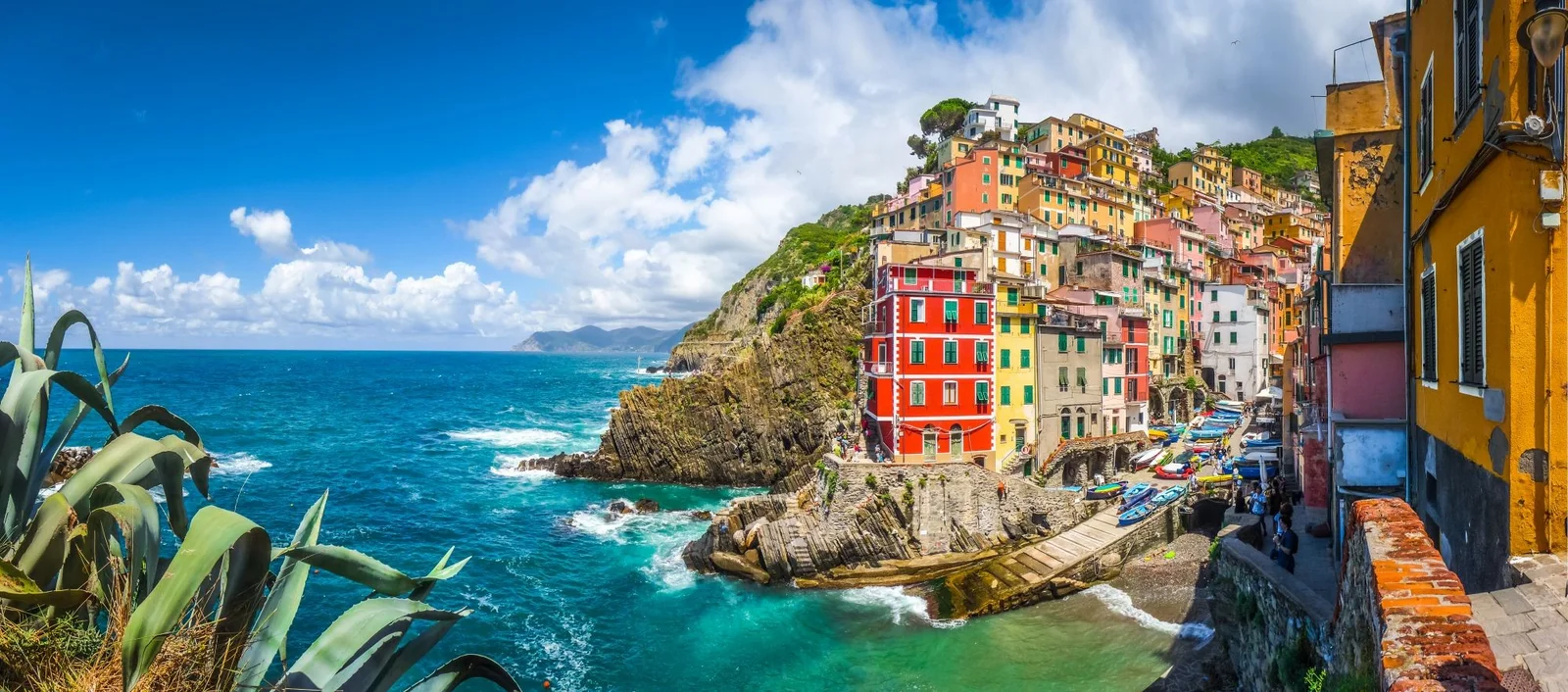
Quick answer: Liguria is Italy’s Mediterranean luxury coast, stretching from Genoa’s port economy through Portofino’s yacht harbour to Cinque Terre’s cliffside villages and Sanremo’s flower-market Riviera. Prime coastal stock trades €3,500-8,000/m² with gross yields of 3-5%, slightly above Lake Como’s 2-3% lakefront band but still income-secondary. British, German, and Swiss buyers lead foreign demand alongside French Riviera cross-shoppers. Landslide risk, heritage restrictions, and sharp STR seasonality define due diligence.
For national context see our Italy property investment guide and best regions for Italy property investment 2026.
Italy recorded 719,578 residential transactions in 2024 and an estimated 766,756 in 2025 (+6.4%). Regional foreign-buyer share varies widely around that national trend, so treat it as context rather than a local indicator.
Use OMI quartiere data as the yield anchor; portal asking peaks overstate what actually closes.
Is Liguria a good property investment for foreign buyers in 2026?
Is liguria a good property investment for foreign buyers in 2026: the 2026 baseline involves 719,578 baseline transactions, €5.5B foreign capital, €632,000 average tickets, and 10-15% closing stacks, with gross yields ranging 2-10% by region before IMU and cedolare secca apply to rental income streams, which is where most Ligurian yield projections lose their margin.
Foreign capital continues to enter Italy at scale. Scenari/Nomisma data for 2025 records 8,700 foreign-family transactions and €5.5 billion in turnover nationwide, implying an average purchase near €632,000. Liguria captures a meaningful share of northern lifestyle demand, particularly from British buyers seeking post-Brexit euro exposure, German and Swiss purchasers familiar with Alpine-to-coast second-home patterns, and French buyers comparing Liguria pricing against Côte d’Azur premiums that often double equivalent Riviera stock on a per-metre basis.
The investment case rests on three pillars: Mediterranean coast scarcity on buildable cliffside terrain, tourism demand concentrated in a long but narrow season, and relative value versus Lake Como’s €8,000-25,000/m² lakefront pricing. Liguria does not offer Milan-style corporate rental depth or Puglia-style 6-8% gross yields. It offers coastal frontage, yacht-culture adjacency, and a buyer pool that has purchased through multiple Italian economic cycles.
National benchmarks frame the premium. Italy’s average residential asking price sits near €2,188/m². Liguria prime coastal stock at €3,500-8,000/m² trades at a significant premium to the national average but often at a discount to Lake Como lakefront on a per-metre basis, while delivering marginally better income math on mid-tier apartments in Sanremo and Rapallo.
| Metric | Liguria (coastal premium) | Italy national | Lake Como (lakefront) |
|---|---|---|---|
| Typical price/m² | €3,500-8,000 | €2,188 avg | €8,000-25,000 |
| Gross yield band | 3-5% | 3-5% (varies) | 2-3% |
| Foreign buyer profile | British, German, Swiss, French | Broad mix | US, UK, Swiss, Gulf |
| Primary buyer goal | Coast lifestyle + preservation | Diversified | Lake scarcity + Milan link |
| STR peak season | April-October | Region-dependent | April-October |
| Key risk | Landslide, heritage | Varies | Landslide, heritage |
- Commission independent avvocato and geometra review before compromesso deposits.
- Model net cash flow after 21% or 26% cedolare secca, not gross portal yield bands alone.
- Track three OMI-quartiere closed sales in the same micro-district before offer price.
The table explains why savvy northern Italy investors often hold both Liguria and Como exposure: Como for lakefront trophy scarcity, Liguria for Mediterranean coast diversification at a wider price spectrum. Many buyers run parallel models before committing capital.
| Liguria micro-market | 2026 €/m² | Gross yield |
|---|---|---|
| Sanremo centro | €2,800-€4,200 | 4-5% |
| Rapallo sea-view | €3,500-€6,000 | 3.5-4.5% |
| Portofino trophy | €8,000-€14,000 | 2-3% |
What are property prices per square metre across the Italian Riviera?
Prime coastal band: €3,500-8,000/m² covers quality sea-view apartments and restored village houses in Sanremo, Rapallo, Santa Margherita Ligure, Camogli, and Sestri Levante. Exact position matters: west-facing sunset terraces command premiums; properties behind the coastal road or rail line trade at 20-35% discounts despite “Riviera” marketing, so confirm the actual position rather than the listing’s description.
Trophy tier: Portofino village and Cinque Terre (Monterosso, Vernazza, Manarola, Riomaggiore, Corniglia) push €8,000-14,000/m² for restored units with genuine sea views. Harbour-front Portofino can exceed €12,000-18,000/m² on small footprint historic stock where implied per-metre rates shock first-time Riviera buyers.
Value tier: Genoa city (Boccadasse, Nervi, Pegli) and inland Ligurian towns offer €2,200-4,500/m² with urban connectivity and lower international marketing gloss. These sub-markets attract domestic buyers and investors who prioritise cash flow over postcard views.
| Sub-Market | Price/m² (Indicative) | Typical Ticket | Liquidity |
|---|---|---|---|
| Portofino harbour | €12,000-18,000+ | €2M-8M+ | Very low (trophy) |
| Cinque Terre villages | €8,000-14,000 | €800K-2.5M | Low (regulated) |
| Sanremo / Bordighera | €4,000-6,500 | €400K-1.2M | Medium-high |
| Rapallo / S. Margherita | €4,500-7,500 | €500K-1.5M | Medium |
| Camogli / Sestri Levante | €3,800-6,000 | €350K-900K | Medium |
| Genoa waterfront | €2,800-5,000 | €280K-750K | Medium-high |
| Genoa hinterland | €2,200-3,800 | €200K-500K | Higher (domestic) |
Meaningful coastal investment typically requires €400,000-800,000 for a quality two-bedroom apartment with sea views, and €1.5 million or more for restored village houses in Portofino or Cinque Terre. Trophy harbour assets represent a separate ultra-luxury segment with bespoke liquidity, not comparable to standard investor entry points.
Which Liguria sub-markets deserve the closest investor attention?
Liguria is 3 distinct markets rather than one coastline, and treating it as a single region is the usual mistake. Genoa trades on year-round employment demand, the Portofino stretch on trophy scarcity with heavy permitting, and the Riviera di Ponente on German and Swiss drive-in seasonality, three markets that should never be compared on a single average.
Liguria is not one coastline. The region stretches roughly 350 km from the French border through Genoa to Tuscany, creating distinct micro-markets with different price tiers, buyer profiles, and regulatory environments.
Genoa offers Liguria’s most accessible urban investment case. Italy’s largest port city recorded sustained waterfront regeneration in Boccadasse, Nervi, and the Porto Antico corridor, attracting domestic professionals and investors who want Liguria exposure without village premium pricing.
Average prices in revived waterfront zones run €2,800-5,000/m² for apartments, with long-term gross yields occasionally reaching 4-5% on well-located units rented to port-sector workers, university students, and Genoa hospital staff. STR potential exists but lacks the international nightly-rate premiums of Portofino or Cinque Terre.
Investment case: highest liquidity within Liguria for standard apartments, lower entry ticket, year-round tenant demand. Trade-off: weaker global brand than Portofino; appreciation tied to Genoa employment and port economy rather than international trophy demand.
Red flags: older centro storico buildings with unresolved condominium debt, properties in landslide-classified zones without geotechnical clearance, and listings marketed as “Riviera” that sit 30+ minutes inland.
Portofino occupies Liguria’s pricing peak alongside select Cinque Terre addresses. The village’s yacht harbour, luxury hospitality orbit, and decades of international media coverage support demand even when Italian macro sentiment softens.
Harbour-front and near-frontage properties command €12,000-18,000/m² or higher. Small restored units can list at implied per-metre rates that exceed €15,000/m². Gross yields compress to 2.5-3.5% despite strong summer nightly STR rates because purchase prices absorb most income upside.
Investment case: maximum prestige, legacy holding, multi-generational ownership patterns. British and American ultra-high-net-worth buyers dominate trophy transactions. Not ideal for leveraged yield plays. Municipal scrutiny on tourist density and STR caps is tightening.
Red flags: properties marketed with shared harbour views that lack deeded terrace rights; unapproved boathouse structures; listings without verified geotechnical reports on cliffside plots.
The five villages of Cinque Terre (Monterosso al Mare, Vernazza, Corniglia, Manarola, Riomaggiore) sit in a national park and UNESCO landscape with strict building and tourism controls. Restored sea-view units trade €8,000-14,000/m² depending on village and exact view corridor.
Rental demand is intense but seasonal: July and August occupancy can exceed 85% for well-managed STR, while November through March often drops below 30%. Gross yields on premium stock cluster at 3-4% when modelled across full-year occupancy, not peak-season fantasy projections.
Investment case: irreplaceable coastal heritage asset, strong personal-use justification, limited supply supports long-term appreciation on correctly priced stock. Cinque Terre suits buyers planning 40-60% personal use with STR for remaining weeks.
Red flags: properties accessible only via hundreds of steps with no vehicular access (maintenance and resale friction); missing CIN or municipal STR approval; landslide zone classifications on terraced hillsides; heritage restrictions blocking planned renovations.
Sanremo combines casino tourism, Milan-Monaco event traffic, and a mild microclimate that extends the rental season versus eastern Liguria. The city offers Liguria’s best balance of coastal appeal, transaction liquidity, and yield headroom for investors who reject Portofino pricing but want genuine Riviera exposure.
Quality sea-view apartments trade €4,000-6,500/m². A restored 80 m² two-bedroom at €5,000/m² (€400,000 purchase) renting €1,400-1,800 monthly in extended season produces roughly 4.2-5.4% gross before costs. British and German buyers feature prominently in Sanremo transactions, often comparing against French Menton and Monaco pricing 20-40 km west.
Investment case: moderate prestige, better income math than Portofino, faster resale velocity on correctly priced stock (often 9-14 months versus 18-30 for trophy villages). STR regulations more permissive than Cinque Terre.
Red flags: 1970s tower blocks with poor energy ratings and high condominium costs; properties on busy Via Aurelia frontage with noise exposure; unverified sea-view claims where new construction blocks sightlines.
Rapallo and neighbouring Santa Margherita Ligure sit between Genoa and Portofino, offering ferry links, yacht culture, and authentic village character at prices below Portofino peaks. Typical pricing runs €4,500-7,500/m² for quality coastal apartments.
Gross yields may touch 3.5-5% on well-run STR in peak season, with long-term rental options for Milan and Genoa commuters seeking coast access. Swiss and German buyers appear frequently in transaction data for this corridor.
Investment case: balanced lifestyle purchase with modest income offset. Strong fit for buyers planning 30-50% personal use and STR for the balance. Better yield math than Portofino at the cost of slightly lower international resale pool.
| Sub-market | Character | Main constraint |
|---|---|---|
| Genoa centro and Albaro | Hospital and university long lets | Pre-1980 stock, extraordinary works |
| Portofino and Santa Margherita | Trophy coastal | Park rules; approval 12-18 months |
| Riviera di Ponente | German and Swiss drive-in demand | Seasonality, terrace conformità |
What rental yields can Liguria property deliver?
Ligurian yields divide by whether an address depends on a summer season or on year-round Genoa employment, and the two behave nothing alike. A foreign buyer should model annual occupancy rather than peak-week rates, then subtract IMU at 0.86% to 1.06%, condominium spese and 21% cedolare secca, before setting any Ligurian yield beside a northern city’s.
Ligurian yields divide by whether the address depends on a summer season or on year-round Genoa employment. Foreign buyers should model annual occupancy rather than peak-week rates, then subtract an IMU charge between 0.86% and 1.06% of cadastral value, condominium spese and 21% cedolare secca on a registered lease.
Long-term residential leases on the Ligurian coast can yield roughly 3-4.5% gross on mid-tier Sanremo and Genoa apartments. Tenant demand exists from local workers, healthcare staff, university students in Genoa, and Milan-linked commuters seeking coast access under two hours away.
Cedolare semplificata at 21% applies to qualifying residential contracts of four or more years, improving net cash flow versus STR taxation at 26%. The constraint is rent levels versus purchase prices: tenant protection makes long-term letting stable, but achievable rents reflect local wages and Milan spillover, not international trophy pricing.
Vacancy on desirable Sanremo and Rapallo long-term stock often runs under 6 weeks annually. Genoa city apartments can achieve year-round occupancy with stronger tenant depth.
STR on the Liguria coast can lift gross yields toward 4-5% on mid-tier stock when occupancy is modelled conservatively across the full year. Peak season (June-September) nightly rates in Sanremo and Rapallo range €120-220 for quality two-bedroom units. Portofino and Cinque Terre command €250-450+ nightly but face stricter municipal caps and higher management costs.
Critical modelling assumptions for Liguria STR:
Net yield after IMU property tax (typically 0.86-1.06% of cadastral value on second homes), management, cleaning, and tax often sits 1.5-2.5 percentage points below gross. A property showing 4.5% gross may deliver under 2.5% net.
For full STR compliance mechanics see our short-term rental rules in Italy guide and national yield benchmarks in the Italy rental yield guide.
| Sub-Market | Gross Yield (Typical) | Net Yield (After Costs) | Best Rental Strategy |
|---|---|---|---|
| Portofino | 2.5-3.5% | 1.2-2.2% | Luxury STR, low occupancy OK |
| Cinque Terre | 3-4% | 1.5-2.5% | STR with personal use |
| Sanremo | 3.5-5% | 2-3.5% | STR + long-term blend |
| Rapallo / S. Margherita | 3.5-4.5% | 2-3.2% | STR shoulder + winter long-term |
| Genoa city | 4-5% | 2.5-3.8% | Long-term primary |
| Genoa hinterland | 4.5-5.5% | 3-4% | Long-term domestic tenants |
- Genoa’s hospital and university corridors support 12-month leases with materially lower vacancy.
- Riviera sea-view stock concentrates income into roughly 3 to 4 months against 12 months of costs.
How does short-term rental seasonality work on the Italian Riviera?
Riviera letting concentrates into roughly 3 to 4 months while standing costs run for all 12, which is the arithmetic that decides most Ligurian cases. Foreign buyers should underwrite annual occupancy rather than peak-week nightly rates, then subtract IMU, condominium spese and 21% cedolare secca, which is what separates a headline return from a banked one.
Seasonal pattern by month (indicative Sanremo two-bedroom):
| Month | Occupancy Band | Nightly Rate Band | Revenue Weight |
|---|---|---|---|
| January-March | 15-30% | €80-120 | 8-12% of annual |
| April-May | 45-60% | €110-160 | 15-18% |
| June | 65-75% | €140-190 | 14-16% |
| July-August | 75-85% | €160-220 | 28-32% |
| September | 60-70% | €130-180 | 12-14% |
| October | 40-55% | €100-150 | 8-10% |
| November-December | 20-35% | €85-130 | 6-10% |
Sanremo benefits from event-driven spikes: Milan-Sanremo cycling (March), casino congress traffic, and flower-market tourism extend shoulder season versus eastern Cinque Terre villages that feel deserted from November to March.
CIN registration is mandatory nationwide. Liguria municipalities layer local rules:
Properties without valid CIN face delisting from Airbnb and Booking.com plus fines from €1,000 to €10,000. Always verify transferable CIN status before underwriting STR income on any Liguria purchase.
Who buys Liguria property: British, German, and Swiss buyer profiles
British buyers: Post-Brexit, British purchasers treat Liguria as euro-denominated diversification with personal use. Sanremo and western Riviera towns within 90 minutes of Nice airport attract UK retirees and remote workers. Typical ticket €450,000-900,000 for two-bedroom coastal apartments. British buyers often compare Liguria against Tuscan Maremma and Umbria before choosing coast exposure.
German buyers: Germany’s geographic proximity and strong domestic second-home culture in Italy (South Tyrol, Tuscany, Liguria) makes German capital a core demand driver. German purchasers favour Sanremo, Bordighera, and Rapallo for family holiday use with occasional STR. Due diligence expectations are high: geotechnical reports, energy certificates, and notary-led title review are standard, not optional.
Swiss buyers: Swiss franc strength and cross-border familiarity with Italian property markets (Ticino adjacency, Lugano-Genoa rail links) support Swiss demand in western Liguria. Swiss buyers often hold multiple Italian assets and treat Liguria as coastal complement to lake or mountain properties. Ticket sizes skew higher in Portofino and Cinque Terre trophy segments.
French cross-shoppers: Menton and Monaco proximity drives French buyers comparing Liguria value against Côte d’Azur pricing. A Sanremo sea-view apartment at €5,500/m² looks attractive against Menton equivalents often exceeding €8,000-10,000/m² for similar product.
Italian domestic buyers: Piedmont and Lombardy families provide baseline demand for Sanremo and western Riviera second homes, adding liquidity that pure international markets lack. Domestic buyers often pay cash and accept lower yields for generational use.
Nationwide context: foreign buyers placed 8,700 transactions worth €5.5 billion in 2025 (Scenari/Nomisma). Liguria’s share concentrates in the upper-middle and luxury tiers rather than volume-driven markets like Milan apartments or Puglia mass tourism stock.
| Buyer | Typical brief |
|---|---|
| British | Sea-view apartment, seasonal use, lower entry than Como |
| German and Swiss | Drive-in access, longer stays, Riviera di Ponente |
| Domestic | Genoa and hospital-corridor long lets |
- All 3 groups meet the same constraint: pre-1980 stock with recurring extraordinary works votes.
- Every one of them pays second-home IMU on cadastral value, 0.86% to 1.06% by comune.
What landslide and geotechnical risks affect Liguria buyers?
Slope stability is a genuine constraint in Liguria rather than a formality, and it is assessed by zone before any works are permitted. Regional landslide inventories classify areas with building restrictions and mandatory geotechnical surveys, which means terrace and retaining-wall works may not be possible at all on some plots.
Regional landslide inventories (PAI, Piani Assetto Idrogeologico) classify zones with building restrictions, mandatory geotechnical surveys, and insurance limitations. Cinque Terre’s terraced landscape experienced catastrophic landslides in 2011 that killed four people and triggered years of trail closures. Genoa’s Morandi bridge collapse in 2018 underscored infrastructure fragility in the region, though residential cliffside risk follows different mechanics.
Red flags for Liguria buyers:
Mitigation steps:
Landslide risk is not abstract in Liguria. It is the single highest-impact technical due diligence item after title verification, and it applies across Portofino cliffs, Cinque Terre terraces, and Genoa hillside neighbourhoods alike.
| Risk | What to establish before the offer |
|---|---|
| Slope stability | Geotechnical report on hillside plots |
| Retaining walls | Condition and who is liable for them |
| Terrace works | Whether they are permitted at all on the slope |
| Protected-area rules | Approval commonly adds 12 to 18 months |
- Commission a geotechnical report before offering on any hillside plot.
- Establish who is liable for retaining walls: the answer is often the condominium.
- Protected-area approval on the Portofino coast commonly adds 12 to 18 months.
What heritage restrictions apply in Ligurian historic villages?
Heritage and landscape protection in the Cinque Terre and the Portofino park constrains almost every visible external change. Non-resident buyers should establish the clearance position before making an offer, since facades, terraces and shoreline works on protected village stock are decided by the authority rather than the contractor, so the approval date, not the builder’s quote, sets the schedule.
Common heritage constraints:
Red flags:
Mitigation: pre-purchase heritage clearance letter from Soprintendenza for planned works; align renovation budget with 6-18 month approval timelines; read our heritage restricted property Italy guide for national framework detail.
Cinque Terre-specific: Parco Nazionale delle Cinque Terre regulates building materials, colours, and even laundry drying visible from trails. Investors planning active STR renovation should confirm park authority requirements before purchase, not after.
- Establish the clearance position before the offer: it decides both the scope and the schedule of works.
- Approval on the Portofino coast commonly adds 12 to 18 months before permitted works may begin.
- Carry the approval period in the acquisition model, not only in the works budget.
How does Liguria compare to Lake Como for investment?
Liguria is the access position and Como the scarcity position, which is a difference in kind rather than degree. Foreign buyers in Liguria pay materially less per sqm and take on ageing condominium stock, while on Como they pay for constrained shoreline supply and inherit concession questions instead, two risks that are priced quite differently by the resale market.
| Factor | Liguria (coastal premium) | Lake Como (lakefront) |
|---|---|---|
| Price/m² (prime) | €3,500-8,000 | €8,000-25,000 |
| Gross yield band | 3-5% | 2-3% |
| Product | Mediterranean sea coast | Alpine lakefront |
| Milan access | 90-120 min (Genoa-Sanremo) | 40-50 min (Como city) |
| Foreign buyer lead | British, German, Swiss | US, UK, Swiss, Gulf |
| STR regulation | Varies; Cinque Terre strict | CIN + municipal caps |
| Key risk | Landslide, UNESCO limits | Landslide, heritage |
| Best for | Coast diversity, yield headroom | Lake scarcity, Milan link |
Liguria wins when you want Mediterranean exposure, yacht tourism adjacency, French Riviera cross-shopping optionality, and wider budget flexibility from €350,000 coastal apartments to €8 million Portofino villas. Gross yields at mid-tier addresses run 100-200 basis points above Como lakefront on comparable hold periods.
Como wins when you prioritise global lake-villa brand, Milan executive weekend access, and irreplaceable lakefront frontage that commands premium pricing regardless of yield math. Como lakefront at €8,000-25,000/m² reflects scarcity pricing that Liguria trophy coast partially shares but at lower absolute peaks.
Many families hold both: a Sanremo or Rapallo apartment for coast summers and STR income, plus a Como villa for lake culture and Milan proximity. The blended portfolio accepts modest combined yield metrics in exchange for northern Italy lifestyle diversification.
For detailed side-by-side analysis read our Lake Como vs Liguria property comparison and the dedicated Lake Como property investment guide.
What risks should Liguria investors model before purchase?
Six risks recur in Liguria and two of them are close to universal. Landslide and geotechnical exposure on slope zones can carry a build ban; heritage restrictions in the historic villages add cost and delay; and renovation overruns on cliffside stock run €80,000-300,000 and above. Triple the quotes and carry a 30% contingency.
| Risk Category | Probability | Impact | Mitigation |
|---|---|---|---|
| Landslide / geotechnical | Medium-high (slope zones) | Severe (build ban, collapse) | Independent geotechnical report |
| Heritage / UNESCO restrictions | High (historic villages) | Medium (cost + delay) | Soprintendenza pre-clearance |
| STR regulatory tightening | Medium | Medium (yield compression) | Model without STR; verify CIN |
| Seasonal vacancy | High (coast) | Medium (cash flow gap) | Blend long-term + STR |
| Liquidity (trophy stock) | Medium-high | Medium (capital tied) | 5+ year horizon |
| Renovation overruns | High (cliffside stock) | High (€80K-€300K+) | Triple quotes + 30% contingency |
Liquidity risk concentrates in Portofino and Cinque Terre trophy segments. Assets above €2 million may sit 18-30 months on market if priced above comparable sales. Sanremo and Rapallo mid-tier stock typically sells within 9-14 months when priced correctly, a window that widens sharply on overpriced trophy stock.
Regulatory risk is rising: Italian municipalities nationwide are tightening STR density caps. Liguria’s UNESCO villages face the strictest trajectory. Underwrite base case without STR; treat rental income as upside, not requirement.
- Extraordinary works on pre-1980 sea-view blocks are the largest recurring cost line.
- Terrace conformità is the single most common pre-rogito finding on Riviera stock.
- Seasonality concentrates income into a short summer while IMU and spese run all year.
What due diligence steps matter before closing in Liguria?
Ligurian due diligence adds two items to the national list. Buyers from abroad should obtain a geotechnical view on any hillside plot and establish the protected-area position for the address, alongside the usual conformità check and 3 years of condominium spese with the assemblea minutes, all of which transfer with the property at the rogito.
Liguria-specific verification sequence:
Full Liguria due diligence on coastal villa transactions typically costs €5,000-€12,000 and runs 6-10 weeks parallel to negotiation.
Insider tip: sellers in Cinque Terre and Portofino often market apartments using peak-August STR revenue divided by 12 to imply “monthly income.” Underwrite on full-year occupancy of 45-55% for village stock and 55-65% for Sanremo, or you will overpay by 10-15% relative to income-supported value. Request the seller’s actual BDSR registration history and platform payout statements, not broker projections.
Ligurian diligence adds two items to the standard Italian file and both are terrain-driven. The first is the PAI landslide mapping: a slope property inside a classified zone can face a build ban that no design revision overcomes, and the map is public rather than something the seller supplies. The second is liability for retaining walls, which on terraced hillside stock is frequently shared, ambiguous, and expensive: establish in writing whose wall it is before the caparra. On top of those run the usual four: the visura catastale against the building, the conformità position on past works, three years of condominium spese with approved programmes, and the CIN status if letting is planned. On a €350,000 ticket a geotechnical report and an independent avvocato together cost a fraction of one remediation.
Which buyer scenarios fit Liguria property in 2026?
Liguria suits foreign buyers who want coastal exposure at a materially lower entry than Lake Como and can accept ageing stock. It suits poorly anyone needing a finished asset quickly, because protected-area approval on the Portofino coast commonly adds 12 to 18 months to any works programme, a delay carried by the buyer rather than the seller.
Profile: UK couple, post-Brexit, wants Sanremo exposure, 4 months personal use annually, moderate STR otherwise.
Optimal strategy: Purchase 75 m² two-bedroom with verified sea view in Sanremo centro, 10-minute walk to promenade. Budget €480,000 purchase plus €55,000 closing. Personal use January, April-May, October (4 months). STR remaining 8 months at 55% average occupancy, €145 nightly, gross €19,000 annually.
Expected outcome: 3.8-4.2% gross yield blended; lifestyle value primary; resale to next British or German cohort in 2030s. Sanremo liquidity supports 9-14 month exit when priced to market.
Decision rule: Choose Sanremo over Cinque Terre for 120 basis points additional yield and faster resale. Verify CIN and condominium STR approval in writing before compromesso.
Profile: Zurich-based family, generational ownership, boating in Portofino harbour, minimal rental dependency.
Optimal strategy: Acquire restored Portofino village house with terrace harbour views, professionally managed STR four weeks annually for cost offset. Purchase €2.6 million plus €340,000 closing and geotechnical diligence.
Expected outcome: 2.5-3% gross STR contribution; capital preservation thesis; succession planning dominates exit logic. Expect 18-30 month resale timeline if ever required.
Decision rule: Accept compressed yield for irreplaceable harbour address. Commission geotechnical and heritage reports before offer, not after.
Profile: Munich professional, pure income angle, no personal use, comfortable with Genoa urban stock.
Optimal strategy: Buy 85 m² renovated three-bedroom in Genoa Nervi waterfront zone at €4,200/m² effective. Total deploy €357,000 plus €42,000 costs. Long-term rent to family tenant at €1,650 monthly yields €19,800 gross, 5.5% on purchase price.
Expected outcome: 4-4.5% net after IMU and 21% cedolare; lower prestige than coast villages; strongest cash flow in Liguria comparison set. Resale to domestic Genoa buyer pool.
Decision rule: Accept weaker international brand in exchange for yield premium. Verify no landslide classification on specific building plot.
Profile: American entrepreneur, euro hedge, 6 weeks personal use, STR balance, comparing Liguria against Como.
Optimal strategy: Purchase Rapallo sea-view apartment with existing CIN and 3-year STR track record. Budget €880,000 plus €105,000 closing. Model 50% personal use, STR 50% at 60% occupancy, €175 nightly average.
Expected outcome: 3.5-4% gross blended; competitive versus Como at lower entry; exit to international buyer or long-term investor. Run parallel model against Lake Como vs Liguria before final offer.
Decision rule: Only proceed with transferable CIN and documented occupancy history. Discount broker yield projections by 150 basis points.
| Priority | Recommended sub-market | Avoid |
|---|---|---|
| Maximum prestige | Portofino, Cinque Terre | Genoa periphery |
| Maximum yield | Genoa city, hinterland | Portofino trophy |
| STR income | Sanremo, Rapallo | Cinque Terre (caps) |
| Capital preservation | Portofino, S. Margherita | Deep hinterland |
| Liquidity / exit | Sanremo, Genoa | Cinque Terre village |
| Coast + yield balance | Rapallo, Sanremo | Overpriced Portofino |
What closing costs and ownership expenses apply in Liguria?
Ligurian carrying costs are dominated by building age rather than by the region’s tax rates. Foreign buyers pay the standard between 10% and 15% all-in stack and an IMU charge between 0.86% and 1.06% of cadastral value, then meet lift, façade and terrace programmes voted as extraordinary assessments, which arrive unpredictably and transfer with the flat.
| Expense | Typical Range | Notes |
|---|---|---|
| Registration tax (second home) | 9% of cadastral value | Largest line item |
| Notary and legal | 1-2% | Higher complexity on village stock |
| Agent commission | 3-5% | Often split; negotiable |
| Geotechnical survey | €2,000-€5,000 | Essential on slopes |
| Structural engineer | €1,500-€4,000 | Pre-1970 coastal stock |
| Energy certification (APE) | €300-€800 | Mandatory |
| CIN / STR setup | €200-€500 | If holiday let planned |
| Total closing burden | 10-15% | On top of purchase price |
Example: €750,000 Rapallo apartment → €75,000-€112,000 closing and diligence → €825,000-€862,000 all-in before renovation.
Annual ownership adds IMU property tax (0.86-1.06% of cadastral value on second homes), TARI waste tax, condominium spese (€200-500 monthly in coastal buildings with lift and heating), garden and retaining-wall maintenance on terraced stock, and insurance, often €12,000-€35,000 yearly on larger coastal properties.
Non-resident mortgage buyers should budget 50-60% LTV from Italian banks on Liguria coastal stock, with geotechnical clearance often required for hillside collateral. Allow three to four months from offer to rogito with financing.
Liguria’s closing stack is national but its ownership costs are not, and the difference sits in the terrain. Buying carries 9% registration tax on a second home calculated on cadastral value, plus notary, agency and geometra lines, for an all-in 10-15%. Holding adds IMU at 0.86-1.06% and condominium spese. What a Ligurian owner meets that an inland buyer does not is the cost of slope and salt: retaining walls and drainage on hillside stock, terrace waterproofing that fails faster in sea air, and on cliffside property renovation overruns that run €80,000-300,000 where a geotechnical survey was skipped. Triple the quotes and carry a 30% contingency on historic village stock. On a €350,000-500,000 coastal purchase, those maintenance realities move the net yield more than the tax stack does.
What action plan moves buyers from research to keys?
The Ligurian sequence inverts the national one in 1 decisive respect: here the works question comes before the price question, not after it. Overseas purchasers should establish the protected-area position and the building’s extraordinary works programme first, because both can move the true cost by tens of thousands of euros.
Step 2, Pick sub-market. Sanremo and Rapallo for balance; Portofino and Cinque Terre for trophy; Genoa for value and cash flow.
Step 3, Assemble team. Bilingual agent with verified Liguria sales, independent notary, geotechnical engineer for slopes, commercialista for tax structure.
Step 4, Model conservatively. Underwrite 3-5% gross yield on coast, 10-15% closing, 30% renovation contingency on historic stock, 5+ year hold, full-year STR occupancy not peak-only.
Step 5, Execute diligence. Complete seven-step verification including PAI landslide maps, CIN status, and heritage clearance for village stock.
Step 6, Close and comply. Register utilities, IMU, STR if applicable, and property management before first guest or tenant.
Liguria is really several markets with one name. The Riviera di Ponente, the Cinque Terre and the Portofino headland price and let nothing like each other. Tell us the budget and we will send a shortlist that respects the difference.
- Step 1: establish the protected-area position for the exact address before discussing price.
- Step 2: request 3 years of condominium spese history and the assemblea minutes.
- Step 3: only then anchor an offer on 3 OMI-quartiere closed sales rather than portal asking prices.
| Step | Before you move on |
|---|---|
| 1. Protected-area position | Established in writing for the exact address |
| 2. Condominium finances | 3 years of spese plus the assemblea minutes |
| 3. Offer anchor | 3 OMI-quartiere closed sales, not portal asking prices |
- Ligurian sequencing differs nationally in 1 respect: the works question precedes the price question.
What does Liguria underwriting rest on in 2026?
Ligurian underwriting is dominated by 2 costs that sit outside the purchase price. A foreign buyer should price the protected-area approval path, which can run 12 to 18 months on the Portofino coast, and the extraordinary works programme that pre-1980 sea-view condominiums routinely carry, both of which sit entirely outside the purchase price.
Genoa Albaro and Sanremo partner closings through Q2 2026: Genoa centro averages €2,200 per square metre on hospital-tenant bilocale stock, while Sanremo Riviera sea-view tickets trade €3,400-4,800/m² before IMU and 21-26% rental tax. Anchor offers to three OMI-quartiere closed sales in the same micro-district rather than spring portal asking peaks.
Insider tip: Genoa Albaro mispriced sea-view listings linger when parking deeds are missing. Require garage assignment in lease annex before marketing to hospital fellows.
| Line | Ligurian position |
|---|---|
| Protected-area approval | Commonly 12 to 18 months inside the Portofino park |
| Extraordinary works | Lift and façade programmes recur on pre-1980 stock |
| IMU on a second home | 0.86% to 1.06% of cadastral value |
| Closing stack | between 10% and 15% all-in for a non-resident |
Frequently Asked Questions
Liguria suits lifestyle and capital-preservation investors who accept 3-5% gross yields on prime coastal stock priced €3,500-8,000/m². British, German, and Swiss buyers dominate international demand alongside French Riviera cross-shoppers. The region works when you prioritise Mediterranean coast exposure, yacht tourism, and euro-denominated real assets over maximum rental cash flow.
Prime Italian Riviera coastal properties typically trade €3,500-8,000/m² depending on exact waterfront position and village prestige. Portofino harbour-front stock can exceed €10,000/m². Cinque Terre villages run €6,000-12,000/m² for restored sea-view units. Sanremo and Rapallo offer €4,000-6,500/m² for quality apartments. Genoa hinterland and secondary towns start near €2,200-3,800/m².
Gross rental yields on Liguria coastal property generally fall in the 3-5% band for well-located apartments with short-term or long-term strategies. Portofino and Cinque Terre compress toward 2.5-3.5% on trophy pricing. Sanremo, Santa Margherita Ligure, and Rapallo can reach 3.5-5% on mid-tier stock. Net yields after IMU, management, and 21-26% cedolare secca typically sit 1-2.5% below gross.
Yes. EU citizens purchase on equal terms with Italians. Non-EU buyers from reciprocity countries including the UK, United States, Switzerland, and Australia face no ownership restrictions. You need a codice fiscale, notary-led rogito, and 10-15% transaction costs on second homes. Residency is not required for purchase or rental income.
Sanremo and Rapallo offer the best balance of coastal appeal, liquidity, and yield headroom for investors. Portofino and Cinque Terre suit trophy legacy holds with compressed yields. Genoa city provides urban entry and port-economy rental demand at lower per-metre pricing. Santa Margherita Ligure bridges prestige and moderate STR income between Portofino and Rapallo.
Liguria offers wider price tiers (€3,500-8,000/m² prime coast vs Como's €8,000-25,000/m² lakefront) and slightly higher yield potential at 3-5% versus Como's 2-3%. Como wins on global villa brand and Milan executive access. Liguria wins on Mediterranean coast diversity, yacht tourism, and French Riviera adjacency. See our Lake Como vs Liguria comparison for side-by-side modelling.
Key risks include landslide and geotechnical constraints on steep coastal terrain, heritage and Soprintendenza restrictions in Cinque Terre and historic Genoa, strict short-term rental caps in UNESCO villages, seasonal vacancy outside April-October, and slow resale on overpriced trophy stock. Always verify geotechnical reports, building compliance, and CIN status before binding purchase.
Yes. Italy requires a Codice Identificativo Nazionale for all short-term rental listings nationwide. Liguria municipalities add local rules: Cinque Terre villages enforce seasonal caps and density limits, Portofino restricts tourist use in residential harbour zones, while Sanremo and Rapallo maintain more permissive frameworks. Properties without valid CIN face platform delisting and fines from €1,000 to €10,000.
British, German, and Swiss buyers lead international Liguria transactions alongside French cross-border purchasers from the Côte d'Azur corridor. Italian domestic buyers from Piedmont and Lombardy add demand for Sanremo and western Riviera second homes. American and Dutch buyers concentrate in Portofino and Cinque Terre trophy segments.
Budget 10-15% above the agreed purchase price for second-home buyers. Registration tax at 9% of cadastral value dominates. Add notary fees (1-2%), agent commission (3-5%, negotiable), geotechnical survey (€2,000-€5,000 on slopes), energy certification, and optional structural reports on pre-1970 coastal buildings.
Which related guides support Liguria investment decisions?
Liguria decisions turn on two questions this page cannot answer alone: what the protected-area rules permit on a specific address, and what an ageing condominium is about to vote through. Non-residents should pair this guide with the due-diligence and tax pages before committing to any Riviera ticket, since neither question can be answered from this page alone.
Last Updated: 15 June 2026 | Data sources: Italian Estate market research (Liguria pricing and yield bands), Scenari/Nomisma Italian Property Report (2025), Immobiliare.it regional benchmarks (Italy avg €2,188/m²), Agenzia delle Entrate (cedolare 21% / STR 26%), Parco Nazionale delle Cinque Terre regulatory framework
- Protected areas: the Portofino park rules can add 12 to 18 months before permitted works begin.
- Condominium finances: request 3 years of spese history; lift and façade programmes dominate Riviera carry.
- Annual tax: IMU runs 0.86% to 1.06% of cadastral value on a second home, with no primary-residence relief.
Get an Italy property shortlist
Tell us your budget and region (Tuscany, Lake Como, Puglia, Milan, Sardinia). We reply within one business day with options matched to your goals.