
Non-Resident Mortgage Italy 2026: 50-60% LTV & Timeline
Italy mortgage for foreign buyers: 50-60% LTV, Intesa and UniCredit, 6-10 week approval. Income docs, Euribor 2026 rates and top rejection reasons.
By Italian Estate Editorial · Updated July 27, 2026 · 14 min read
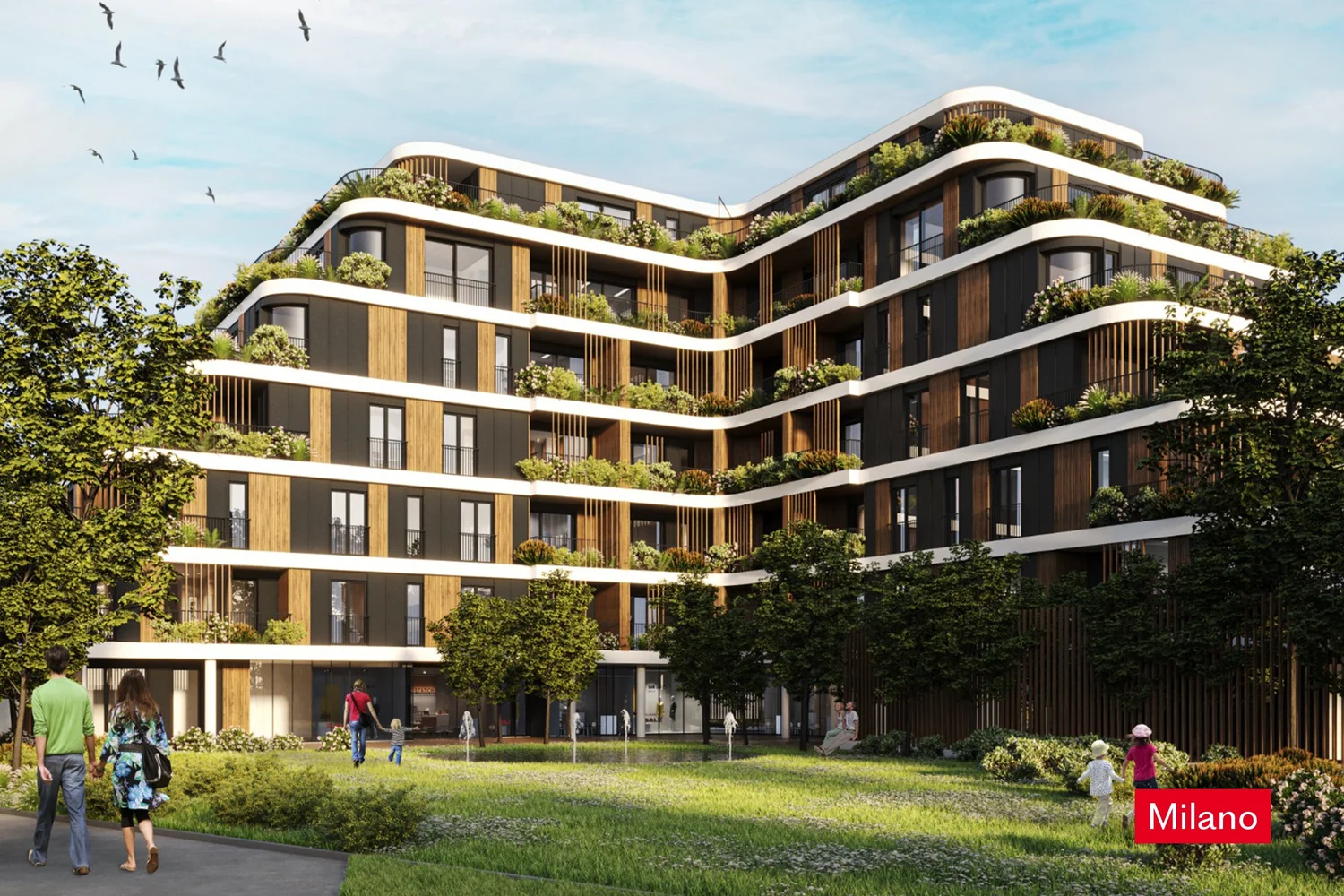
Non-Resident Mortgage Italy: 2026 Foreign Buyer Guide
Non-residents can obtain an Italian mortgage (mutuo ipotecario) from major banks, but loan-to-value ratios typically cap at 50-60% for buyers earning income abroad. You need a codice fiscale, two to three years of verified foreign income, a bank-approved property valuation, and six to ten weeks for approval before the notaio can register the loan at closing.
Can Non-Residents Get a Mortgage in Italy?
Yes. Italian law sets no blanket restriction on lending to non-residents, and mutuo ipotecario products are marketed directly at foreign buyers. The binding constraint is underwriting rather than eligibility: banks discount income earned abroad and cap most non-resident files near 55% loan-to-value, against 80% for a comparable resident borrower.
Roughly 46% of Italian property purchases involve mortgage financing according to Bank of Italy household finance surveys. Foreign buyers are a growing share of that volume, concentrated in Tuscany, Lombardy, and Puglia. Banks assess each file individually rather than applying a single nationality rule, though EU citizens generally face shorter documentation paths than buyers from countries without bilateral reciprocity agreements.
Across MORE Group buyer files, a three-point checklist decides whether an application is worth starting before anyone pays for sworn translations:
- Income abroad that keeps total debt service under 30-35% of net monthly income
- Collateral the bank accepts, which rules out most agricultural buildings and any property with cadastral non-conformity
- A codice fiscale issued before the application, because a missing tax ID freezes the file at intake for 4 to 6 weeks
If you hold Italian residency or pay tax in Italy, different products apply with higher LTV ceilings. This guide covers buyers who live abroad, earn income outside Italy, and want euro-denominated financing secured against Italian real estate.
What LTV Can Foreign Buyers Expect in 2026?
Foreign buyers with income earned entirely abroad typically receive 50-60% loan-to-value. On a €400,000 apartment that means €160,000 to €200,000 of cash equity plus transaction costs, which add another 10-15% on top of the purchase price. EU passport holders normally sit at the upper end of that band.
| Buyer profile | Typical LTV | Notes |
|---|---|---|
| Non-EU, income abroad | 50-55% | Stricter income verification, possible currency haircut |
| EU citizen, income abroad | 55-60% | Simpler cross-border documentation within SEPA |
| Non-resident with Italian employment | 60-70% | Payslip and CUD from Italian employer |
| Italian tax resident | 70-80% | Standard domestic underwriting |
| Prima casa resident buyer | up to 80% | Primary residence, income in Italy |
| Cash buyer (no mortgage) | 100% equity | Fastest closing, strongest negotiation position |
Three separate caps apply to every file, and the tightest one decides the loan:
- Loan-to-value: 50-60% for most non-resident applicants
- Loan-to-income: total monthly debt service held under 30-35% of net provable income
- Valuation: the perizia figure, not the agreed price, sets the lending base
LTV is calculated on the lower of purchase price or bank valuation. If you agree €500,000 but the perizia values the property at €460,000, the bank lends against €460,000. That gap catches buyers who overpay in competitive markets like Milan Navigli or Florence centro storico.
Buyer scenario: a couple with €120,000 of combined annual income might support €350,000 to €400,000 of borrowing on income grounds, which becomes irrelevant once a 55% cap on a €500,000 target limits the loan to €275,000 and pushes the cash requirement to €225,000 plus costs.
What Is a Mutuo Ipotecario and How Does It Work?
A mutuo ipotecario is a long-term loan secured by a registered mortgage (ipoteca) on the property, giving the bank first claim if you default. Terms run 15 to 25 years for most foreign buyers, and the ipoteca is registered at the Conservatoria dei Registri Immobiliari during the same rogito session that transfers ownership.
| Product parameter | Standard for non-residents | Why it matters |
|---|---|---|
| Term | 15 to 25 years, 10 to 30 available | Shorter terms raise the monthly payment, not the rate |
| Currency | Euro only | Income in USD, GBP, or CHF carries exchange exposure |
| Repayment | Monthly direct debit from an Italian IBAN | Local account needed before disbursement |
| Security | Ipoteca registered at 150-200% of loan value | Standard Italian practice, not a red flag |
| Early repayment | 0-2% penalty, often waived on primary homes | Confirm in the offer, not at the rogito table |
Three practical consequences follow from the ipoteca itself:
- Loan and purchase complete in one notary session, so a financing delay moves the closing date
- Selling before repayment requires a cancellazione ipoteca, which adds 2 to 4 weeks to a future sale
- The bank appoints the surveyor who values the collateral, and you pay for it
Rate structure is the other half of the product decision, and the fixed versus variable section below sets out 2026 pricing for both.
What Documents Do Non-Residents Need for an Italian Mortgage?
Italian banks request 8 to 10 document categories from foreign buyers because overseas income cannot be checked against domestic tax databases. Assemble the file before you make an offer: incomplete paperwork is the most common cause of closing delays, and a single missing sworn translation typically costs 4 to 6 weeks.
| Document category | What banks require | Format notes |
|---|---|---|
| Identity | Valid passport, codice fiscale certificate | Certified copy; codice fiscale mandatory |
| Income proof | 2-3 years personal tax returns | Sworn Italian translation, apostille on some jurisdictions |
| Employment | Permanent contract or employer letter | Must state salary, role, start date, no termination clause |
| Self-employed | Business accounts, accountant letter, corporate tax returns | Additional scrutiny; LTV may drop 5-10 points |
| Bank statements | 6-12 months from salary account | Show consistent deposits matching declared income |
| Assets | Investment statements, other property deeds | Demonstrates net worth beyond income |
| Property | Preliminary sale contract, listing details, perizia | Bank orders its own valuation after application |
| Insurance | Life insurance assignment to bank | Often mandatory for LTV above 50% |
| Translations | All foreign documents | Traduzione giurata by certified Italian translator |
Collect the file in this order, because each item gates the next:
- Codice fiscale, which every other document references
- Tax returns and bank statements covering the same 2 to 3 year window
- Employer or accountant letters explaining any income variation
- Sworn translations, ordered once the set is complete and final
Non-EU buyers from countries without reciprocity may need additional MAECI clearance, the same check the notaio performs at rogito. The bank risk department runs it in parallel, so confirm your status early using our guide to buying property in Italy as a foreigner.
One red flag stops files at intake more often than any other: tax returns that do not reconcile with the deposits on the bank statements for the same months. Reconcile the two yourself before submission and attach a one-page explanation of bonuses, dividends, or rental income that arrive outside payroll.
Self-employed applicants face tougher scrutiny. Banks want 3 years of accounts, an accountant certificate confirming average net income, and evidence the business continues. Freelancers and remote workers with variable income should expect LTV at the bottom of the 50-60% range.
Why Is the Codice Fiscale Mandatory Before You Apply?
The codice fiscale is a 16-character Italian tax ID that banks require to open a mortgage file, notaries require at rogito, and the land registry requires to record ownership. Foreign buyers who apply without one stall at intake, so obtain it 4 to 6 weeks before submitting any loan application.
| Route | Processing time | Cost | Best for |
|---|---|---|---|
| Italian consulate abroad | 1 to 4 weeks | Free | Buyers planning from home |
| Agenzia delle Entrate in person | Same day | Free | Buyers already travelling in Italy |
| Power of attorney to an Italian lawyer | 3 to 10 days | €150-€400 | Remote buyers on a deadline |
Banks also require an Italian IBAN for monthly payments. Non-resident accounts at Intesa Sanpaolo, UniCredit, or ING Italy need a passport and codice fiscale, and some lenders bundle account opening with the mortgage application. Direct debit (addebito diretto) from that account is the standard repayment method.
Two administrative details block more of our clients than any legal question:
- A codice fiscale whose spelling does not match the passport character for character
- An Italian IBAN opened after the delibera, which delays disbursement past the agreed rogito date
Our dedicated guide on codice fiscale for Italy property covers consulate forms and in-person appointments step by step.
How Much Do Mortgage-Related Costs Add to Your Purchase?
Mortgage financing adds €4,000 to €8,000 for foreign buyers on a €400,000 purchase with a €220,000 loan, separate from purchase taxes. The arrangement fee alone is 0.5-1.0% of the loan, and the bank valuation, notary registration of the ipoteca, and mandatory life cover each carry their own line at closing.
| Cost item | Typical range | Who pays | When due |
|---|---|---|---|
| Bank arrangement fee (istruttoria) | 0.5-1.0% of loan amount | Buyer | At approval or first disbursement |
| Property valuation (perizia) | €300-€800 | Buyer | During underwriting |
| Notary mortgage registration | €800-€2,500 | Buyer | At rogito |
| Life insurance premium | €200-€600/year | Buyer | Annual, sometimes capitalised |
| Mortgage broker fee (if used) | 0.5-1.0% of loan | Buyer | At closing |
| Early repayment penalty | 0-2% of outstanding balance | Buyer | Only if you repay early |
These sit on top of standard purchase costs covered in our cost of buying property in Italy guide: registration tax at 2% or 9%, notary fees at 1-2.5%, agency commission, and surveyor charges.
The perizia deserves the most attention, because a valuation below the agreed price forces you to raise the deposit or renegotiate. Three red flag conditions regularly produce a low figure:
- Renovated trulli and masserie still classified in agricultural cadastral categories
- Centro storico apartments where the floor plan does not match the visura catastale
- Off-market deals priced above recent comparable sales in the same comune
The notaio registers your ownership and the bank ipoteca in one rogito session. Notary fees scale with property value and complexity, and the mortgage registration component alone adds €800 to €2,500 depending on loan size and region.
Fixed vs Variable Rates: What Makes Sense in 2026?
Fixed rates near 3.2-3.8% are the predictable option after the ECB cutting cycle that began in 2024. Variable Euribor-linked pricing near 3.0-3.5% costs less today but reintroduces the volatility foreign buyers met when Euribor passed 3.5% in 2023. The spread between the two is roughly 30 basis points.
| Rate type | Current range (non-resident) | Best for | Main risk |
|---|---|---|---|
| Fixed 15-20 year | 3.2-3.8% | Long hold, rental income budgeting | Higher initial rate than variable |
| Variable Euribor + spread | 3.0-3.5% | Short hold, rate decline expectation | Payment rises if Euribor climbs |
| Fixed 10 year then variable | 3.3-3.9% initial | Medium hold with partial certainty | Rate shock when the fixed period ends |
| Capped variable | 3.4-4.0% | Balance of cost and protection | Cap premium widens the spread |
Three decision rules cover most foreign-buyer files:
- Holding beyond 10 years with rental income to budget: take the fixed rate
- Selling or refinancing within 5 years: variable usually wins on total interest
- Borrowing above 55% LTV with tight income headroom: cap the variable rate or fix it
Non-resident landlords should model net rental yield after mortgage payments rather than gross yield. A property returning 6% gross with a 3.5% loan at 60% LTV leaves a thin margin once IMU, management, and maintenance are paid. Our Italy property investment guide carries regional yield data for those projections.
Insider tip from our Milan and Tuscany files: apply to two banks in parallel rather than one after the other. Intesa Sanpaolo and UniCredit foreign desks use different income verification standards, and a refusal from one does not predict the other. A US employee earning $180,000 might receive 60% LTV from UniCredit and 50% from a regional bank without dedicated international underwriting. Parallel applications cost an extra €600 to €800 in duplicate perizia fees and routinely save four to six weeks.
Which Italian Banks Lend to Non-Residents?
Intesa Sanpaolo and UniCredit are the two lenders that handle most non-resident files, both through international desks that accept applications in English. Regional banks such as Banco BPM and BPER Banca lend to foreign buyers selectively, usually EU citizens buying in the bank home region, with minimum loans from €100,000.
| Lender | Typical LTV | Minimum loan | Strongest regions | English-speaking desk |
|---|---|---|---|---|
| Intesa Sanpaolo | 50-60% | €100,000 | Lombardy, Tuscany, Liguria | Yes, Ufficio Estero |
| UniCredit | 55-60% | €150,000 | Milan, Lake Como, Veneto | Yes, dedicated advisors |
| Banco BPM | 50-55% | €80,000 | Lombardy, Piedmont | Limited |
| BPER Banca | 50-55% | €80,000 | Emilia-Romagna, Sardinia | Limited |
| Private banking (Mediobanca and peers) | 50-70% against securities | €1,000,000 purchase | National | Yes |
Two practical rules apply when you approach them:
- Contact the international desk directly, since branch staff in small towns often decline files that central underwriting would approve
- Ask for the LTV band and rate in writing at pre-qualification, before paying any perizia fee
One red flag to watch at branch level: an LTV quoted verbally before anyone has seen translated income documents. That number carries no weight with central underwriting and has cost buyers 6 to 8 weeks when the written offer came back 10 points lower.
Buyers purchasing above €1 million through a private banking relationship can also borrow against a securities portfolio instead of the property, which removes the perizia from the timeline entirely.
What Are the Main Rejection Reasons and How Do You Avoid Them?
Italian banks decline applications from foreign buyers for a short list of predictable reasons, and most are fixable before submission. Documentation gaps and valuations below the agreed price cause the majority of refusals, followed by debt-to-income ratios above the 35% ceiling and property types that banks will not accept as collateral.
| Refusal reason | What the bank sees | Fix |
|---|---|---|
| Income gaps | Returns not matching statement deposits | Employer letter, matching 2-3 year window |
| Low valuation | Perizia 5-10% under price | Financing clause, larger deposit |
| No codice fiscale | Missing tax ID | Obtain 4 to 6 weeks before any offer |
| Debt above 35% | Home-country loans counted in full | Repay, then reapply |
| Non-standard property | Agricultural category or cadastral gaps | Due diligence first |
| Currency risk | Volatile earnings currency | 3 years of history, or lower LTV |
| Age at last instalment | Loan past age 75-80 | Shorter term or co-borrower |
A refusal is rarely final, and the reason letter matters more than the decision itself. Valuation shortfalls are lender-specific: a perizia of €460,000 against a €500,000 price at one bank often returns within 2% at another, because surveyors apply different comparable sets inside the same comune. Income refusals travel with you, so a debt service ratio above 35% needs genuine repayment of home-country debt rather than a second submission the following month. Where the property itself is the obstacle, agricultural cadastral categories and unregistered extensions block financing at every Italian bank until the seller regularises them. Budget 4 to 8 weeks for a second application, keep the financing clause in the compromesso alive while the first refusal is under review, and ask the declining bank for its written grounds before you spend money on new translations.
One red flag deserves separate mention: a seller who will not release the visura catastale before the compromesso. Without it neither your surveyor nor the bank can confirm that the registered floor plan matches the building, and the perizia will either stall or come back short.
If a refusal arrives, three moves are available in order of cost:
- Reapply to a second lender with the same file, adding the reason letter and any missing document
- Lower the requested LTV by 5 to 10 points, which resolves most valuation and income refusals
- Add a guarantor or switch to one of the alternatives below
Ask for those written reasons every time. With them you can reapply elsewhere, raise the deposit to lower LTV, add a guarantor, or move to one of the alternatives below.
What Are the Alternatives to an Italian Bank Mortgage?
Roughly 50% of foreign buyers in Tuscany and Puglia complete without Italian financing, and three routes cover most of those deals: cash, borrowing at home against an existing asset, and a Lombard loan secured on an investment portfolio. The tradeoff is always interest cost against speed, currency exposure, and capital left invested.
| Route | Typical cost | Time to funds | Fits when |
|---|---|---|---|
| Full cash purchase | 0% interest, full capital tied up | 6 to 8 weeks to rogito | Price negotiation and speed matter most |
| Home-country remortgage | Domestic mortgage rate, often below 3.5% | 4 to 8 weeks | You hold equity in a home abroad |
| Lombard loan on securities | Euribor plus 0.8-1.5% | 1 to 2 weeks | Portfolio above €500,000 you prefer not to sell |
| Developer payment plan | Priced into the purchase, 24 to 36 months | Immediate | New build only, after legal review |
Each route carries a different failure mode:
- Cash: capital concentration and no leverage if prices rise
- Home-country remortgage: your main residence secures an Italian purchase
- Lombard loan: a portfolio fall can trigger a margin call mid-purchase
- Developer plan: unregulated credit exposure to the builder
Cash removes bank fees, perizia risk, and six to ten weeks of underwriting, and it strengthens negotiation on both price and closing date. The cost is capital concentration and lost leverage if Italian property appreciates.
Home-country borrowing keeps income verification domestic and often prices below Italian non-resident products. Consult a cross-border tax adviser first, because the structure affects inheritance tax, currency reporting, and wealth tax in both countries.
Buyer scenario: a Swiss buyer targeting a €600,000 Lake Como apartment compared a 55% Italian mortgage at 3.6% against a Lombard line at 3.1% on a €900,000 portfolio. The Lombard route funded in 9 days, avoided €4,200 of Italian bank and perizia fees, and left the property free of an ipoteca for a possible resale in year four.
A Lombard loan (credito Lombard) lends 50-70% of portfolio value with no property appraisal and no ipoteca on the Italian asset, which simplifies a future sale. Developer payment plans are not regulated mortgages and carry developer credit risk, so treat them as a last resort.
How Does the Mortgage Fit Into the Italian Purchase Timeline?
Mortgage approval has to complete before the rogito, which stretches a financed purchase for foreign buyers to 3 to 4 months against 6 to 8 weeks in cash. The bank issues its binding offer (delibera) 6 to 10 weeks after a complete application, and the perizia typically consumes 2 to 4 weeks inside that window.
| Step | Who acts | Typical duration |
|---|---|---|
| Codice fiscale and Italian account | Buyer | 1 to 4 weeks |
| Written offer with financing clause | Buyer and agent | Days |
| Compromesso and 10-20% deposit | Buyer, seller, notaio | 1 to 2 weeks after offer |
| Full mortgage application | Buyer | 1 week once documents are translated |
| Perizia and underwriting | Bank | 6 to 10 weeks |
| Due diligence checks | Lawyer, geometra | Runs in parallel |
| Rogito with ipoteca registration | Notaio | 1 day |
| Loan disbursement to seller | Bank | Same session |
Buyer scenario from a recent Puglia file shows how the weeks stack up. A UK buyer agreed €340,000 on a Ostuni villa in early March, signed the compromesso three weeks later with a 15% deposit and a financing clause, and submitted the application on 2 April with translations already prepared. The bank ordered the perizia in the second week of April, received it on 6 May at €330,000, and issued the delibera on 21 May at 55% of the valuation, which capped the loan at €181,500 instead of the €187,000 requested. The buyer covered the €5,500 difference from reserves rather than renegotiating, and the rogito completed on 18 June. Total elapsed time from accepted offer to keys was 15 weeks, with the valuation gap absorbing the only unplanned cash call.
Three tasks run in parallel with underwriting rather than after it:
- Legal due diligence and the geometra survey
- Sworn translations of any document the bank requests mid-review
- Currency transfers, since the deposit and the balance move on fixed dates
Never sign a compromesso without the financing clause (clausola sospensiva per mutuo) unless you can complete in cash. With the clause, a formal refusal (diniego) returns your deposit; without it, the deposit is at risk.
How Should You Prepare Your Application File?
Strong applications share four traits: complete documentation submitted in one batch, income that clearly supports the requested loan, a property that passes perizia without cadastral surprises, and early contact with the international desk. Pre-qualification is free for foreign buyers and typically returns a written LTV estimate within 5 days, before you commit to any fees.
Work through this checklist before you submit:
- Ask for a pre-qualification on nationality, income range, target region, and price, then get the LTV estimate in writing
- Order sworn translations only after the document set is final, so nothing is translated twice
- Keep digital and physical copies of every translated file, because banks do lose documents and a 48-hour resend keeps the timetable
- Engage a cross-border mortgage broker if you are self-employed, earn in multiple currencies, or buy above €1 million, where fees of 0.5-1.0% usually pay for themselves
| Complication | What to prepare | Typical extra time |
|---|---|---|
| Self-employment | 3 years of accounts plus accountant certificate | 2 to 3 weeks |
| Income in two currencies | 12 months of statements per currency | 1 to 2 weeks |
| Purchase above €1 million | Asset schedule and private banking introduction | 2 to 4 weeks |
| Property under renovation | Geometra report and permit copies | 3 to 6 weeks |
Applicants who resubmit a lost document within two days stay on schedule; those who reorder translations lose 4 to 6 weeks. Read the full step-by-step buying guide alongside this page, since financing is one stage in a process that also covers reciprocity checks, notary selection, and tax registration.
Which Related Guides Should You Read Next?
Financing is one stage of an Italian purchase, and the guides below cover the stages that decide whether foreign buyers reach the rogito on schedule. Reciprocity rules, tax ID setup, the full 10-15% closing-cost stack, and pre-purchase due diligence each carry requirements that banks verify independently before releasing funds.
Read them against your own timeline:
- Before you make an offer: reciprocity by nationality and the due diligence checks a perizia will repeat
- Before you apply: codice fiscale, Italian account, and the cash needed beyond a 40-50% deposit
- Before you sign: the full purchase sequence, so the delibera lands ahead of the rogito date
Treat the table as a reading checklist before you submit the application:
| Read next | What it answers | Why your lender cares |
|---|---|---|
| Buy property in Italy as a foreigner | Reciprocity by nationality | The bank runs the same check as the notaio |
| Codice fiscale for Italy property | How to obtain the tax ID | No mortgage file opens without it |
| Cost of buying property in Italy | The full 10-15% cost stack | Sets the cash needed beside a 40-50% deposit |
| Due diligence Italy property | Cadastral and planning checks | A failed check sinks the perizia |
| How to buy Italy property step by step | The end-to-end purchase sequence | Places the delibera in the right week |
Frequently Asked Questions
Yes. Italian banks offer mutuo ipotecario loans to non-residents, typically at 50-60% loan-to-value for buyers with foreign income. EU citizens often receive slightly higher LTV than non-EU applicants.
Non-residents with income earned abroad usually qualify for 50-60% LTV. EU citizens may reach 70% in some cases. Italian residents can access up to 80-90% depending on income and property type.
Yes. Every mortgage application requires a valid Italian codice fiscale. Banks, notaries, and the land registry all use this tax ID. Apply through an Italian consulate or Agenzia delle Entrate before submitting your loan file.
Banks typically require two to three years of tax returns, six to twelve months of bank statements, an employment contract or business accounts, and sworn translations into Italian. Self-employed applicants need additional accountant certificates.
Expect six to ten weeks from complete application to approval, plus two to four weeks for property valuation. Total timeline from offer to rogito with financing is usually three to four months.
Fixed-rate mortgages for non-residents start around 3.2-3.8% depending on LTV and term. Variable rates track Euribor plus a bank spread, currently landing near 3.0-3.5% for well-qualified applicants.
Intesa Sanpaolo and UniCredit operate dedicated international desks. Banco BPM, BPER Banca, and Mediobanca also accept non-resident applications. Requirements and LTV vary by branch and nationality.
Common reasons include insufficient foreign income documentation, property valuation below purchase price, missing codice fiscale, high debt-to-income ratio, non-standard property types like agricultural masserie, and incomplete reciprocity checks for certain nationalities.
Ready to finance your Italian property purchase? Tell us your budget, target region, and nationality, we match you with mortgage-ready listings and connect you with banks experienced in non-resident files. Get a curated shortlist of Italian investment properties.
Get an Italy property shortlist
Tell us your budget and region (Tuscany, Lake Como, Puglia, Milan, Sardinia). We reply within one business day with options matched to your goals.