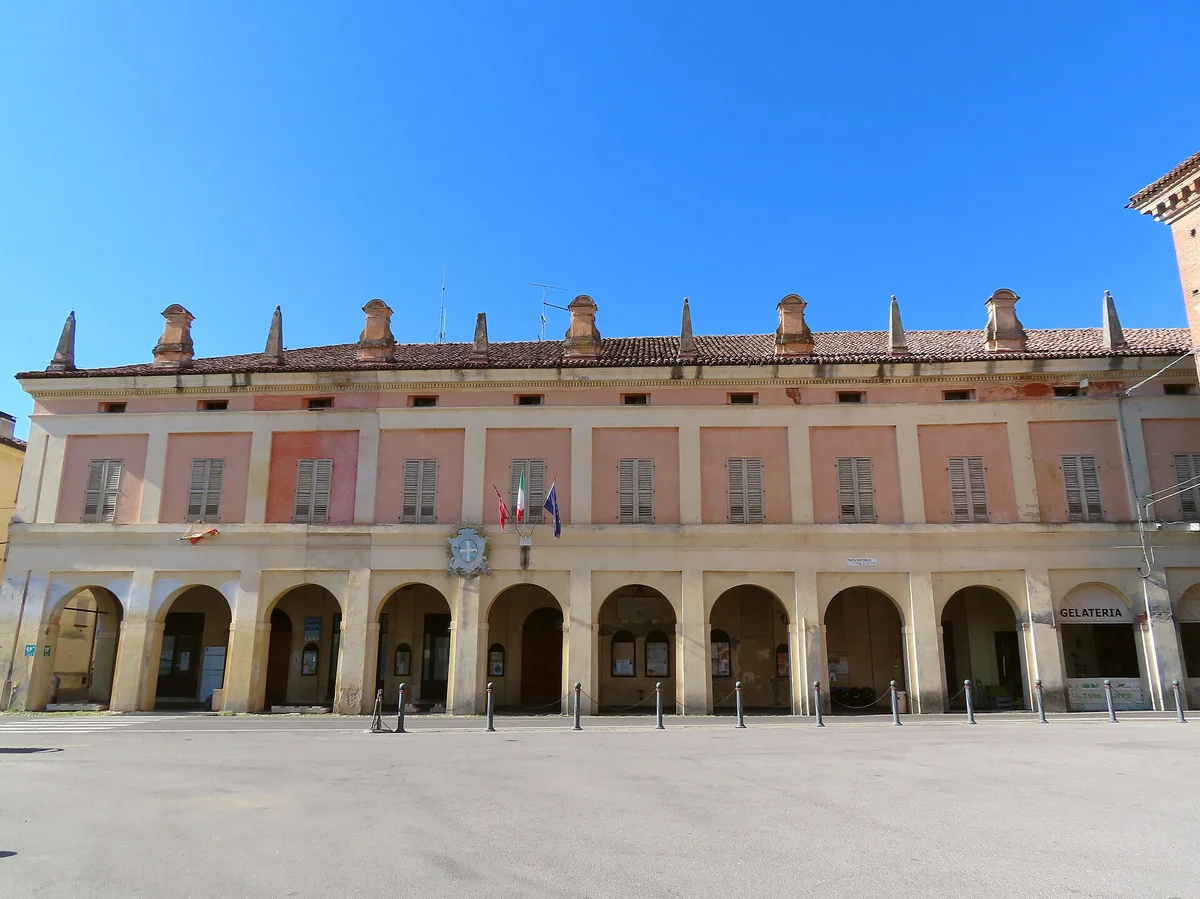
Quick answer: Salva Casa is the 2024 reform that made a large share of Italy’s imperfect resale stock legally fixable: deviations within 2-6% of the permitted project (the percentage rises as the unit shrinks) are now lawful automatically for works finished before 24 May 2024, and mid-sized irregularities regularise under a lightened conformity test instead of the old, often impossible one. For a buyer this converts many «walk away» files into «price the fix» files. This guide explains the tolerance scale, the new sanatoria, stato legittimo, mini-flat habitability, and what stays unfixable, with the wider irregularity map in the abusi edilizi guide.
What is the Salvacasa (Salva Casa) decree and why does it matter to buyers?
Salva Casa is decree-law 69/2024, converted into law 105/2024 and in force since 28 July 2024, and its target is the gap between what Italian buildings actually are and what their filed plans say: a gap that affects a large share of the resale market and that used to stall financing, deeds and sales for months.
The reform matters to buyers through three concrete channels:
- Fewer blocked deals: deviations inside the new tolerances are lawful without any procedure, so the cadastral-conformity checks that banks and notaries run stop failing on trivia.
- Priceable fixes: mid-band irregularities now regularise at a predictable fee, which converts a legal risk into a number you can negotiate off the price.
- Cleaner title chains: stato legittimo anchored to the last comprehensive permit shortens the documentary archaeology every purchase used to require.
| Element | Before Salva Casa | After |
|---|---|---|
| Tolerance on works | flat 2% | 2-6% sliding by unit size (pre-24.05.2024 works) |
| Partial-deviation sanatoria | double conformity, then and now | today’s planning rules + build-time building rules |
| Stato legittimo | full historical chain | last comprehensive title + tolerances |
| Micro-units | 28 sqm minimum | 20 sqm (1 person) with certified requirements |
How does the graduated tolerance scale work?
The scale is inverse to size, because a 10 cm deviation means more on a studio than on a villa: works completed before 24 May 2024 are automatically lawful within 2% of the permitted parameters for units above 500 sqm, 3% between 300 and 500, 4% between 100 and 300, 5% below 100, and 6% below 60 sqm.
| Useful surface | Tolerance | On a typical wall of 5 m |
|---|---|---|
| Over 500 sqm | 2% | 10 cm |
| 300-500 sqm | 3% | 15 cm |
| 100-300 sqm | 4% | 20 cm |
| Under 100 sqm | 5% | 25 cm |
| Under 60 sqm | 6% | 30 cm |
Three reading rules keep the scale honest in a purchase file:
- Date matters: the enlarged percentages apply to works finished before 24 May 2024; anything built afterwards lives under the ordinary 2%.
- Within tolerance means no procedure: nothing is filed, nothing is paid; the geometra records the measurement and the deviation legally does not exist.
- Tolerance covers execution, not extra volume: a slightly shifted wall qualifies; an added room never does.
Worked Rome example: a 78 sqm Prati apartment whose living-room wall sits 18 cm off the 1968 plans. Under the old flat 2% the deviation (roughly 3.5% on that dimension) needed a costly regularisation; under the 5% band for sub-100 sqm units it is simply lawful, and a sale that would have stalled in 2023 closes on the ordinary calendar.
What changed in the sanatoria rules (article 36-bis)?
Article 36-bis is the reform’s engine: partial difformità now regularise against today’s planning rules combined with only the building rules of the construction era, at an oblazione commonly between €1,000 and €10,000 at apartment scale. The old test, double conformity with the rules of both eras, left perhaps 50% of honest deviations in legal limbo, satisfying neither request nor demolition order.
The procedure a buyer will actually see, step by step:
- Survey: a geometra measures reality against the last title and classifies each deviation (tolerance, partial, total).
- Filing: for partial items, a request under art. 36-bis with technical attestations.
- Oblazione: a fee scaled to the works, commonly €1,000-10,000 at apartment scale.
- Silence rules: the comune’s decision windows are defined, and conditional requests (works to align parts of the property) are possible.
- Cadastral update: new plans filed so the visura and planimetria finally match the walls.
Scale explains why the article matters beyond legal technique: Italy’s building stock counts roughly 35 million homes, the median urban apartment predates 1975, and practitioner estimates have long put stock with at least one paper deviation at 50% or more in the big cities. Every one of those files used to meet the same wall: double conformity failed, demolition of a 20 cm wall shift was absurd, and the sale simply carried the defect forward to the next notary. The lightened test converts that standing inventory into work a technician can actually finish, which is why the months after 28 July 2024 produced a visible queue of art. 36-bis filings at urban comuni and why well-prepared resale files in 2025-2026 increasingly arrive at the compromesso table already cleaned by the seller’s own technician.
The reform also regularised two everyday categories outright: internal changes executed during construction that never touched structure, and the glazed balcony structures (VEPA) and awnings that half of Italy had installed without asking. Heritage-bound buildings keep their own gate: where a vincolo applies, the Soprintendenza’s opinion still decides, as the heritage guide details.
Insider tip: ask the seller’s technician for the computo of the oblazione in writing before the compromesso, not after. The fee scales with the works and the comune, and a written number converts «there is a small irregularity» into a line you can deduct from the price with no argument at the notary’s table.
What does the new stato legittimo rule simplify?
Stato legittimo is the property’s lawful paper state, and since the reform it anchors to the last permit that authorised the whole building or unit, with automatic tolerances layered on top: the buyer’s technician no longer reconstructs an unbroken chain of filings back to the first licence, a task that on pre-war Rome stock could consume 6-8 weeks of archive requests.
What this means operationally in a purchase:
| Task | Old practice | Current practice |
|---|---|---|
| Title research | every permit since construction | last comprehensive title |
| Deviation measurement | against the oldest plans | against that title, tolerances applied |
| Bank conformity check | frequent failures on ancient trivia | passes where reality fits the anchored state |
| Time in due diligence | 4-8 weeks on older stock | commonly 2-4 |
The simplification has a boundary worth respecting: the anchor works only where a comprehensive title exists. Buildings that never had one (rural stock regularised through condoni, pre-1942 urban houses with no surviving file) still require the older, slower reconstruction, and the due diligence guide’s full documentary checklist stays the standard there.
For sellers the same rule is an argument for preparing the file before listing, a point the selling guide makes from the other side of the table: a pre-verified stato legittimo is now cheap to produce and shortens every subsequent step.
Which problems does Salva Casa not fix?
The reform cleans deviations, not abuses, and the boundary is worth €100,000-scale money at negotiation: whole structures without permits, added floors and volumes, works in absolute-protection zones and unauthorised interventions on heritage-bound stock all stay outside its reach, under the ordinary regime of demolition orders and acquisition to the comune that has governed total abusivismo since 1985.
The buyer’s exclusion list, explicitly:
- Extra volume: an added room, a closed loggia beyond VEPA limits, a raised roof: never tolerance, rarely sanabile.
- Total difformità and no-permit buildings: the classic beach-house abuse; only the historic condoni (1985, 1994, 2003) ever covered these, and no new condono exists.
- Absolute-protection zones: coastal bands, riverbeds, landslide red zones: planning conformity today is impossible by definition.
- Heritage vincoli: the Soprintendenza gate stands; Salva Casa expressly defers to it.
- Structural works without engineering titles: seismic rules, covered in the seismic zones guide, have their own unforgiving paper trail.
Being described as an amnesty is the commonest thing said wrongly about this decree, and it sits alongside six other recurring errors in what English guides get wrong about Italian property. Condono history clarifies what Salva Casa deliberately is not: Italy ran three building amnesties, in 1985, 1994 and 2003, which regularised total abuses against payment, and every government since has faced pressure for a fourth. Salva Casa refused that road: its own preamble frames it as a simplification of minor deviations, its tolerances top out at 6% of a permitted parameter, and its sanatoria reaches only partial difformità. A buyer offered a no-permit seaside villa «because the new law fixes everything» is being sold a 20-year-old rumour: the asset’s value must be computed on the assumption of 0 future amnesties, which for unfixable structures means land value minus demolition cost, a number routinely 40-60% below the optimistic asking price such properties still carry on the portals.
Pricing discipline follows from the list: a deviation Salva Casa reaches is a repair bill (fee plus technician plus weeks), while an abuse it does not reach is a value question (what is the property worth if this can never be regularised), and the two must never be blended in negotiation. The abusi edilizi guide maps the full severity ladder with the walk-away thresholds.
How do the mini-flat habitability rules work?
Salva Casa lowered the habitability floor to 20 sqm for single-occupant units and 28 sqm for two, where a technician certifies the hygiene, ventilation and height requirements: a change that legalised a real slice of city-centre micro-stock which previously rented and sold in a grey zone, discounted for its paper status rather than its walls.
The requirements that must be certified alongside the size:
- Minimum internal height per the applicable norms.
- Ventilation and lighting ratios, with certified alternatives admitted where windows fall short.
- A professional’s attestation filed with the comune (the same SCA machinery described in the agibilità guide).
Investor arithmetic on a Rome example makes the stakes concrete: a 24 sqm Testaccio studio that traded at a 15-20% paper-status discount before the reform can now carry full habitability, and with it bank financing and a legal short-let registration. On a €150,000 asset the reclassification is worth €20,000-30,000 of value, against €2,000-4,000 of certification costs. Stock like this is thin and the certification is genuinely conditional, so the play rewards buyers who verify requirements before paying the post-reform price rather than after.
What should a buyer do differently since Salva Casa?
The reform rewrites the buyer’s playbook in one direction: measure first, negotiate second, because the legal status of any deviation now depends on numbers (percentages, dates, sqm bands) that a €300-500 pre-offer survey establishes objectively. The sequence below folds the reform into the standard purchase path.
- Commission the measurement survey early: the geometra classifies every deviation into tolerance / sanabile / abuse using the new bands and the works’ dates.
- Price by class: tolerance items cost zero; sanabile items cost the written oblazione plus fees, deducted from the offer; abuse items reprice the asset or end the negotiation.
- Condition the offer: a conformity clause requiring the seller to deliver regularised paper (or fund it) makes the classification enforceable, per the offer guide’s condition patterns.
- Verify the anchor title: confirm which permit constitutes the stato legittimo and that the bank’s surveyor agrees.
- Never buy a promise: «Salva Casa will fix it» is true only per class and per date; the decree is generous, not universal.
Timing arithmetic rewards the measured approach: a pre-offer survey costs €300-500 and 1-2 weeks, an art. 36-bis filing runs €2,500-14,000 all-in (oblazione plus technician) and 1-3 months, while an unconditioned purchase that discovers the same deviation afterwards pays the identical regularisation bill plus the notary’s rescheduling delay, the lending bank’s conformity re-check, and 100% of the negotiating leverage already spent at acceptance. On a €400,000 Rome purchase the difference between the two sequences is routinely a €10,000-20,000 swing in who funds the fix. The decree changed the cost of cleaning paper; it did not change the much older market rule that whoever discovers the defect first is the party who gets to price it into the deal.
Buyer scenarios distribute the reform’s value unevenly and predictably: the urban resale buyer gains the most (measurement, tolerance, done), the rural buyer gains a usable sanatoria path where before there was limbo, and the buyer of anything with added volume gains nothing at all, which is precisely the information.
Sellers reading the same list in reverse will recognise the strategy that now dominates well-run sales: regularise before listing, attach the file to the viewing documentation, and collect the price premium that clean paper has always earned in Italy, only now at a fee most owners can actually afford. Eligibility and the wider purchase machinery stay where they always were, in the foreign buyer hub, and works that do need a permit are priced in the Italy property renovation costs guide.
Frequently Asked Questions
A 2024 reform (decree-law 69/2024, converted into law 105/2024 and in force since 28 July 2024) that legalises small construction deviations outright and makes mid-sized ones easier to regularise. Its practical effect for buyers is that a large share of Italy's resale stock, where the built reality never quite matched the filed plans, can now reach a clean paper state at predictable cost.
For works completed before 24 May 2024, deviations from the permitted project are automatically lawful within a sliding scale: 2% for units over 500 sqm, 3% for 300-500 sqm, 4% for 100-300 sqm, 5% under 100 sqm, and 6% under 60 sqm. Works finished after that date fall back to the standard 2%. Within tolerance, nothing needs regularising: the deviation simply does not count as a violation.
Before the reform, regularising partial deviations required conformity with the rules in force both when the works were done and today, a test many honest buildings failed. Article 36-bis now asks partial difformità to satisfy today's planning rules and only the building rules of the time of construction, which converts many previously unfixable situations into a fee plus paperwork.
No. Whole buildings without permits, extra floors, large unpermitted extensions and works in absolute-protection zones stay outside its reach, and heritage-bound properties still need the Soprintendenza's consent. The reform cleans the enormous middle band of small and partial deviations; total abuses remain subject to demolition orders and the ordinary sanctions.
The lawful state of a property is now anchored to the last permit that authorised the whole building or unit, with tolerances folded in automatically. For buyers this simplifies the documentary chain: instead of reconstructing every filing since 1942, the geometra verifies the last comprehensive title and measures today's reality against it.
Yes, within limits: the reform allows habitability for single-occupant units from 20 sqm and two-person units from 28 sqm, where health and ventilation requirements are certified. This legalised a slice of city-centre micro-stock, in Rome and Milan especially, that previously traded in a grey zone at a discount.
Within tolerance: nothing, by definition. For sanatoria under the lightened rules, budget the oblazione (a fee scaled to the works, commonly €1,000-10,000 for apartment-level deviations), plus a geometra or architect at €1,500-4,000 for surveys, filings and updated cadastral plans. That is a repair bill, not a penalty, and it prices into the offer.
Before, at the seller's cost or with a price cut that funds it, wherever the deviation exceeds tolerance. A conformity condition in the offer makes this enforceable. Post-completion regularisation leaves you managing the file and carrying the risk of a refusal; the only common exception is within-tolerance items, which need no procedure at all.
Salvacasa is the common spelling of the Salva Casa decree: decree-law 69/2024, converted into law 105/2024 and in force since 28 July 2024. It sets automatic building tolerances of 2% to 6% by unit size for works finished before 24 May 2024 and makes partial deviations easier to regularise under article 36-bis.
Get an Italy property shortlist
Tell us your budget and region (Tuscany, Lake Como, Puglia, Milan, Sardinia). We reply within one business day with options matched to your goals.