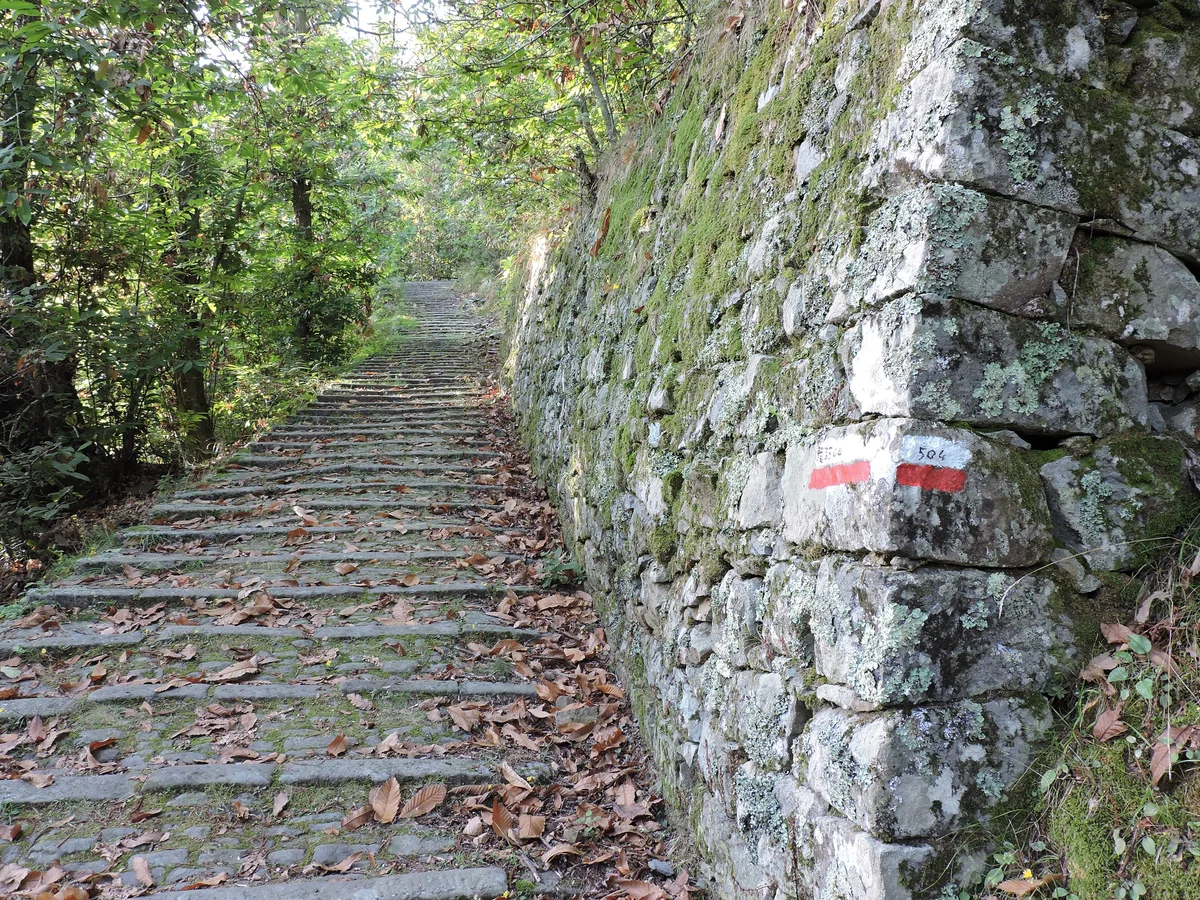
Usucapione: how possession becomes ownership in Italy
Quick answer: Article 1158 of the Italian Civil Code transfers ownership of immovable property to whoever has possessed it openly, exclusively and without permission for 20 years. The period drops to 10 years where the possessor bought in good faith from someone who turned out not to own it, and to 15 or 5 years on small rural properties. The rule applies to foreign owners exactly as it applies to Italians, and an owner who is rarely there is the one most exposed to it.
This is the quietest risk in Italian rural property and the one least covered in English. It does not appear in a survey, it does not show in the cadastre, and the seller has no obligation to raise it.
The five things a claim has to prove
Possession in Italian law is not the same as being on the land. A claim needs all five of these, and failing any one of them defeats it.
Actual possession. Physical use of the property as an owner would use it: cultivating, grazing, building, fencing, maintaining. Occasional presence is not possession.
Open and notorious. Visible to anyone who looked, including the owner. Secret use never matures into a claim, which is why the classic cases involve fields, tracks and outbuildings rather than anything hidden.
Exclusive. The possessor controls it to the exclusion of others, including the owner. Shared use by both parties does not qualify.
Without permission. This is the requirement that decides most real cases. Someone using your land because you allowed it holds it by tolerance, not by possession, and tolerance never becomes ownership however long it lasts. A written permission is the cheapest defence available and almost nobody in this position has one.
Continuous and uninterrupted for the whole period. Which brings the question of what breaks it.
What stops the clock, and what does not
Possession is interrupted where the owner retakes the property for more than 1 year, or where a formal legal act asserting ownership is served.
What does not interrupt it: visiting, noticing, complaining to the neighbour, mentioning it to the agent, or sending a letter that goes unanswered. Italian law wants an act with evidential weight, not an expression of displeasure. An owner who has objected verbally every summer for 15 years has, in evidential terms, done nothing at all.
This is the part foreign owners get wrong most often, because the informal objection feels like it counts. If you intend to stop the clock, it has to be stopped in a way that can be produced in front of a judge a decade later.
The shorter clocks
Twenty years is the general rule. Three shorter periods exist and they matter mostly to rural buyers.
| Route | Period | What it requires |
|---|---|---|
| Ordinary usucapione, article 1158 | 20 years | Possession meeting the five tests |
| Good faith with a registered title | 10 years | Buying in good faith from someone who was not the owner, under a title capable of transferring ownership, duly registered |
| Small rural property, article 1159-bis | 15 years | Rural land with buildings, in a comune classified as mountain by law |
| Small rural property in good faith | 5 years | The same, acquired in good faith from a non-owner under a registered title, counted from registration |
Article 1159-bis also reaches rural land with buildings in communes not classified as mountain, where the income falls below the limits set by special law.
Two conditions on the rural route are frequently missed. The land must be registered in the rural cadastre, and it must have been actually used for agriculture from the start of the possession relied on. A neglected olive terrace that nobody has worked for 20 years does not qualify as agricultural use simply because it is registered as rural.
Why a foreign owner is the exposed party
The clock runs on possession, not on the owner’s knowledge. That single fact makes absence the risk factor.
The pattern repeats across Italy and it is not adversarial in the way the English phrase “adverse possession” suggests. A neighbour extends cultivation across an unmarked boundary. A track across the corner of a field becomes the only sensible access to the house behind. A shed creeps three metres onto land nobody has walked in a decade. None of this begins as a land grab, and after 20 years none of that matters.
An owner who visits for two weeks in August sees the boundary twice a year, in the season when overgrowth hides it. That is the whole mechanism.
What an absent owner can reasonably do, once a year, is short enough to list. Walk the full boundary rather than the part you can see from the house, and photograph anything that has changed, with the date on the file. Keep the fencing, the wall or the marker stones in repair, because maintenance is itself evidence of exclusion. And where a neighbour is using something, put the permission in writing that season rather than the season after.
Two defences cost almost nothing. Document permission wherever a neighbour uses anything of yours, because tolerance defeats a claim outright and an undocumented arrangement is worth nothing once memories differ. And mark the boundary physically, because a maintained fence or line of stones is evidence of exclusion that a court can see.
The other direction: buying land someone else has a claim on
The risk runs both ways, and on a purchase it is the more immediate one.
Nothing in a cadastral extract shows possession. The cadastre records who is registered, not who has been farming the lower field since 2005. A visura and a planimetria will both come back clean on land that a neighbour is 6 years from acquiring.
What surfaces it is a site visit with a geometra who walks the boundaries against the plan, and direct questions asked of the seller in writing. Look for the physical signs: cultivation that stops at a line the plan does not draw, a track with wheel ruts across your parcel, a structure sited oddly relative to the boundary, fencing that does not match the mapped line.
Where something is found, the fix before completion is a written acknowledgement from the user that they occupy by permission, or a negotiated adjustment of the price and the boundary. What does not work is buying and intending to sort it out later, because the clock does not restart when the owner changes.
The wider sequence of checks is in due diligence before the compromesso, and what a surveyor actually does on the ground is in the role of the geometra.
How a claim is formally established
Possession alone produces no registrable title. However strong the facts, ownership has to be ascertained before it can be sold, mortgaged or insured.
Two routes exist.
Court judgment. A declaratory action establishing that usucapione has run. Slow and expensive, and unavoidable where the parties disagree.
Mediation. Since the 2013 reform, mediation is a compulsory precondition to litigating disputes over real rights, usucapione included. Where the parties reach agreement, article 2643 of the Civil Code expressly makes a mediation agreement that ascertains usucapione transcribable in the land registers, provided the record is signed and the signatures authenticated by an authorised public official. That transcription is what converts a factual situation into a marketable title.
The practical consequence for a buyer is simple. If a seller tells you part of the land or the access came to them by usucapione, ask to see the judgment or the transcribed mediation agreement. If neither exists, they cannot sell you a clean title to it, whatever they have been using for 30 years.
Where usucapione shows up in ordinary purchases
Three situations account for most of what foreign buyers actually meet.
Access tracks. The lane to a rural house crosses a neighbour’s land, has done for decades, and nobody has ever written it down. This is usually resolved as an easement (servitù) rather than ownership, but the same evidential logic applies, and a house without documented legal access is a house a bank will not lend against.
Boundary creep on agricultural land. The single most common case, and the reason the article 1159-bis periods exist.
Where a succession is the reason nobody has claimed the property, the rules that decide who the heirs are in the first place are in Italian inheritance law for foreign owners.
Inherited property with absent heirs. A family member who stayed and worked the land while others moved abroad. After 20 years the position between the heirs may not be what the succession documents say, and this is a live issue on the sort of inherited farmhouse that reaches the international market.
Access rights, which is the version most buyers actually meet
Ownership of a whole parcel changes hands rarely. Rights of way change hands constantly, and the same twenty-year logic governs them.
A servitù di passaggio, a right of way, can be acquired by usucapione where the crossing is exercised openly, continuously and without permission for the full period, and where the route is marked by permanent visible works: a made track, a gate, a bridge, a culvert. Italian law distinguishes here in a way that matters. A right of way that leaves no permanent trace, someone simply walking across a field, is treated as non-apparent and cannot be acquired by possession at all. It is the built track that creates the right, not the walking.
For a buyer this cuts two ways and both belong in the pre-contract questions.
Your access may be less secure than it looks. A lane that has served the house for fifty years across a neighbour’s land may rest on nothing written. If the neighbour sells, the new owner is entitled to ask what the legal basis is. A house whose access cannot be evidenced is a house most lenders will decline and most resale buyers will discount, whatever it has been like in practice.
Someone else’s access across your land may be more secure than the seller admits. The track you were told is a courtesy may already be a right, and it runs with the land rather than with the person who has been using it.
The fix at purchase is the same in both directions: establish in writing whether each access is registered as a servitù in the deeds, and where it is not, resolve it before completion rather than after. A notaio checks what is registered; nobody checks what is merely happening on the ground unless asked.
Weighing it up before you buy rural land
In favour of proceeding
- The risk is concentrated in identifiable places: boundaries, tracks, outbuildings and inherited parcels, all of which a geometra can walk in a morning
- Documented permission defeats a claim outright and costs nothing to put in writing
- On land held clean for 20 years by the seller, the same rule that threatens you protects you: their title is stronger for the possession, not weaker
- Where a claim is already settled by judgment or transcribed mediation agreement, the title is as good as any other
Against, and what it costs
- Nothing in the cadastre, the visura or the planimetria reveals possession, so a paper-only purchase cannot surface it
- The clock does not restart when ownership changes, so you inherit however many years have already run
- Absence is the risk factor and a holiday-home owner is absent by definition
- Resolving a live claim means mediation at minimum and litigation at worst, in Italian, in the local court
- A house without evidenced legal access is difficult to mortgage and slower to resell, which shows up at exit rather than at purchase
The proportionate response is not to avoid rural property. It is to treat boundaries and access as a due diligence item of the same weight as unpermitted building works, and to budget the survey that answers them. The purchase sequence that puts those checks in the right order is in buying property in Italy as a foreigner, and what restoration on rural stock actually costs is in Italian renovation costs.
Sources
Italian Civil Code articles 1158 (ordinary usucapione, 20 years), 1159 (10 years with good faith and a registered title), 1159-bis (special usucapione for small rural property, 15 years and 5 years), and 2643 number 12-bis on the transcription of mediation agreements ascertaining usucapione; Decree Law 69 of 21 June 2013, converted by Law 98 of 9 August 2013, on compulsory mediation in real rights disputes. Checked 7 September 2026.
Frequently Asked Questions
Twenty years of continuous possession under article 1158 of the Civil Code. It falls to ten years where the possessor acquired in good faith from someone who was not the owner under a registered title, and to fifteen or even five years on small rural properties in mountain communes under article 1159-bis.
Yes, if the use is open, exclusive, continuous and without your permission for the full period. Permission is the decisive point: a neighbour who crosses your land because you allowed it is not possessing it, and a written permission destroys any later claim. Tolerating use without documenting it is what creates the risk.
Considerably. The clock runs on possession, not on your awareness of it, and someone who visits twice a year sees the boundary twice a year. The classic Italian case is a neighbour who has cultivated, grazed, parked or built on a strip for decades while the owner was abroad.
Retaking possession for more than a year interrupts it, and so does a formal legal act asserting your ownership. A visit, a complaint over coffee or an unanswered letter does not. If you want the clock to stop, it has to stop in a way that can be evidenced later.
Either by a court judgment or, since 2013, by a mediation agreement between the parties. Mediation is compulsory before litigating real rights disputes, and an agreement that ascertains usucapione is transcribable in the land registers under article 2643, which is what makes the title marketable afterwards.
Yes, but only if the usucapione has been formally ascertained and transcribed. Possession alone, however long, does not produce a registrable title, and a seller who claims it without a judgment or a transcribed mediation agreement cannot give you a clean one.
Get an Italy property shortlist
Tell us your budget and region (Tuscany, Lake Como, Puglia, Milan, Sardinia). We reply within one business day with options matched to your goals.