
ARIA Ex Macello Milan Carbon-Negative Site Review 2026
ARIA Ex Macello Calvairate Milan review. 1,200 homes, carbon-negative Reinventing Cities winner, Redo SGR, IED campus, 600-bed PBSA, 2026-2027.
By Italian Estate Editorial · Updated June 18, 2026 · 11 min read
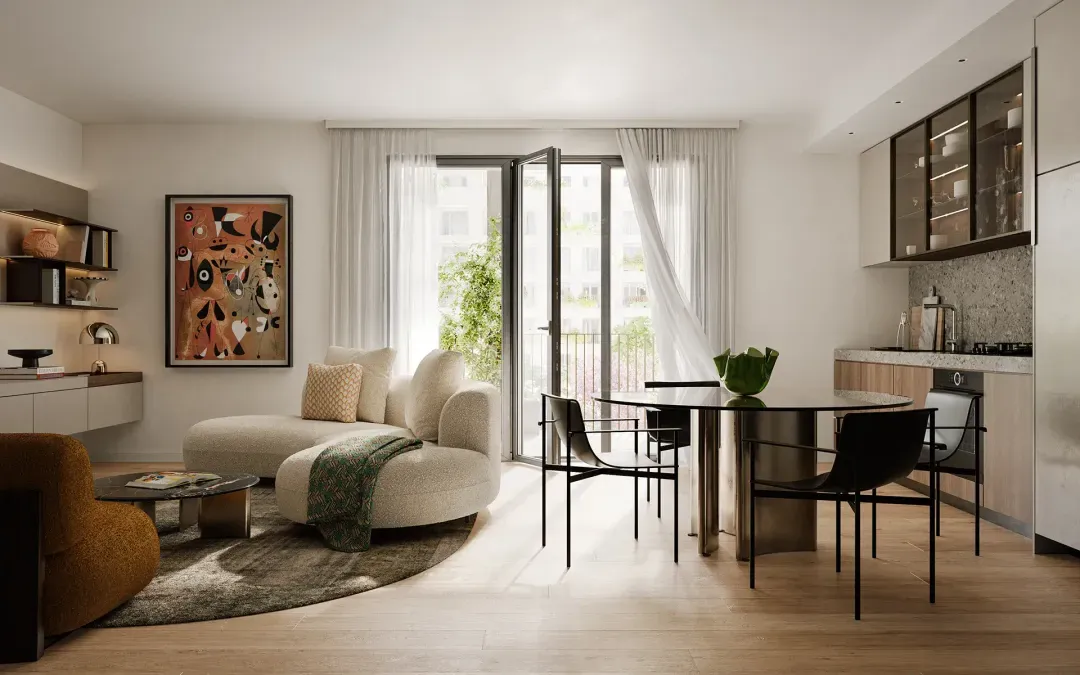
Quick Answer: ARIA Ex Macello transforms Milan’s former Calvairate slaughterhouse into a 150,000 sqm carbon-negative district with 1,200 homes, 600-bed student housing, and an IED campus led by Redo SGR. Compare northwest off-plan stock at Inspire UpTown Milan and the Milan property investment guide.
Project Overview
Off-plan and regeneration stock trades delivery risk for 10-20% discounts versus completed comparables but demands bank escrow verification, permesso di costruire review, and penalty clauses on developer delay. Resale before snagging completion often discounts 8-12% — stress-test exit liquidity if hold period may not exceed construction timeline plus 24 months.
| Detail | Information |
|---|---|
| Project Name | ARIA Ex Macello |
| Developer | Redo SGR / Near SGR (FIL1) |
| Location | Calvairate, southeast Milan |
| Site area | 150,000 sqm |
| Residential units | ~1,200 apartments |
| Student housing | 600 beds PBSA |
| Residential GFA | ~67,000 sqm |
| Non-residential GFA | ~93,000 sqm |
| Completion window | 2026-2027 (phased) |
| Energy target | Carbon-negative district |
About ARIA Ex Macello
ARIA reactivates the Ex Macello slaughterhouse complex decommissioned in the 1990s and abandoned after 2005 on Viale Molise in Calvairate. Redo SGR won Milan’s Reinventing Cities 2020 competition with a proposal positioning the district as the municipality’s first carbon-negative settlement, integrating social housing, education, culture, and commercial services on a single remediated brownfield.
The masterplan allocates roughly 35% of new surface to residential uses with the majority social and affordable housing, over 40% to mixed functions including hospitality, offices, laboratories, exhibition space, and retail, plus a medical centre and higher-education campus. Approximately 15% of pre-existing structures undergo architectural recovery rather than demolition, preserving industrial heritage within Snøhetta-led contemporary envelopes.
Fondo Immobiliare Lombardia Comparto Uno backs the concession with institutional quotisti including CDP Investimenti SGR, Fondazione Cariplo, and Regione Lombardia alongside CA Ventures, E.ON, Cooperativa LUM, and CCL coinvestors. Published Sur Atlas data cites approximately USD 97.8 million covering concession costs for the regeneration operation.
District Program and Uses
Short-term rental income requires valid CIN registration, commune SCIA or SUAR paths where applicable, Alloggiati Web guest filing, and tourist tax collection remitted to comune. First-property STR income may use 21% cedolare secca; a second property triggers 26% — model net after platform fees, cleaning, and void months not peak-event screenshots alone.
| Use cluster | Scale / role |
|---|---|
| Social housing apartments | Core residential volume (~1,200 units) |
| PBSA student residence | 600 beds |
| IED design campus | 20,000-30,000 sqm consolidated schools |
| Commercial and services | Ground-floor activation |
| Cultural temporary use | Active during remediation phase |
| Medical centre | Community healthcare anchor |
The IED Istituto Europeo di Design consolidates ten scattered Milan campuses into a single Calvairate campus designed by CZA Cino Zucchi Architetti, expanding teaching space toward 30,000 sqm and anchoring weekday student demand for PBSA and furnished rental products adjacent to the main residential phases.
Planet Smart City partners on digital infrastructure and smart solutions while MIC-HUB, Deloitte, PNAT, and Politecnico di Milano professors contribute energy innovation layers. Temporary cultural programming during remediation already hosts exhibitions, festivals, and research initiatives, demonstrating place-making before permanent vertical construction.
Location and Connectivity
Commute and airport access shape tenant pools and resale depth: properties within walkable services and rail links command premium rents versus car-only hill or coastal fringe stock. High-speed rail and motorway corridors often reprice peripheral tickets when corporate tenants accept 45-70 minute schedules instead of centro walkability premiums.
| Destination | Approximate access |
|---|---|
| Milan Duomo | 15-25 min transit |
| Porta Vittoria | 10-15 min |
| BEIC library (2026) | Adjacent corridor |
| Linate Airport | 20-30 min |
| Malpensa Airport | 45-60 min |
Southeast Milan positioning offers railway station proximity and suburban transit integration described in masterplan documents, connecting Calvairate to broader metropolitan employment basins. Buyers comparing trophy centro addresses should weigh southeast regeneration upside against northwest Lendlease MIND and Cascina Merlata commuter narratives with established metro M1 ridership.
Remediation reports in 2025 indicated over 90% of the site bonified and collaudato with final demolition of temporary-use structures completing within an eight-month window before main construction launch. Piano attuativo approval and convenzione signing in early 2026 gate the formal construction start Redo SGR communicated for first semester 2026.
Investment and Buyer Positioning
ARIA primarily serves institutional affordable housing, build-to-rent, and PBSA capital rather than classic foreign freehold trophy buyers. International investors monitor Redo SGR FIL structures, coinvestor co-investment tickets, and adjacent open-market Milan off-plan comparables when underwriting southeast Milan regeneration exposure.
Build-to-sell phases within social housing frameworks may release subsidized sale units to eligible households under Italian edilizia residenziale pubblica rules rather than unrestricted foreign cash purchases. Due diligence therefore starts with allocation eligibility, not only unit floor plans and per sqm pricing used on Inspire UpTown open-market towers.
Adjacent southeast Milan resale stock and northwest off-plan from Near Milan provide liquid benchmarks when ARIA direct inventory remains channel-restricted. Long-term furnished rental demand from IED students and creative industries may support BTR underwriting on PBSA and mid-market units released through operator partners.
Carbon-negative district branding differentiates ARIA from conventional Class A towers marketing energy efficiency alone. Redo SGR cites integrated renewables, circular economy waste streams, and mobility innovation including partners such as Electreon and GaiaGo when positioning the district against Cascina Merlata volume supply.
ARIA vs northwest Milan off-plan
| Factor | ARIA Ex Macello | Inspire UpTown Cascina Merlata |
|---|---|---|
| Developer | Redo SGR institutional | Near / EuroMilano |
| Primary product | Social + PBSA mix | Open-market off-plan |
| Site scale | 150,000 sqm | District phase |
| Carbon target | Carbon-negative | Class A efficiency |
| Foreign freehold | Limited channels | Standard off-plan |
| Completion | 2026-2027 phased | Q2 2028 flagship |
Due Diligence Checklist
- Confirm buyer eligibility for social housing or BTR channels before deposit.
- Review Redo SGR FIL disclosure and convenzione milestones with avvocato.
- Audit remediation certificates and piano attuativo approval status.
- Compare southeast regeneration thesis against northwest metro corridors.
- Model PBSA operator contracts separately from residential freehold rogito.
- Cross-read Redo SGR Italy developer profile.
- Track IED campus and BEIC opening timelines affecting tenant demand.
- Independent legal review on allocation rules and foreign purchaser limits.
Pros and Cons
Advantages
- Reinventing Cities winner with institutional FIL backing and CDP quotisti.
- 150,000 sqm district scale rare inside Milan municipality boundaries.
- Carbon-negative positioning with Snøhetta and multidisciplinary design team.
- IED campus and 600-bed PBSA create education-linked demand anchors.
- Heritage recovery of 15% pre-existing structures adds cultural differentiation.
- Temporary cultural activation proves place-making before vertical delivery.
Challenges
- Social housing allocation limits classic foreign freehold access.
- Southeast Calvairate resale liquidity thinner than centro or M1 corridors.
- Construction timeline depends on convenzione and remediation close-out.
- Mixed-use complexity increases underwriting versus single-tower off-plan.
- Carbon-negative claims require independent energy audit at handover.
- Competition from northwest volume supply at Cascina Merlata and MIND.
Buyer Scenarios
Scenario 1: Institutional housing investor: A European fund targets Italian affordable housing and PBSA through Redo SGR coinvestment or operator partnerships on ARIA student beds and BTR phases.
Scenario 2: Milan portfolio allocator: A buyer holds Inspire UpTown open-market exposure and monitors ARIA subsidized-sale windows for household eligibility or staff relocation packages.
Scenario 3: Regeneration researcher: An analyst maps Reinventing Cities winners L’Innesto and ARIA together when comparing Redo SGR southeast versus northeast Milan social housing pipelines.
Closing Verification Checklist
- Verify allocation channel and foreign purchaser eligibility before enquiry.
- Confirm remediation completion and construction start notices from Redo SGR.
- Compare district scale against personal liquidity and hold horizon.
- Review FIL coinvestor documentation with qualified tax advisor.
- Cross-link Milan property guide for corridor context.
- Independent avvocato review on social housing law constraints.
- Track PBSA operator versus freehold title structures separately. Insider tip: Track three closed sales in the same quartiere before offer — portal asking averages often overshoot OMI reference bands by 8-12% in spring listing season.
Frequently Asked Questions
ARIA is a 150,000 sqm urban regeneration district on the former Ex Macello slaughterhouse site in Calvairate, led by Redo SGR for Fondo Immobiliare Lombardia. The Reinventing Cities winner targets Milan's first carbon-negative settlement with 1,200 apartments, a 600-bed student residence, IED design campus, and mixed commercial uses.
The site sits in Calvairate near Porta Vittoria and Viale Molise in southeast Milan, close to railway connectivity and suburban transit lines. The district neighbors the Biblioteca Europea BEIC opening circa 2026 and ongoing Molise-Calvairate urban renewal corridors.
Remediation exceeded 90% completion in 2025-2026 updates. Construction start targets first half 2026 after piano attuativo approval and convenzione signing. Redo SGR schedules 18-24 month build phases with district completion anticipated between 2026 and 2027 on published masterplan timelines.
Snøhetta Oslo leads architecture with Barreca & La Varra, CZA Cino Zucchi Architetti for the IED campus, Chapman Taylor, Stantec, and Fondazione Housing Sociale on place-making. Partners include Planet Smart City, CA Ventures, E.ON, Cooperativa LUM, and CCL.
Much of ARIA inventory targets social housing, affordable rental, and PBSA channels rather than open-market foreign freehold. International buyers typically monitor Redo SGR and Near SGR allocation windows, BTR structures, or adjacent open-market Milan stock such as Cascina Merlata off-plan towers.
ARIA is southeast Calvairate carbon-negative district scale at 1,200 homes versus L'Innesto Greco-Breda social housing at 400 units and 300 student beds. Both are Redo SGR Reinventing Cities winners but serve different Milan corridors and buyer allocation models.
Frequently Asked Questions
ARIA is a 150,000 sqm urban regeneration district on the former Ex Macello slaughterhouse site in Calvairate, led by Redo SGR for Fondo Immobiliare Lombardia. The Reinventing Cities winner targets Milan's first carbon-negative settlement with 1,200 apartments, a 600-bed student residence, IED design campus, and mixed commercial uses.
The site sits in Calvairate near Porta Vittoria and Viale Molise in southeast Milan, close to railway connectivity and suburban transit lines. The district neighbors the Biblioteca Europea BEIC opening circa 2026 and ongoing Molise-Calvairate urban renewal corridors.
Remediation exceeded 90% completion in 2025-2026 updates. Construction start targets first half 2026 after piano attuativo approval and convenzione signing. Redo SGR schedules 18-24 month build phases with district completion anticipated between 2026 and 2027 on published masterplan timelines.
Snøhetta Oslo leads architecture with Barreca & La Varra, CZA Cino Zucchi Architetti for the IED campus, Chapman Taylor, Stantec, and Fondazione Housing Sociale on place-making. Partners include Planet Smart City, CA Ventures, E.ON, Cooperativa LUM, and CCL.
Much of ARIA inventory targets social housing, affordable rental, and PBSA channels rather than open-market foreign freehold. International buyers typically monitor Redo SGR and Near SGR allocation windows, BTR structures, or adjacent open-market Milan stock such as Cascina Merlata off-plan towers.
ARIA is southeast Calvairate carbon-negative district scale at 1,200 homes versus [L'Innesto](/projects/innesto-milan-social-housing/) Greco-Breda social housing at 400 units and 300 student beds. Both are Redo SGR Reinventing Cities winners but serve different Milan corridors and buyer allocation models.
Get an Italy property shortlist
Tell us your budget and region (Tuscany, Lake Como, Puglia, Milan, Sardinia). We reply within one business day with options matched to your goals.