Quick answer: Most of what stands in Potenza was built or rebuilt under one piece of legislation. Law 219 of 14 May 1981, passed after the Irpinia earthquake of November 1980, funded reconstruction and development across eight provinces, and in this city its vintage of construction is the housing stock a buyer will actually be looking at.
Every Italian city has a dominant building period and most of them have several. Potenza has essentially one, and it is unusually recent and unusually well documented, because it was produced by a statute rather than by a property cycle.
What the law was for
The earthquake of 23 November 1980 struck a large area of the southern Apennines. The legislative response came in two steps, a decree of 19 March 1981 followed by law 219 of 14 May 1981, and its scope was reconstruction and the development of the affected territories rather than repair alone.
The geography of the programme was wide. It covered municipalities across the provinces of Avellino, Benevento, Caserta, Matera, Foggia, Naples, Potenza and Salerno, and the number of comuni receiving reconstruction funding grew from an initial 339 to 643 and eventually to 687, close to 8.4% of all Italian municipalities.
It was also more than a housing law. Industrial development in the affected areas was funded alongside reconstruction, which is why the legacy of the programme in Basilicata and Campania includes industrial sites as well as residential districts.
What that produced in this city
A housing stock concentrated in one generation. Where an ordinary Italian city offers a buyer a choice between medieval, nineteenth-century, post-war and modern construction, Potenza offers mostly the reconstruction period and what followed it, laid out across the ridges and valleys the city occupies.
| Characteristic | Position on 1980s reconstruction stock |
|---|---|
| Seismic design | Built after requirements tightened following 1980 |
| Layout | Regular, planned, generally with lifts and parking |
| Thermal performance | Poor by current standards |
| Building services | Now around 40 years old and reaching replacement |
| Documentation | Permit files and designs held by the comune |
That combination is worth reading carefully, because it is neither the disaster nor the bargain that buyers assume from the outside.
The advantages nobody mentions
Reconstruction stock has three genuine strengths and they are the reasons a buyer might prefer it to an older southern town.
It was designed. Buildings produced under a public programme have drawings, calculations and permits, and those documents are held by the comune. In much of southern Italy that file does not exist.
It was built after the rules changed. Structural design requirements in Italy tightened in the aftermath of 1980, and a building of this vintage was produced under a stricter regime than the boom-decade construction that fills the peripheries of most Italian cities.
It is practical. Lifts, parking, regular room layouts and functioning services are standard in a way that the historic centres of comparable towns cannot offer at any price, and for a buyer who intends to live in or let the property that matters more than character does.
The problems, stated honestly
Forty years is exactly the age at which a building becomes expensive.
- Thermal performance. Insulation standards of the period were minimal, and heating costs in a city at this altitude are not trivial. The energy certificate guide explains how to read the rating, and it should be read as a running cost rather than as a formality.
- Services. Lifts, boilers, risers and roofs installed in the 1980s are at or past their design lives, and replacing them is a condominium decision with a bill attached.
- Facades and balconies. Reinforced concrete elements of this generation, exposed to a mountain climate, are the recurring extraordinary works item.
- Uniformity. Where every building in a district is the same age, the works arrive across the district at the same time, and the local trade is not large.
The renovation cost guide covers what the works cost. What a buyer should establish first is what the condominium has already decided, since an approved but unstarted programme transfers with the flat.
The diligence that suits this stock
Use the due diligence guide as the base and shift the emphasis from a building’s history to its maintenance record.
- Obtain the building’s permit file from the comune, which for this vintage is usually complete
- Establish whether the building was funded under the reconstruction programme and, if so, what the decree required
- Request three years of condominium accounts and every set of minutes for the same period
- Identify approved but unstarted works, which is where the transferring liability sits
- Read the energy certificate and ask what the building actually costs to heat through a winter
Point two is worth a sentence. Public reconstruction funding carried conditions, and on a property that has not changed hands since the 1980s those conditions are worth confirming rather than assuming to have lapsed.
The city’s shape and what it does to daily life
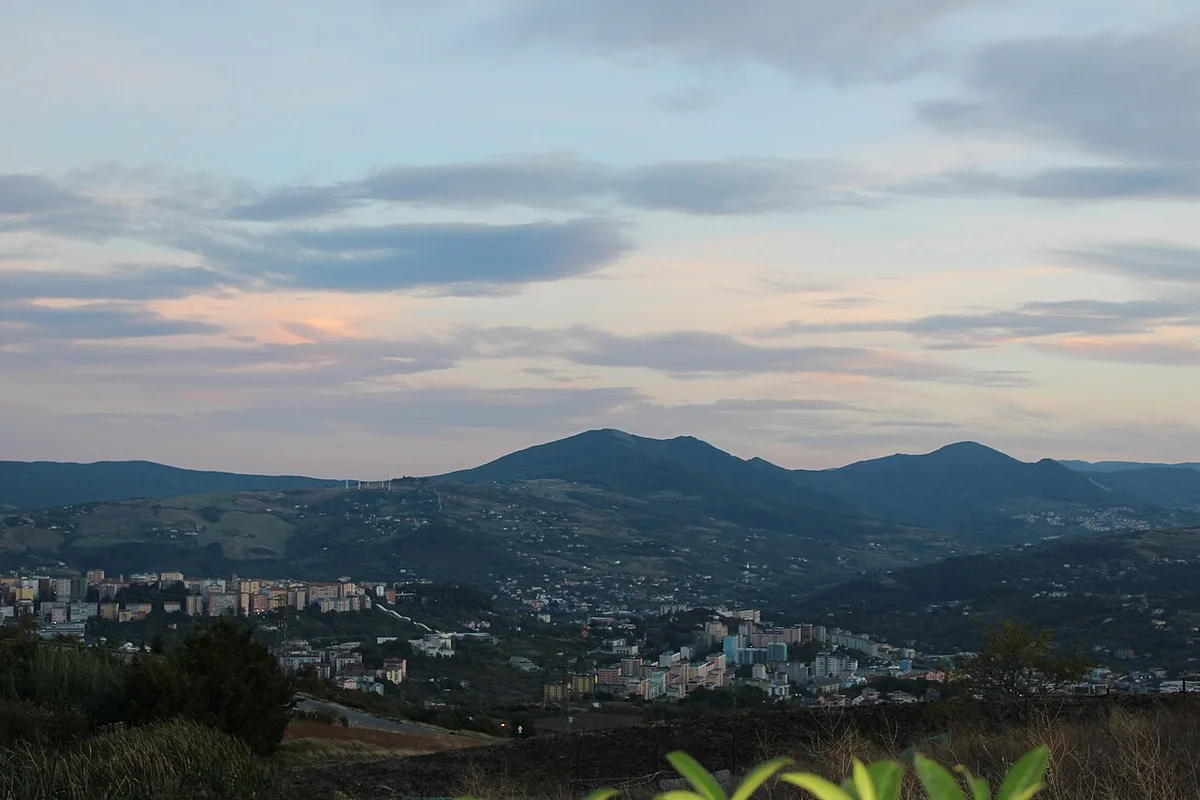
Potenza sits high in the southern Apennines on a series of ridges, and its geography does more to determine the desirability of an address than the age of the building does.
The city is spread across levels connected by roads, stairs and mechanised links, and moving between them is a daily reality rather than an occasional inconvenience. An apartment on the wrong level, without parking, is harder to let and harder to sell than the same apartment three streets away with a garage and level access.
Altitude also means weather. Winters here are genuinely cold and snow is not unusual, which is a running-cost question for a poorly insulated building and an access question for a property on a steep approach.
- Establish the level, the access and the parking before anything else
- Test the approach in winter conditions if the purchase is significant
- Treat heating cost as a first-order variable rather than a detail
- Expect the local market to price these factors precisely, and remote buyers not to
Who actually rents here
Three groups, all institutional, and none of them touristic.
University students take rooms in shared flats on the ordinary academic calendar, at modest rents, in buildings close to the faculties. Health service staff on rotations take small furnished flats and are the more reliable covenant. Public administration employees take conventional annual tenancies and stay.
None of those groups will pay a premium for a restored interior, and all of them will pay attention to heating costs, parking and access. That is a clear specification, and a landlord who follows it lets consistently while one who furnishes for an imagined visitor market does not.
The regional context
Basilicata is one of Italy’s smallest and least populated regions, and it has been losing residents for decades through outward migration to the north and abroad. That is the demographic background to every property decision taken here, and it is the reason prices are what they are.
Set against it, the region has two things worth noting. Public investment has been substantial, both under the 1981 programme and since, which means infrastructure in the region is better than its economy alone would produce. And one of its two provincial capitals has an international profile that arrived recently and changed that town’s market completely, which is a reminder that regional averages hide very different local stories. A buyer comparing the two provincial capitals on price alone will conclude that one is cheap and the other dear, and will have compared two markets that share a region and almost nothing else.
What a purchase here should be for
Three uses make sense and one does not.
Buying to live in the city, for someone working here or returning to family, is straightforward: the stock is practical, the prices are low, and the documentation is better than in most southern towns.
Buying to let to the institutional tenant base is a modest, reliable business with low management demands, provided the specification matches what those tenants want rather than what a visitor might.
Buying to hold a family property, where an inheritance or a connection already exists, is common and needs nothing more than the ordinary maintenance discipline any forty-year-old building requires.
What does not work is buying for capital appreciation on the expectation of discovery. This is a functional regional capital in a region that has been losing population, and no visitor economy is arriving to reprice it. A buyer who wants that thesis in Basilicata should look at the other side of the region.
What the market is actually like
Small, cheap, institutional and thin. Potenza is a regional capital with a university, a hospital and public administration, and those three supply the rental demand. There is essentially no tourist market and essentially no foreign buyer market, which means an owner is buying for use or for local letting rather than for resale to an international purchaser.
That is not a criticism, and for the right buyer it is an advantage: prices are among the lowest in mainland Italy, the tenant base is stable and salaried, and the competition for stock is local rather than international. What it rules out is a capital growth thesis based on discovery, because nobody is coming to discover it.
Within the region, Matera is the opposite case in almost every respect, with an international profile, a visitor economy and a distinctive legal position on part of its historic stock; the Matera and Potenza comparison sets the two against each other properly. The Basilicata guide covers the region, and buyers working at this price level should read buying under 200,000 euro for what the segment supports nationally.
One further comparison is instructive. Campobasso faces the same question from the opposite direction: there the issue is stock built before the seismic rules applied, here it is stock built after they tightened. Two southern regional capitals of similar size, and the single most useful fact about a building in each is its date.
Frequently Asked Questions
The statute passed on 14 May 1981, following a decree of 19 March that year, for the reconstruction and development of the territories struck by the earthquake of 23 November 1980. It covered municipalities across the provinces of Avellino, Benevento, Caserta, Matera, Foggia, Naples, Potenza and Salerno, and it funded industrial development as well as housing.
It grew. Reconstruction funding initially concerned 339 municipalities, extended to 643 and eventually reached 687, which is close to 8.4% of all Italian comuni. That is the scale that makes it a defining feature of southern Italian building stock rather than a local programme.
Because a large share of the city's housing dates from that programme and its aftermath. Buying here means, more often than not, buying a building designed and constructed in the 1980s under a public reconstruction framework, which has a distinct set of characteristics good and bad.
It is mixed and it is knowable. It was built after seismic design requirements had tightened following 1980, generally to regular layouts with lifts and parking, which is better than the ad hoc 1960s expansion elsewhere. Against that, thermal performance is poor by modern standards and forty-year-old building services are reaching the end of their lives.
More than for older stock. A building constructed under a public reconstruction programme has a permit file, a design, and frequently a record of the funding and its conditions, all held by the comune. That is a real advantage for a purchaser willing to ask for it.
Public reconstruction money came with conditions, and where a specific building was funded under the programme the terms are a matter for the relevant decree and administrative record. It is worth establishing rather than assuming, particularly on properties that have not changed hands since the 1980s.
It is inexpensive, institutional and thin. The city is a regional capital with a university, a hospital and public administration, which supports local rental demand, and it has almost no tourist or foreign buyer market. That makes it a place to buy for use or for local letting rather than for resale to an international buyer.
They are opposite cases. Matera has an international profile, a visitor economy and a distinctive legal position on part of its historic stock. Potenza has none of those and has a working regional economy instead. The comparison of the two is set out separately, and neither is a cheaper version of the other.
Get an Italy property shortlist
Tell us your budget and region (Tuscany, Lake Como, Puglia, Milan, Sardinia). We reply within one business day with options matched to your goals.