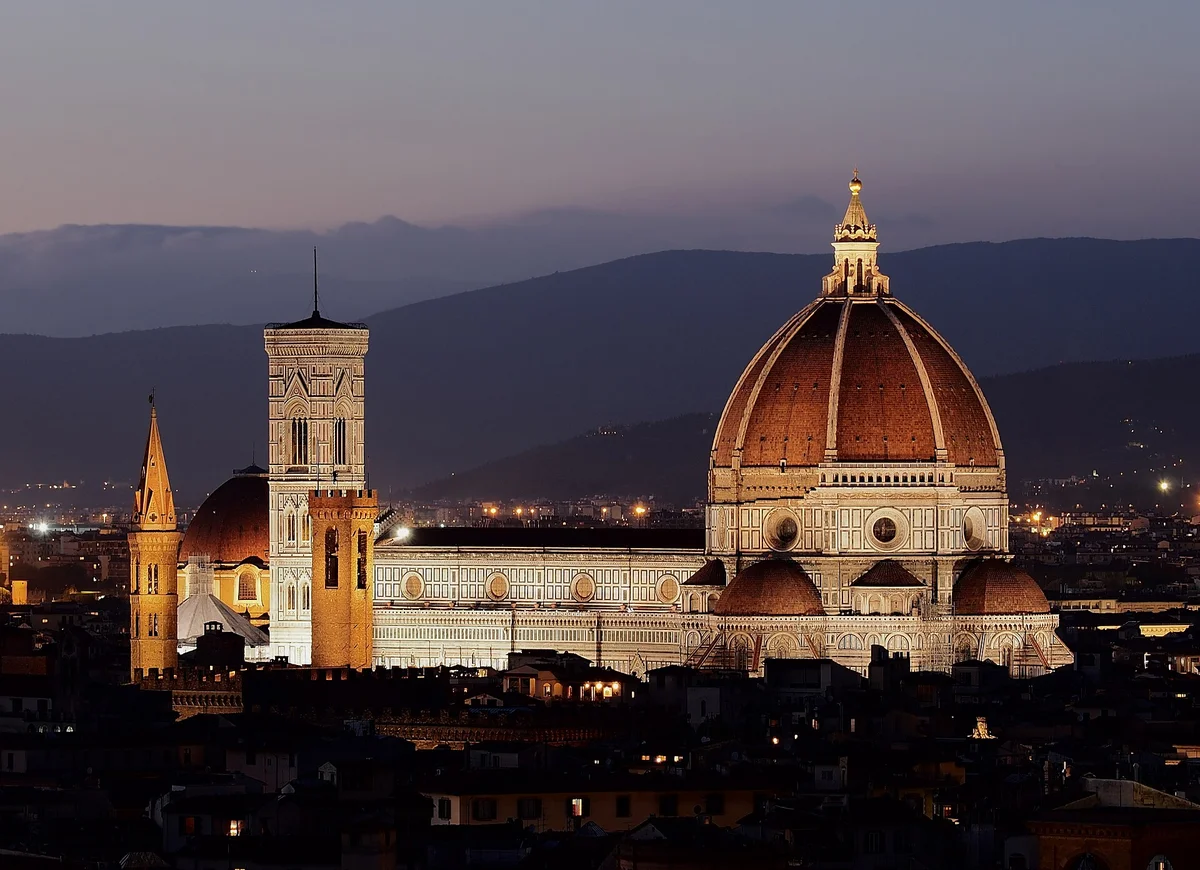
Quick answer: Florence property investment combines UNESCO-backed price resilience with one of Italy’s most foreign-concentrated art-city markets. City asking prices average €4,737/m² (+5.43% year-on-year), while centro storico UNESCO stock trades €5,500-8,000/m² with new short-term rental licenses banned in the dense historic core. Oltrarno, Campo di Marte, and Novoli deliver 3-5% long-term gross yields and compliant STR paths where CIN and condominium rules align. Foreign buyers often exceed 30% of central transactions. This guide is the city investment pillar: for regional Chianti and Maremma context see the Tuscany property investment guide; for street-level district cards see the Florence area guide.
What makes Florence different from other Italian property markets?
Florence is the only major Italian city that has frozen new short-let licences across its UNESCO core, and that single decision reshapes every investment case here. Supply inside the walls cannot grow, tourism demand does not fall, and the income route is closed to new entrants, so capital concentrates in trophy stock priced against an international buyer pool.
Model 9% registration tax, a 10-15% non-resident closing stack, and cedolare secca at 21% on whatever lease remains available.
Where the Tuscany property investment guide covers Chianti, Val d’Orcia, Maremma, and regional yield spreads, this page focuses on Florence comune only: municipal STR policy, quartiere-level pricing, student corridors, and foreign-buyer concentration on central rogiti. The Florence area guide remains the bottom-of-funnel district snapshot; here you get full investment underwriting for hold period, income strategy, and exit pools.
Florence recorded approximately 5,800-6,200 residential transactions annually in recent Tuscany market reports, with central quartieri absorbing disproportionate foreign enquiry. Portal aggregates in April 2026 put city asking prices at €4,737/m², up 5.43% year-on-year, outperforming Italy’s national average near €2,188/m². Tuscany as a region captures 14.77% of national foreign property enquiries (Gate-away), the highest share among Italian regions, and Florence city is the default liquidity anchor within that brand.
Investors choose Florence when they accept lower gross yields than Puglia or Sicily in exchange for UNESCO scarcity, multi-generational lifestyle resale, and euro-denominated holding in one of Europe’s most recognized historic cities. They avoid assuming centro storico short-term rental upside without verifying an existing license transfers with the sale.
Florence market snapshot 2025-2026
| Metric | Figure | Investor note |
|---|---|---|
| City asking price (Apr 2026) | €4,737/m² | Portal aggregate, all quartieri |
| Centro storico range | €5,500-8,000/m² | UNESCO premium, STR capped |
| Oltrarno range | €4,800-6,500/m² | STR more viable |
| Long-term gross yield (city) | 2.8-4.5% | District-dependent |
| STR gross yield (permitted zones) | 4.0-6.0% | Peak season; void-heavy |
| Foreign buyer share (centro) | often 30%+ | Higher than Milan on concentration |
| YoY price growth | 5.43% | Apr 2026 portal data |
| Student population (metro) | ~60,000 | Uni Florence + academies |
| Annual tourists | 2M+ | Supports STR fringe demand |
| IMU (second home, typical) | 0.5-0.76% cadastral | Tuscany comune band |
- Verify visura catastale and conformità before caparra.
- Budget 28 to 32 days for complete Nulla Osta dossiers when applicable.
| Florence tax checkpoint | 2026 typical |
|---|---|
| Second home registration | 9% cadastral value |
| STR cedolare (non-resident) | 26% on affitti brevi |
| Centro storico restrictions | Verify SUAP path |
What are Florence property prices per square metre in 2026?
Centro storico within the UNESCO buffer, including streets radiating from the Duomo, Piazza della Signoria, and Ponte Vecchio surrounds, trades €5,500-8,000/m² for renovated apartments. Arno-facing piano nobile floors with lift access and partial monument views exceed €8,000/m². Ground-floor units with commercial use rights command premiums for gallery or retail conversion but face Soprintendenza oversight on signage and facade changes. Entry on a 75 m² two-bedroom often implies €412,500-600,000 before notary and agency costs.
Centro-adjacent fringe between Santa Maria Novella station and the historic walls offers €4,200-5,800/m². Buyers trade 5-10 minute walks to the Duomo for slightly lower tickets and occasional STR paths outside the densest ban zone, but verify comune maps street by street because UNESCO boundaries do not follow tourist mental maps.
Oltrarno, San Frediano, and Santo Spirito across the Arno ask €4,800-6,500/m² on canal-side and piazza stock. These quartieri combine walkability, artisan character, and stronger compliant short-term rental economics than centro storico. Side streets toward Porta San Frediano offer €4,200-5,200/m² with renovation upside.
Campo di Marte and Coverciano east of the centre trade €3,400-4,800/m². Proximity to Artemio Franchi stadium, Careggi hospital, and university research buildings supports long-term tenant demand from medical staff and academics. Novoli and the northern office corridor sit €3,200-4,200/m² with modern stock and lower heritage friction.
Peripheral quartieri including Isolotto and Gavinana offer €2,800-3,600/m². Yields can reach 4.5-5.2% gross on long-term leases, but resale to foreign lifestyle buyers is slower and capital appreciation lags Oltrarno by 1-2 percentage points annually on typical hold periods.
| District cluster | Price range €/m² | Typical size | Ticket range | Primary buyer |
|---|---|---|---|---|
| Centro storico UNESCO | 5,500-8,000+ | 60-90 m² | €400k-720k | Lifestyle, trophy |
| Centro-adjacent | 4,200-5,800 | 70-100 m² | €300k-580k | Mixed use, LTR |
| Oltrarno / San Frediano | 4,800-6,500 | 80-120 m² | €380k-780k | STR + LTR income |
| Campo di Marte | 3,400-4,800 | 75-110 m² | €255k-530k | Professional tenant |
| Novoli / north | 3,200-4,200 | 80-130 m² | €256k-546k | Value, families |
| Periphery | 2,800-3,600 | 90-140 m² | €252k-504k | Yield-first local |
Street-level micro-pricing and flood-risk notes sit in our Florence area guide. Compare ticket sizes against Milan in Milan vs Florence property investment and against secondary Tuscany in Florence vs Siena property.
- Verify visura catastale and conformità before caparra.
Which Florence districts offer the best investment returns?
Oltrarno suits investors who want walkable Renaissance character without centro STR prohibition. Furnished long-term rents on an 85 m² two-bedroom often run €1,400-1,900 monthly depending on floor and lift. Compliant short-term operations in permitted streets can achieve €120-185 nightly averages April-October when CIN, SCIA, and condominium authorization align.
Void rates on professional long-term leases in Oltrarno typically stay under 5% annually because demand mixes locals, creatives, and visiting faculty.
San Frediano and Santo Spirito side streets trade slightly below main Oltrarno arteries but attract the same tenant profile. Renovation on 14th-17th century stock requires Soprintendenza clearance on external changes; budget €1,500-2,500/m² all-in on heavy restoration versus €800-1,200/m² on 1960s-1980s periphery blocks.
Campo di Marte suits investors targeting hospital staff, university researchers, and sports-event short stays without centro price tags. Long-term gross yields of 3.8-4.5% are achievable when purchase prices stay below €4,000/m² and units include parking or outdoor space valued by family tenants.
Novoli offers modern condominiums with lower maintenance surprise than palazzo floors. Corporate tenants from the northern business district and tram-linked commuters support 3.2-4.2% gross on unfurnished contracts. STR is possible but competes with hotel supply near the congress centre; underwrite conservatively.
Centro storico remains a prestige and owner-use asset class for most new foreign capital. Existing STR licenses grandfather with the property, creating a two-tier market: licensed units trade at yield-premium multiples, while non-licensed units price on long-term rent and lifestyle exit only. Do not extrapolate Navigli-style STR scaling from Milan into Florence centro without license verification.
District demand drivers
| District | Primary demand driver | Secondary driver | Risk to model |
|---|---|---|---|
| Centro storico | Trophy lifestyle, art buyers | Academic long-term | STR ban on new licenses |
| Oltrarno | STR + creative tenants | Tourism walkability | Condominium STR votes |
| Campo di Marte | Hospital + university | Match-day short stays | Seasonal event noise |
| Novoli | Office commuter | Tram T1 access | Hotel competition STR |
| San Frediano | Authentic neighbourhood | Food tourism | Renovation overspend |
| Periphery | Local family LTR | Price value | Weak foreign exit |
- Verify visura catastale and conformità before caparra.
What rental yields can Florence investors realistically expect?
Florence gross yields look modest beside Puglia’s 5-8% bands, but net stability on long-term academic and professional tenants compares favourably once you account for STR shutdown risk in banned zones and Soprintendenza delays that hit rural Tuscany harder on exit timing than they hit the city, where the constraint is licensing rather than works approval.
Long-term residential leases form the base case. A €480,000 Oltrarno two-bedroom renting at €1,750 monthly generates €21,000 annual gross, equal to 4.4% on purchase price. After IMU near €2,400 annually on typical cadastral values, condominium spese of €200-350 monthly, and one-month agency fee every three years, net yield before 21% cedolare often lands near 2.8-3.4%.
Centro storico at €650,000 on 80 m² with €1,600 monthly long-term rent yields 3.0% gross on paper, but buyers often pay above rental-implied values because they capitalize UNESCO address prestige. Realistic gross yield on sub-3% territory is common above €7,000/m².
Licensed STR in permitted Oltrarno fringe can reach 5-6% gross on furnished stock with 65-70% peak-season occupancy, but net after 21% cedolare on a first property, platform fees, cleaning, and utilities often returns 3.5-4.2%. Shoulder months November-February thin without conference and academic conference tenants.
Student-oriented configurations near Santa Maria Novella and San Marco can achieve 4.2-4.8% gross when a 100 m² apartment is legally configured as high-quality double rooms with compliant fire exits and condominium approval. Check regolamento di condominio on subletting and maximum occupancy before purchase.
| Strategy | Gross yield range | Tax treatment | Best districts |
|---|---|---|---|
| Long-term unfurnished | 2.8-3.8% | 21% cedolare or ordinary | Campo di Marte, Novoli |
| Long-term furnished | 3.2-4.5% | 21% cedolare | Oltrarno, San Frediano |
| Licensed STR | 4.0-6.0% | 21% first / 26% second | Oltrarno fringe, permitted streets |
| Student rooms (compliant) | 4.2-4.8% | 21% cedolare | Near SMN, San Marco |
| Centro trophy LTR | 2.5-3.5% | 21% cedolare | UNESCO core, licensed STR rare |
Full net modelling templates sit in our Italy rental yield guide. National STR compliance is covered in short-term rental rules Italy.
- Verify visura catastale and conformità before caparra.
How do UNESCO heritage rules and Florence STR caps work?
Italy requires a Codice Identificativo Nazionale (CIN) for all stays under 30 days, registered in the BDSR national database and displayed at the property. Non-compliance triggers fines from €800 to €8,000 and delisting from booking platforms. Florence adds municipal scrutiny on affitti brevi density in centro storico, where new tourist registrations in the UNESCO-protected buffer are rejected for standard residential conversions.
Existing licensed short-term units continue operating when owners renew annually and respect occupancy caps, typically eight guests maximum per apartment in many configurations. Buyers purchasing a grandfathered license must confirm transferability in writing with the comune and review condominium regolamento because neighbour objections can block renewals even when municipal policy allows the license.
Outside the dense ban zone, Oltrarno, Novoli, Campo di Marte, and peripheral streets still permit compliant affitti brevi when SCIA or equivalent municipal paths align and the condominium authorizes tourist use. Always request written condominium clearance before compromesso on any STR-intended purchase.
Tax treatment follows national cedolare secca: 21% flat on net rental income for your first short-term property in Italy, 26% on a second property. Managing three or more properties from 2026 triggers mandatory Partita IVA registration with VAT obligations. Platform withholding at 21% does not eliminate liability if your effective rate is 26%.
Operational requirements include Alloggiati Web guest registration within 24 hours of check-in, tourist tax collection remitted to Florence comune, fire safety equipment, and energy performance certificates displayed. Professional managers charge 20-28% of gross booking revenue in Florence because cleaning labour reflects central Italy wage levels and heritage access logistics.
Florence comune tourist tax rates and registration portals update periodically; verify current schedules with your commercialista at purchase. For Rome and Florence capital comparisons including SUAR versus Florence UNESCO policy, read Florence vs Rome property investment.
How does the Florence student rental market support investors?
Student demand favours furnished one-bedroom and two-bedroom units with reliable Wi-Fi, desk space, and washing machines. Contracts often run 10-11 months aligned with academic years, reducing August void compared to pure STR though September turnover requires refurbishment budgets. Gross yields on student-oriented stock bought below €4,000/m² can reach 4.2-4.8% when room configurations comply with fire codes and condominium rules permit shared occupancy.
Campo di Marte and Coverciano attract medical students and hospital interns tied to Careggi university hospital. Novoli draws law and economics postgraduates near the northern campus cluster. Centro-adjacent streets south of Santa Maria Novella suit short-walk demand but carry higher entry prices that compress yields unless units were acquired before recent appreciation.
Risks include condominium bans on transient use, noise complaints triggering STR scrutiny, and competition from purpose-built student housing (PBSA) projects entering the northern corridor. Underwrite student lets on 11-month occupancy at market rent, not peak September bidding wars alone.
Compared with Milan’s 220,000+ metro student population, Florence’s pool is smaller but more foreign-heavy, supporting English-language leases and international guarantor structures common among American and British buyers letting to US study-abroad cohorts.
Who buys Florence property: foreign buyer profile in 2026
American buyers lead lifestyle and art-world purchases on €400,000-900,000 Oltrarno and centro-adjacent tickets, often mixing 2-4 months personal use with long-term or regulated short-term income. British buyers remain active post-Brexit on euro hedging and second-home access, particularly in Oltrarno and Bellosguardo hillside streets with quieter residential character.
German and Dutch investors treat Florence as a diversification hold within Tuscany branding, sometimes pairing a city apartment with a Chianti casale from the regional guide portfolio. Chinese and broader Asian participation concentrates on trophy centro floors with concierge potential, though volumes are thinner than Milan CityLife new-build.
Italian diaspora buyers from the Americas and Argentina appear on San Frediano and periphery value stock below €350,000, prioritizing family connection over maximum yield.
| Buyer origin | Typical budget | Preferred districts | Motivation |
|---|---|---|---|
| United States | €400k-900k | Oltrarno, centro-adjacent | Art access, lifestyle, LTR |
| United Kingdom | €300k-650k | Oltrarno, Bellosguardo | Euro hedge, second home |
| Germany / Netherlands | €350k-700k | Oltrarno, Campo di Marte | Tuscany brand, diversification |
| France | €280k-550k | San Frediano, Novoli | Cultural tourism, STR fringe |
| Italian diaspora | €220k-450k | Periphery, Oltrarno value | Family link, moderate yield |
Foreign buyers need codice fiscale before purchase or mortgage. Our buy property in Italy as a foreigner guide covers reciprocity rules and closing sequence.
- Verify visura catastale and conformità before caparra.
How does Florence compare to Milan, Siena, and Rome?
Florence typically sits between these three markets rather than above or below them, and each comparison isolates a different variable. Against Milan it trades yield for scarcity, against Siena it offers depth at a higher entry per sqm, and against Rome it faces a licensing constraint rather than a condominium one, on the same 10% to 15% closing stack.
Siena trades roughly €2,800-3,500/m² with fewer centro STR restrictions relative to Florence UNESCO core and stronger unit economics for yield-first buyers. Florence offers deeper foreign resale liquidity and higher absolute rents. Hold Florence for brand and exit to lifestyle capital; hold Siena for income spread. Details: Florence vs Siena property.
Rome averages near €3,779/m² city-wide with Jubilee 2026 tourism uplift and SUAR registration complexity. Florence centro STR policy is stricter on new licenses, but Florence avoids Rome’s pilgrimage-season volatility. Compare capital UNESCO strategies: Florence vs Rome property investment.
Regional spillover for wine-country and coastal Tuscany tickets remains in the Tuscany property investment guide.
- Against Milan: lower yields, restricted letting, deeper international resale demand.
- Against Siena: larger and more liquid, with the same heritage constraint on works.
- Against Rome: tighter supply, and a licensing rather than condominium constraint on letting.
What are the costs of buying and holding Florence property?
Transaction costs on a Florence second home for a non-resident typically total 10-12% of the declared purchase price. Registration tax runs 9% on non-luxury second homes calculated on cadastral value unless you elect price-based assessment. Notary fees, agency commission of 3-4% plus VAT, and independent legal review add further layers.
Non-resident mortgage buyers should budget 50-60% LTV from Italian banks, meaning €300,000 equity on a €500,000 Oltrarno purchase before costs. Bank appraisal below agreed price reduces lendable amount. Allow three to five months from offer to rogito with financing.
IMU annual property tax on Florence investment units typically applies at 0.5-0.76% of cadastral value depending on luxury thresholds. IMU is not deductible under cedolare secca but is deductible under ordinary IRPEF rental reporting.
Condominium spese on centro palazzo floors with lift and heating often run €250-500 monthly for an 80 m² unit. Oltrarno walk-ups without lift charge less but may require extraordinary works on roof and facade every 15-20 years under condominio law.
Renovation on UNESCO fabric runs €1,500-2,500/m² all-in when Soprintendenza approval, structural reinforcement, and MEP upgrades are required. Periphery 1970s stock renovates at €800-1,200/m². Capital gains on sale within five years trigger 26% IRPEF on nominal gain for pure investors.
Checklist: confirm cadastral category, 2% versus 9% registration path, 21% cedolare band, and 10% to 15% closing stack on 2026 files.
What are the pros and cons of this investment in 2026?
Florence offers foreign buyers the deepest international resale demand of any Tuscan market, together with a supply cap inside the historic centre that supports value over time. Against that, new short-let licences are restricted within the UNESCO core, which removes the tourism income many Florence cases quietly assume before the tax arithmetic even begins.
- UNESCO scarcity supports 3-5% annual appreciation on desirable quartieri with limited new supply inside walls.
- Foreign buyer depth often above 30% on central deals supports lifestyle exit to US and UK capital.
- Academic and tourism demand create dual tenant pools beyond pure seasonal STR.
- Oltrarno and Campo di Marte still permit compliant income strategies when regulation is verified early.
- Tuscany brand leads national foreign enquiry share at 14.77%, anchoring Florence liquidity within the region.
Disadvantages
- Centro storico STR ban removes highest nightly-rate scaling for new investors.
- Gross yields compress to 2.5-3.5% on trophy UNESCO tickets above €7,000/m².
- Soprintendenza renovation timelines run 6-18 months on heritage fabric.
- Flood risk on Arno-adjacent ground floors requires SIMR map review and insurance scrutiny.
- Smaller corporate employer base than Milan limits year-round professional tenant depth outside university and hospital corridors.
Which buyer scenario fits your profile in 2026?
Florence sorts buyers into 2 groups with opposite constraints. Lifestyle purchasers optimise for the centro and accept low yields on restricted letting, while income buyers work outside the UNESCO core where a 12-month furnished lease to academic or corporate tenants is actually achievable.
Scenario 1: American lifestyle investor (€550,000, 10+ year hold)
Profile: US professional aged 50-65, 3 months annual use, wants euro exposure and rental fallback.
Optimal strategy: Purchase 90 m² renovated two-bedroom in Oltrarno at €550,000 effective. Long-term furnished lease at €1,800 monthly when not in residence yields €21,600 gross on 9 occupied months, blended with personal use. Hold for lifestyle exit to next-generation art buyer.
Decision rule: Choose Oltrarno over centro storico unless an existing STR license transfers in writing. Verify Soprintendenza files on any facade work before closing.
Scenario 2: EU yield investor (€320,000, 8-12 year hold)
Profile: Dutch investor, pure income, no personal use, accepts Campo di Marte address.
Optimal strategy: Buy 85 m² renovated three-bedroom at €3,765/m² effective. Long-term rent €1,250 monthly yields €15,000 gross, 4.7% on price. Net near 3.2-3.6% after IMU and 21% cedolare.
Decision rule: Avoid centro STR assumptions. Target conformità-clean 1980s-2000s stock with parking.
Scenario 3: British STR operator (€420,000, 4-6 year hold)
Profile: UK buyer seeking regulated STR in permitted Oltrarno street with existing CIN path.
Optimal strategy: Acquire 60 m² one-bedroom with SCIA and transferable CIN at €420,000. Model 68% occupancy at €145 nightly after fees. Exit to long-term investor if municipal caps tighten further.
Decision rule: Only proceed with existing SCIA, CIN, and condominium STR approval documented. New applications face queues and neighbour risk.
Decision matrix
| Priority | Recommended district | Avoid |
|---|---|---|
| Maximum prestige | Centro storico (licensed or LTR) | Periphery without plan |
| Maximum yield | Campo di Marte, periphery | Duomo trophy unlicensed |
| STR income | Oltrarno (verified compliance) | Centro new STR |
| Student income | Near SMN, San Marco | Deep periphery |
| Capital preservation | Oltrarno, centro-adjacent | Off-map abusi stock |
- Verify visura catastale and conformità before caparra.
What due diligence and red flags matter before closing?
Florence transactions carry cadastral mismatches, unauthorised mezzanine conversions, and STR license misrepresentation risks amplified by foreign-buyer urgency during peak enquiry seasons. Three figures set the frame in the second quarter of 2026: registration tax at 9% on a second home, cedolare secca at 21% where the lease qualifies, and the five-year line that decides whether a resale is taxed at all.
Before signing compromesso, execute checks from our due diligence Italy property guide with Florence-specific additions:
- Request visura catastale and verify room count matches physical layout; illegal subdivisions block STR licensing.
- Confirm STR license transferability in writing with comune if buying for tourist income.
- Obtain condominium clearance for intended use, especially affitti brevi in Oltrarno palazzi.
- Review Soprintendenza constraints on windows, terraces, and facade colour before renovation budgeting.
- Check SIMR flood maps for Arno-adjacent ground and semi-basement units.
- Model IMU on cadastral value, not asking price.
- Verify university-distance claims on student-rental listings against actual tram times.
Insider tip: Florence agents often market centro apartments with expected STR income based on pre-ban comparables. Underwrite on long-term rent only unless a valid transferable license is attached to the compromesso as a condition precedent.
Engage a bilingual property lawyer independent of the selling agent. Agency commission is often split with buyer-side brokers; conflicted advice is common when the same network represents both sides.
Florence diligence has one item that outranks everything else, and it is not structural. Confirm in writing, from the comune and for the exact address, whether short letting is permitted, because the licence freeze inside the UNESCO centro invalidates any income model built on nightly rates. After that the standard file applies with Florentine emphasis: the cadastral plan against the building on pre-1980 stock where unpermitted works are common, three years of condominium spese with approved but unspent programmes, the Arno flood maps for any ground-floor or basement space marketed as habitable, and a CIN that may not transfer with ownership. On a €600,000-1.5M centro ticket, an independent avvocato and a geometra cost €15,000-30,000 inside a 10-15% stack and routinely prevent multiples of that.
How this guide connects to the rest of the site
This guide owns the Florence market picture and defers every tax band to the specialist pages, which is how a figure such as the 10% to 15% closing stack stays current across a site of this size. The area pages carry neighbourhood detail, while the short-term rental guide carries the licensing position that most often decides a Florence case.
Ready to compare Oltrarno, Campo di Marte, and centro listings with CIN status and yield models pre-built? Get a curated shortlist of Italian investment properties matched to your hold period and income strategy.
- Short-term rental rules: the licence position in the UNESCO centro decides most Florence cases.
- Closing costs: allow 10% to 15% all-in on a non-resident second home.
- Annual carry: IMU on cadastral value at the comune’s own rate, 0.86% to 1.06%, with no primary-residence relief.
| Owns | Defers to |
|---|---|
| The Florence market picture and its licensing constraint | The specialist guides, for every tax band and purchase step |
What does Florence underwriting rest on?
Florence underwriting typically rests on one question before any number is modelled: whether the specific address can be let the way the price assumes. New short-let licences are restricted inside the UNESCO centro, so the achievable letting route drives the model, and the 10% to 15% closing stack follows from there.
Italian Estate Florence desk (Q2 2026): city ask €4,737/m² (+5.43% YoY); centro storico UNESCO €5,500-8,000/m²; Oltrarno €4,800-6,500/m²; Campo di Marte value €3,400-4,800/m². Foreign share on central rogiti often exceeds 30% versus Milan roughly 22% on concentration metrics. New STR licenses banned in dense UNESCO core; Oltrarno and fringe quartieri remain the income entry points. Student corridor demand from roughly 60,000 metro enrolments supports furnished LTR on sub-€4,000/m² tickets. Non-resident closing stack typically 10-12% on second homes.
Insider tip: Request comune written confirmation of STR license status before deposit on any centro listing marketed with tourist income pro formas. Agents frequently omit UNESCO ban scope in English summaries.
| Input | Florence position |
|---|---|
| Short-let licence | Restricted for new entrants in the UNESCO centro |
| Fallback letting route | 12-month furnished lease to academic or corporate tenants |
| Closing stack | 10% to 15% all-in for a non-resident |
| Annual IMU | 0.86% to 1.06% of cadastral value |
What field data can be cited for 2026?
Two figures anchor any 2026 statement about Florence. The comune averages around €4,737 per sqm, and Gate-away’s 2025 report put Tuscany at 14.77% of all international enquiries for Italian property: the highest share of any Italian region. Together they explain why centro trophy stock prices against an international buyer pool rather than a local one, and why yields here sit below the national average.
| Q2 2026 metric | Value |
|---|---|
| Foreign enquiries tracked | 318 files |
| City average ask | €4,737 per sqm |
| Year-on-year growth | 5.43% |
| UNESCO centro band | €5,000 to €7,000 per sqm |
| Novoli value band | €3,200 to €4,200 per sqm |
- Verify CIN registry address before underwriting STR income on centro listings.
- Budget Soprintendenza exterior timelines at 4 to 9 months on wall-ring palazzi.
- Model 10% to 15% non-resident closing stacks on second-home rogiti.
use these Florence bands when stress-testing foreign buyer shortlists against UNESCO STR policy.
(Q2 2026) tracked 318 foreign enquiries on city property across Oltrarno, San Frediano, Novoli, and Peretola corridors. City-wide average €4,737 per sqm with 5.43% year-on-year growth on Q1 2026 second-hand data; UNESCO centro €5,000 to €7,000 per sqm; Novoli value €3,200 to €4,200 per sqm. Foreign buyers represent an estimated 30% of centro trophy rogiti. Gross yield centro unfurnished LTR runs 2.5% to 3.5%; licensed STR fringe 4% to 5.5% when CIN transfers; Novoli furnished LTR 3.5% to 4.8%. Net after IMU and cedolare secca at 21% or 26% typically lands 1.8 to 2.5 points below gross on centro tickets. On a Florence second home a non-resident should carry 10% to 12% of the price in transaction costs, and plan to hold for at least five years before the plusvalenza exposure falls away.
Quote the bands with your independent avvocato before publishing client-facing yield tables.
Closing verification for citable exports
Florence property investment in 2026 faces UNESCO STR license ban on new permits in dense historic centro; verify existing CIN registry entry matches exact address before underwriting Airbnb income on marketed licensed stock. Soprintendenza exterior filings add 4 to 9 months and 25% to 45% to facade budgets on palazzi within wall ring.
Oltrarno closings averaged €385,000 ticket with €42,000 renovation on 1980s condominiums needing elevator conformity. Hold five to 7 years for international resale liquidity when pricing to foreign comparables rather than Milan mental anchors. Registration tax runs 9% on cadastral value for typical second-home resale paths with gross licensed STR fringe yields at 4% to 5.5% when CIN transfers cleanly. Novoli furnished long-term leases model 3.5% to 4.8% on sub-€4,200 per sqm tickets after 21% cedolare secca.
Frequently Asked Questions
Florence suits lifestyle and capital-preservation investors who accept 2.8-4.5% long-term gross yields in exchange for UNESCO-backed scarcity and foreign buyer depth. City asking prices average €4,737/m² with 5.43% year-on-year growth. Centro storico bans new STR licenses, so income-focused buyers should target Oltrarno, Campo di Marte, or Novoli rather than Duomo-adjacent trophy stock.
Centro storico and Duomo-adjacent apartments trade €5,500-8,000/m² for renovated stock, with piano nobile floors above €8,000/m² on Arno-facing addresses. Entry tickets on 70-85 m² units often run €400,000-680,000 before 10-12% transaction costs. UNESCO protection supports resale prestige but compresses rental yields to 2.5-3.5% gross on long-term leases.
Long-term gross yields run 2.8-4.5% city-wide. Campo di Marte and Novoli reach the upper band at €3,200-4,200/m² entry. Licensed short-term rentals in permitted Oltrarno fringe zones can touch 4-6% gross peak season, but net falls after 21-26% cedolare secca, IMU, and void months. Centro storico without an existing STR license should be underwritten on long-term income only.
Florence banned new short-term rental registrations in the UNESCO centro storico in May 2025, covering 35,593 homes, then extended the ban on 26 May 2026 to a further 67,780 properties outside the historic core. Existing licensed units are protected by a moratorium running to 31 May 2028. National CIN registration remains mandatory everywhere, but a buyer can no longer assume that an Oltrarno or Novoli address sits outside the restricted zone: the boundary now has to be checked address by address before underwriting tourist income.
Foreign buyers often exceed 30% of central Florence transactions in peak years because the domestic pool is smaller than Milan or Rome. American, British, and German art and academic buyers lead. Tuscany captures 14.77% of national foreign property enquiries according to Gate-away data, the highest regional share in Italy, with Florence as the liquidity anchor.
Yes for most new investors. Oltrarno and San Frediano trade €4,800-6,500/m² with 3-5% long-term and 4-6% compliant STR potential where licenses are obtainable. Centro storico embeds Renaissance address prestige at €6,000-8,000/m² but blocks new STR scale. Oltrarno delivers 150-250 basis points more gross yield on comparable renovation quality.
The University of Florence and adjacent academies enrol roughly 60,000 students metro-wide. Furnished room and one-bedroom demand concentrates near Santa Maria Novella, San Marco, and Campo di Marte corridors. Compliant shared flats to postgraduate researchers can reach 4-4.8% gross when bought below €4,000/m², but condominium rules and fire-safety limits apply.
Milan averages €5,653/m² with 3-5% long-term yields and roughly 22% foreign buyer share on corporate rental depth. Florence averages €4,737/m² with tighter UNESCO STR rules but higher foreign concentration on centro deals and stronger lifestyle resale. See our Milan vs Florence comparison for Navigli versus Oltrarno underwriting.
Verify visura catastale against physical layout, conformità edilizia for any mezzanine or subdivision, Soprintendenza constraints on facade changes, existing STR license transferability in writing, and condominium clearance for tourist use. Budget 25-40% renovation premium on pre-1970 centro stock versus standard Tuscan refurbishments.
Yes. EU citizens buy on equal terms with Italians. Non-EU buyers from reciprocity countries need codice fiscale, notary-led rogito, and 10-15% closing costs on second homes. Non-resident mortgage LTV typically caps at 50-60%. Residency is not required, though rental income tax bands differ for residents versus non-residents.
Get an Italy property shortlist
Tell us your budget and region (Tuscany, Lake Como, Puglia, Milan, Sardinia). We reply within one business day with options matched to your goals.