
Italy Investor Visa 2026: €250k-€2M Paths (Not Property)
Italy investor visa = €250k startup / €500k company / €2M bonds, NOT property. Zero stay requirement. 3-month capital deadline. Requirements checklist.
By Italian Estate Editorial · Updated June 25, 2026 · 14 min read
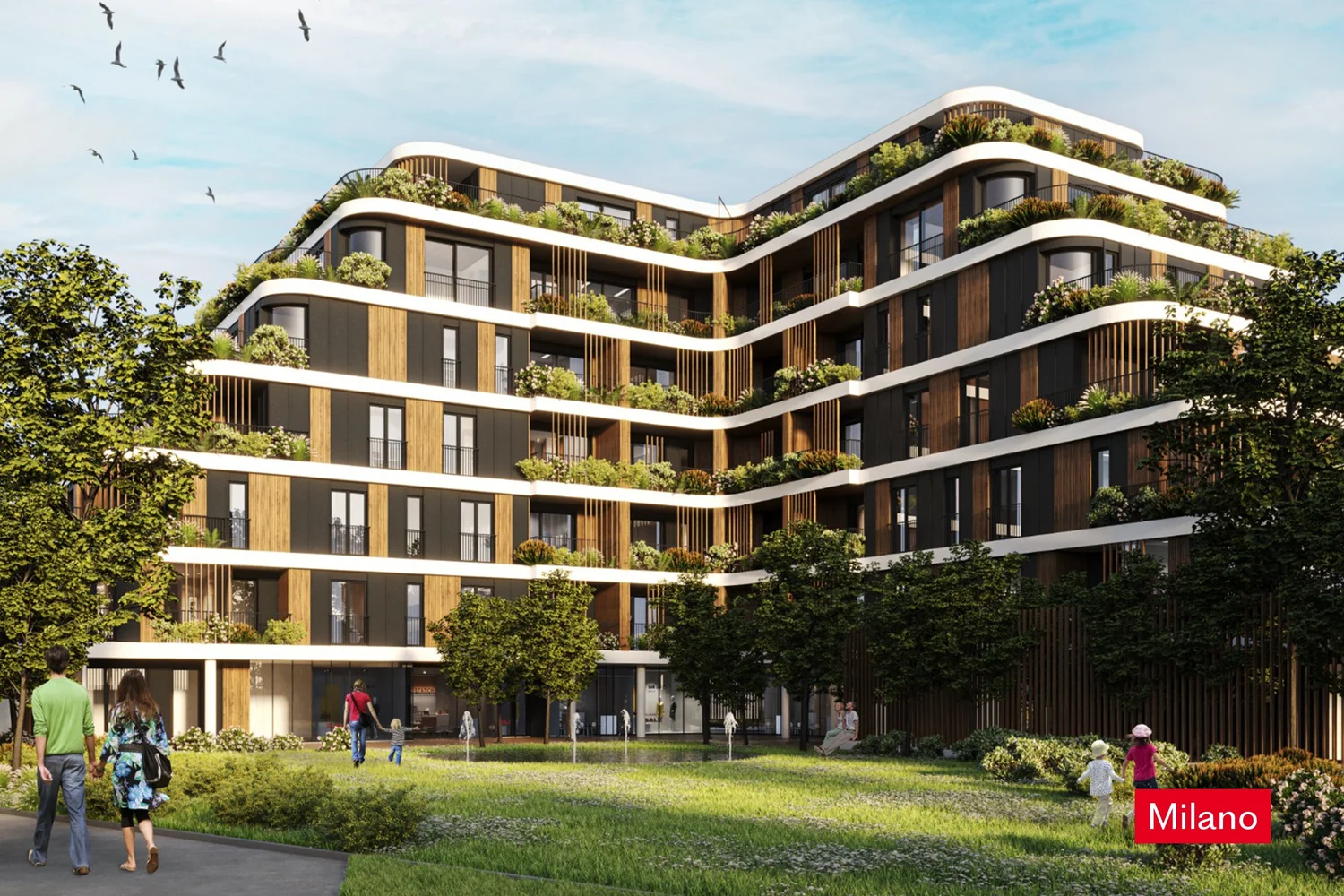
Italy Golden Visa & Investor Visa: 2026 Property Guide
The Italian Investor Visa, widely searched as the Italy golden visa, is a residency-by-investment pathway for non-EU nationals who commit €250,000 to €2,000,000 to regulated financial categories. It does not allow property alone to qualify, but most investors still buy property in Italy for accommodation, lifestyle, or rental income. This guide maps investment thresholds, the 3-month execution deadline, property alignment, and how the program differs from elective residence and flat-tax relocation.
Which Investor Visa Pathway Fits Your Capital?
Four capital tiers qualify, and risk appetite decides between them rather than price alone. Startup equity requires €250,000, company shares €500,000, a philanthropic donation €1,000,000, and BTP bonds €2,000,000. None of the four carries a stay requirement, which is why foreign buyers with businesses abroad choose this route.
| Investment tier | Minimum capital | Target | Risk | Stay requirement |
|---|---|---|---|---|
| Innovative startup | €250,000 | Startup equity | High | 0 days/year |
| Italian company | €500,000 | S.r.l./S.p.A. shares | Medium-high | 0 days/year |
| Philanthropic donation | €1,000,000 | Public interest project | Low (non-recoverable) | 0 days/year |
| Government bonds | €2,000,000 | BTP securities | Low | 0 days/year |
Property purchase: Separate transaction, does NOT count toward visa investment. Most applicants buy €400k to €2M of real estate alongside financial investment for accommodation and lifestyle.
Use this checklist to narrow the tier before you speak to anyone:
- Capital you can leave untouched for 2 years, since early exit breaks compliance
- Tolerance for equity risk against a bond coupon
- Whether you want an operating role in Italy, which only the company and startup routes give
Key dates: Nulla Osta review 30 days, then consulate visa within 6 months, then Questura within 8 days of entry, then capital transferred within 3 months, then a 2-year permit renewable for 3-year periods.
What are Italy golden visa property investment options in 2026?
Italy has no Greece-style golden visa tied to a property purchase. The visa requires capital in startups (€250,000), companies (€500,000), philanthropy (€1 million), or BTP bonds (€2 million), and property sits on a parallel track. Foreign buyers use the visa for residency and fund the home separately.
Both tracks can run at once, and most applicants do exactly that:
- Financial investment secures the permesso di soggiorno
- The rogito follows standard civil law, with no visa effect
- A registered 12-month lease covers accommodation while the purchase completes
A red flag in promoter material is an Italy golden visa sold as a property-purchase programme. Searchers asking about italy golden visa property usually want two things: residency eligibility and a home purchase plan. The legal answer is dual-track: financial investment for the permesso di soggiorno, standard civil law for the rogito. Many applicants buy during the Nulla Osta window so rogito aligns with Questura registration. See our dedicated Italy residency by investment guide for program framing beyond this investor-visa pillar.
| Question | Investor Visa answer | Property-only myth |
|---|---|---|
| Can €500k apartment count as visa investment? | No | Common misconception from Portugal/Greece programs |
| Can I rent while waiting for rogito? | Yes, a registered 12-month lease counts for accommodation | Airbnb not accepted |
| Best regions for investor buyers | Milan liquidity, Rome Jubilee tourism, Puglia yield | Depends on hold period |
| Typical add-on purchase budget | €400k to €2M plus alongside visa capital | Separate from €250k minimum visa tier |
What are Italian investor visa requirements for non-EU applicants?
Non-EU applicants are required to file a passport, apostilled criminal records, proof of the legal source of funds, a CV, health insurance, accommodation evidence, and a commitment to one of the 4 categories. Portal review targets 30 days, and foreign buyers then have 6 months to collect the visa at a consulate.
| Requirement | What satisfies it | Deadline |
|---|---|---|
| Source of funds | Unbroken trail from declared income or asset sales | With the portal application |
| Criminal record | Apostilled certificate from each country of residence | With the portal application |
| Accommodation | Deed, or a registered 12-month lease | Before the Questura appointment |
| Health insurance | Policy valid in Italy | Before consular issuance |
| Capital transfer | Bank receipts uploaded to the portal | 3 months from entry |
A red flag that stops files at consular stage: a source of funds trail with a gap, such as a cash deposit that no tax return explains. Missing the 3-month transfer window revokes the permit outright.
Order of assembly matters, because two items have long lead times:
- Apostilles, which can take weeks in some jurisdictions
- Italian bank onboarding and AML review, up to 6 weeks
- Sworn translations, ordered only once the set is final
Detailed document checklists sit in our Italy investor visa requirements 2026 guide. Consulates apply AML scrutiny: bank statements must show an unbroken trail from declared income or asset sales into the investment account. Corporate structures need visura camerale and anti-shell verification for the €500,000 company route.
How does Italy residency by investment work if you also buy property?
Residency by investment is a 2-year permesso di soggiorno per investitori, renewable for 3-year periods while the investment stays compliant. The property purchase does not fund the visa, but it does satisfy accommodation evidence, which is why foreign buyers run both processes on a single calendar, with one checklist covering each track.
| Order | Step | Timing |
|---|---|---|
| 1 | Choose the category, start Italian bank compliance | 6 weeks before applying |
| 2 | File the Nulla Osta on the portal | 30 day review |
| 3 | Sign the compromesso on the target home | During the Nulla Osta window |
| 4 | Enter Italy, register at the Questura | 8 days from entry |
| 5 | Execute the capital transfer | 3 months from entry |
| 6 | Complete the rogito with the notaio | Aligned with step 4 or later |
Two sequencing rules keep the two tracks from colliding:
- Keep visa capital and property funds in separate accounts and separate paper trails
- Never let a compromesso completion date fall before the Questura appointment
Italian-sourced rental income faces standard IRPEF or cedolare secca; foreign income may qualify for the Article 24-bis flat-tax regime if the investor elects tax residency. Compare pathways in flat tax vs investor visa Italy. Elective residence remains the alternative for passive-income retirees who accept 183-day stay rules. See elective residence vs investor visa.
The Italian government established this residency-by-investment scheme under Legislative Decree 286/1998, specifically Article 26-bis, to attract foreign capital and stimulate key sectors of the domestic economy. Unlike other European residency programs that have faced retrenchment or outright cancellation, the Italian program remains highly stable, welcoming, and legally secure. The program is specifically tailored for high-net-worth individuals, entrepreneurs, and global executives who require unrestricted access to the Schengen Area without the burden of mandatory physical relocation.
The initial residence permit (permesso di soggiorno per investitori) is valid for 2 years. The foreign investor can renew the permit for subsequent 3-year periods, provided the underlying investment remains fully intact and active within the Italian territory. A key advantage of this pathway is the absence of any language proficiency requirements or minimum physical stay obligations during the initial residency phase. The foreign investor can maintain global business operations while holding a prestigious European residency status.
The administrative framework is managed by an interministerial committee, which coordinates the evaluation of applications through a dedicated digital portal. This centralized approach eliminates regional bureaucratic delays, ensuring that the initial clearance, known as the Nulla Osta, is processed within 30 days of a complete submission. This makes the Italian Investor Visa one of the most efficient and reliable administrative pathways in the European residency market.
Can a Foreigner Obtain the Italian Investor Visa Through Real Estate?
No, direct real estate purchase is not an eligible investment category for the Italian Investor Visa. However, foreign buyers can purchase property separately for personal use while securing residency through one of the 4 eligible financial pathways, such as a €250,000 startup investment or a €500,000 company injection.
The Italian legislature intentionally excluded direct real estate acquisitions from the Golden Visa framework to protect the domestic housing market from speculative price inflation. This policy stands in sharp contrast to historic programs in Portugal, Spain, and Greece, where direct property purchases led to significant local displacement and subsequent legislative restrictions. By separating residency qualification from property ownership, Italy ensures that the housing market remains stable while offering a clear, dual-track strategy for affluent buyers.
Under this dual-track approach, the foreign investor secures residency by allocating capital to a productive financial asset, such as government bonds or corporate shares. Simultaneously, the investor proceeds to buy property in Italy as a foreigner to establish a luxurious personal residence or a high-yield rental asset. This structure allows the investor to enjoy the security of a regulated financial investment alongside the tangible benefits of Italian real estate ownership.
| Question | Investor Visa answer | Why |
|---|---|---|
| Does a €500,000 apartment qualify? | No | Real estate is excluded from the 4 categories |
| Does property help the application at all? | Yes | It satisfies accommodation evidence |
| Can the same money do both? | No | Visa capital must sit in an eligible instrument |
| Is there a minimum property price? | No | Standard civil law applies to the rogito |
A red flag worth naming: promoter claims that a €500,000 apartment qualifies. The exclusion is deliberate policy, not an oversight. Portugal, Spain, and Greece all tied residency to property purchase and all three ended up restricting or closing those routes after local price pressure. Italy separated the two from the start, so a foreign buyer allocates €250,000 to €2,000,000 into a productive financial asset for the permit, then buys a home under ordinary property law at whatever price the market sets. In practice that dual structure suits the profile the programme attracts: the bond route preserves capital while the house is chosen slowly, and the 2-year permit does not depend on a completed purchase. It also removes a pressure point that damages buyers elsewhere, where a visa deadline forces a rushed rogito on a property that has not passed due diligence.
Accommodation evidence accepts either route:
- A deed on a purchased property, once the rogito has completed
- A registered lease of 12 months, which is what most applicants use first
- Short-let bookings, which the Questura does not accept
To satisfy the administrative requirements of the visa, the applicant must demonstrate proof of suitable accommodation in Italy once the residence permit is issued. Acquiring a residential property is the most definitive way to satisfy this requirement. The real estate transaction proceeds under standard Italian property laws, allowing the investor to build a diversified portfolio that combines secure financial instruments with premium Italian real estate.
What are the Eligible Investment Categories for the Italian Golden Visa?
The Italian Golden Visa offers 4 distinct financial pathways: €250,000 in innovative startups, €500,000 in active limited companies, €1,000,000 in philanthropic donations, or €2,000,000 in government bonds. Each category requires foreign buyers to hold the full capital in Italy for the entire 2-year duration of the initial residency permit.
The selection of the investment category depends on the investor’s risk tolerance, financial objectives, and desired level of active management. The 4 pathways are structured as follows:
1. Innovative Startups (€250,000)
This pathway represents the lowest entry threshold but carries the highest commercial risk. The investment must be directed toward an enterprise registered in the official section of the Italian Business Register dedicated to “innovative startups” (start-up innovative). These companies operate in high-tech sectors, scientific research, or digital development. The foreign investor must acquire equity shares and maintain the investment for the duration of the residency permit.
2. Limited Companies (€500,000)
The investor can allocate capital to an active limited company (Società a Responsabilità Limitata or S.r.l., and Società per Azioni or S.p.A.) incorporated and operating in Italy. This investment can take the form of a capital increase or the purchase of existing shares on the secondary market. The target company must be in good financial standing and have active operations. This option allows investors to target established businesses with stable cash flows or even invest in their own Italian corporate structures.
3. Philanthropic Donations (€1,000,000)
This is a non-refundable, public-interest donation directed toward specific projects in culture, education, immigration management, scientific research, or the recovery of cultural and natural heritage. While this option does not offer financial returns, it appeals to philanthropic investors who wish to support Italian cultural preservation while securing residency.
4. Government Bonds (€2,000,000)
This is the most conservative and popular pathway for risk-averse investors. The capital must be used to purchase Italian government debt securities, including Buoni del Tesoro Poliennali (BTP), CCT, or CTZ. The bonds must have a remaining maturity of at least 2 years at the time of acquisition and must be held in a dedicated custody account with an Italian financial institution. This option preserves capital while generating predictable, sovereign-backed yields.
Table 1: Investment Categories and Thresholds
| Investment Category | Minimum Capital | Risk Profile | Target Entity Type | Holding Requirement |
|---|---|---|---|---|
| Innovative Startups | €250,000 | High | Registered innovative startups | 2 years minimum |
| Limited Companies | €500,000 | Moderate | Active S.r.l. or S.p.A. | 2 years minimum |
| Philanthropic Donations | €1,000,000 | Non-refundable | Public interest projects | One-time transfer |
| Government Bonds | €2,000,000 | Low | BTP, CCT, or CTZ bonds | 2 years minimum |
A red flag on the €500,000 route: a target company that turns out to be a real estate holding or a dormant shell. The committee audits the entity, so verify three things first:
- Active operations and good financial standing on the visura camerale
- Registration as an innovative startup, where the €250,000 tier is used
- Bonds with at least 2 years of remaining maturity, in a custody account with an Italian institution
The foreign investor must declare the chosen category at the beginning of the application process. The committed capital must originate from bank accounts held in the applicant’s name, and the applicant must provide comprehensive documentation detailing the legal source of the funds.
How Does the Property Purchase Process Align with the Investor Visa?
The property purchase is a parallel transaction that runs on its own contract law, and coordinating it with the 3-month visa clock is what foreign buyers get wrong. Closing costs add 10% to 15% on top of the price, and the caparra on the compromesso is 10% to 20%, both due well before the permit is issued.
| Property stage | What it commits | Cash needed |
|---|---|---|
| Proposta d’acquisto | Offer, usually with a small holding deposit | Low |
| Compromesso | Binding sale, caparra confirmatoria | 10% to 20% of price |
| Due diligence | Title, cadastral, structural checks | Professional fees |
| Rogito with the notaio | Title transfer and taxes | Balance plus 10% to 15% |
Keep two ledgers from day one:
- Visa capital, traceable from declared income into the eligible instrument
- Property funds, transferred separately for the caparra and the balance
The integration of the property purchase with the visa application requires careful planning and professional coordination. The foreign investor typically initiates the property search and the visa application concurrently to align the legal timelines. Once a suitable property is identified, the investor makes a formal purchase offer (proposta d’acquisto) and secures the transaction by signing the preliminary compromesso property contract in Italy.
The compromesso is a legally binding agreement that commits both parties to the sale and requires the buyer to pay a deposit (caparra confirmatoria) of 10% to 20% of the purchase price. During this phase, the buyer’s legal team conducts comprehensive title, cadastral, and structural due diligence. The final transfer of ownership occurs with the signing of the public deed of sale (rogito) in front of a notary. Understanding the role of the Italian notaio is critical, as the notary is the public official responsible for verifying legal compliance, collecting purchase taxes, and registering the deed with the land registry.
The investor must also calculate the total cost of buying property in Italy early in the planning phase. Transaction taxes, notary fees, translation services, and agency commissions typically add 10% to 15% to the base purchase price. For non-resident buyers, the registration tax is 9% of the cadastral value for resale properties, whereas primary residents pay a reduced rate of 2%. By coordinating these steps, the investor can complete the property purchase and secure the physical residence in perfect alignment with the issuance of the 2-year Investor Visa.
To execute this dual strategy successfully, the investor should follow a structured how to buy Italy property step-by-step methodology, ensuring that all financial transfers for the property purchase are kept strictly separate from the capital allocated for the visa investment.
What is the Step-by-Step Application Timeline for the Italian Investor Visa?
The full timeline is 3 to 4 months for foreign buyers, and it starts with the online Nulla Osta request on the ministry portal, which takes up to 30 days from a complete file. After the Nulla Osta, foreign buyers have 6 months to apply at an Italian consulate and must transfer the investment within 3 months of entry.
Four deadlines matter more than the rest, and each one is a hard stop:
- 30 days: committee review of a complete portal file
- 6 months: window to collect the visa at the consulate
- 8 days: Questura registration after entering Italy
- 3 months: full capital transfer, or the permit is revoked
The process divides into 4 phases, each governed by its own documentation requirements:
Phase 1: The Nulla Osta Application (Weeks 1-4)
The foreign investor submits the initial application through the dedicated online portal of the Ministry of Enterprises and Made in Italy. The applicant must upload a comprehensive set of documents, including valid identification, a detailed curriculum vitae, a clean criminal record certificate, and documented proof of the legal origin of the funds. The applicant must also sign a formal declaration committing to execute the chosen investment within the prescribed timeframe. The interministerial committee reviews the file and issues the Nulla Osta within 30 days of a complete submission.
Phase 2: Consular Visa Issuance (Weeks 5-8)
Upon receiving the Nulla Osta, the investor has exactly 6 months to apply for the Investor Visa at the Italian embassy or consulate in their country of residence. The consular office verifies the Nulla Osta and issues the physical visa, which is valid for 2 years and allows multiple entries into the Schengen Area.
Phase 3: Entry and Questura Declaration (Weeks 9-12)
The investor enters Italy using the visa. Within 8 days of crossing the Italian border, the investor must travel to the local police headquarters (Questura) in the municipality where they intend to reside. The investor submits fingerprints and files the formal application for the physical residence permit (permesso di soggiorno per investitori).
Phase 4: Execution of the Investment (Within 3 Months)
The investor must complete the full financial transfer of the committed capital to the target startup, company, or government bonds within 3 months of entering Italy or receiving the residence permit. The investor must upload official bank transfer receipts and corporate certificates to the Ministry portal to verify the transaction. The interministerial committee reviews the proof and issues a final validation certificate. Failure to complete the transfer within this 3-month window results in the immediate revocation of the residence permit.
Table 2: Step-by-Step Application Timeline
| Phase | Key Actions | Required Documents | Timeframe | Critical Deadlines |
|---|---|---|---|---|
| Phase 1 | Online Nulla Osta request | Proof of funds, clean criminal record, CV | 30 days | Submit via official portal |
| Phase 2 | Consular visa application | Nulla Osta, passport, visa application form | 2-4 weeks | Apply within 6 months of Nulla Osta |
| Phase 3 | Entry and Questura visit | Passport, visa, proof of accommodation | 8 days from entry | Visit Questura within 8 days |
| Phase 4 | Capital transfer and proof | Bank receipts, corporate share certificates | 3 months | Complete transfer within 3 months of entry |
How Does the Investor Visa Compare to the Elective Residence Visa?
The Investor Visa requires a minimum €250,000 financial commitment but imposes zero physical stay requirements, whereas the Elective Residence Visa requires a passive income of €31,160 annually and obligates the holder to spend at least 183 days per year in Italy, making the Investor Visa far more flexible for foreign buyers who run businesses abroad.
The choice between the Investor Visa and the Elective Residence Visa (ERV) depends on the applicant’s financial profile, professional activity, and long-term residency goals. The Elective Residence Visa is designed primarily for retirees and individuals with substantial, passive income from pensions, real estate, or trust funds. It strictly prohibits the holder from engaging in any form of employment, freelance work, or active business management within Italy.
In addition, the ERV requires the applicant to demonstrate a minimum passive income of €31,160 per year, which must be increased by 20% for a spouse and 5% for each dependent child. Because the ERV obligates the holder to spend at least 183 days per year in Italy, it automatically triggers Italian tax residency, subjecting the holder’s global income to progressive Italian tax rates (IRPEF) ranging from 23% to 43%, unless specific tax treaties or alternative regimes apply.
By contrast, the Investor Visa offers unparalleled flexibility. It imposes no minimum physical stay requirements, allowing the foreign investor to maintain their primary home and business operations abroad while enjoying unrestricted access to Europe. Additionally, the Investor Visa holder is legally permitted to work, start a business, or manage active investments in Italy. This makes it the ideal choice for active entrepreneurs and global executives.
Table 3: Investor Visa vs. Elective Residence Visa
| Feature | Investor Visa (Golden Visa) | Elective Residence Visa (ERV) | Strategic Advantage |
|---|---|---|---|
| Minimum Investment | €250,000 to €2,000,000 | None (passive income only) | ERV has no capital outlay; Investor Visa requires capital |
| Passive Income | None required | €31,160 annually minimum | Investor Visa does not require passive income proof |
| Physical Stay | 0 days mandatory | 183 days per year minimum | Investor Visa offers complete travel flexibility |
| Right to Work | Yes (employment & business) | No (strictly prohibited) | Investor Visa allows active business operations |
| Tax Residency | Optional (based on physical stay) | Automatic trigger (due to stay rule) | Investor Visa avoids automatic global taxation |
| Initial Validity | 2 years | 1 year | Investor Visa offers longer initial security |
Buyer scenario that decides it for most applicants: a business owner who cannot spend 183 days a year in Italy has no workable ERV route, whatever their passive income. Three questions separate the two visas:
- Can you spend 183 days a year in Italy without damaging your business
- Do you need the right to work or manage a company in Italy
- Do you want tax residency to trigger automatically, or by choice
The Investor Visa represents a significant capital allocation but provides complete operational and travel freedom, whereas the ERV is a low-cost entry pathway that imposes restrictive lifestyle and tax obligations.
What are the Tax Implications for Italian Investor Visa Holders?
Foreign buyers who take Italian tax residency can access the flat-tax regime under Article 24-bis, which allows new residents to pay a fixed annual tax of €100,000 on all foreign-sourced income. This tax incentive is valid for up to 15 years and completely exempts foreign assets from local wealth taxes.
The Italian flat-tax regime, introduced under Article 24-bis of the Italian Tax Code (Testo Unico delle Imposte sui Redditi), is one of the most competitive tax incentives in the global residency market. It is specifically designed to attract high-net-worth individuals and their families to Italy. Under this regime, the primary applicant pays a lump-sum tax of €100,000 per year, which covers all foreign-sourced income, including dividends, capital gains, rental income, and business profits generated outside of Italy.
The primary applicant can extend this flat-tax benefit to family members for an additional fixed fee of €25,000 per person annually. This regime provides complete exemption from Italian inheritance and gift taxes on all assets located outside of Italy. It also exempts the holder from standard reporting requirements for foreign assets (Quadru RW) and eliminates local wealth taxes, such as the IVIE (tax on foreign real estate) and IVAFE (tax on foreign financial assets).
| Item | Under Article 24-bis |
|---|---|
| Flat tax, main applicant | €100,000 per year on foreign income |
| Each family member added | €25,000 per year |
| Duration | Up to 15 years |
| Italian-sourced income | Taxed at IRPEF, 23% to 43% |
| Foreign assets | Exempt from IVIE, IVAFE, and RW reporting |
The regime only works for a specific profile, so run this three-point checklist:
- Wealth and income sit mainly outside Italy
- You were not an Italian tax resident for 9 of the previous 10 years
- You intend to become an Italian tax resident, which the visa itself does not force
To qualify for this regime, the applicant must transfer their tax residency to Italy and must not have been a tax resident of Italy for at least 9 of the 10 years preceding the application. The flat-tax status is valid for a maximum of 15 years and can be revoked by the taxpayer at any time. Any income generated within the Italian territory remains subject to standard progressive Italian tax rates (IRPEF), which range from 23% to 43%. Therefore, the regime is highly beneficial for individuals whose primary wealth and income streams are located outside of Italy.
What are the Family Reunification Rules Under the Italian Golden Visa?
Family members are included in the same application at no extra investment, a checklist item worth confirming early: a spouse, children under 18 years, and dependent parents over 65 years. Each receives a permit of the same 2-year duration, with full rights to work, study, and use the health service, which matters to foreign buyers relocating children.
| Family member | Condition | Permit |
|---|---|---|
| Spouse | Aged 18 years or over, married or in a recognised civil union | 2 years, renewable |
| Minor child | Under 18 years, unmarried, dependent | 2 years, renewable |
| Adult child | Only where a severe disability prevents self-support | 2 years, renewable |
| Parent | Over 65 years, or no other children able to support them | 2 years, renewable |
The family reunification framework (ricongiungimento familiare) is governed by Article 29 of the Italian Consolidated Law on Immigration. It allows the primary investor to secure residency for their immediate family members under a single investment application, ensuring that the family can relocate and live together in Italy.
The eligible family members who can be included in the application are:
- The spouse, provided they are at least 18 years of age and legally married or in a recognized civil union.
- Minor children, including adopted or stepchildren, under 18 years of age, who are unmarried and financially dependent on the main applicant.
- Adult dependent children, only if they are unable to provide for their own support due to severe physical or mental disability.
- Dependent parents, provided they do not have other children in their country of origin, or are over 65 years of age and their other children are unable to support them due to documented, serious health reasons.
Family members do not need to make any separate financial investments or purchase additional assets. They receive a residence permit of the same duration as the primary investor (initially 2 years, renewable for 3 years). This permit grants them full legal rights to reside in Italy, enroll in public or private educational institutions, engage in employment or self-employment, and register with the National Health Service (Servizio Sanitario Nazionale, SSN) to access high-quality public healthcare.
What are the Common Pitfalls and Red Flags for Investors in Italy?
The most critical risk is failing to execute the full financial transfer within 3 months of entering Italy, which results in the immediate revocation of the 2-year residence permit. Investors must also avoid unapproved startup structures or companies that do not meet the strict legal criteria of the Ministry.
Navigating the Italian regulatory and bureaucratic landscape requires meticulous attention to detail. Foreign investors must be aware of several common pitfalls that can jeopardize their application or lead to the revocation of their residency status:
| Pitfall | Consequence | Prevention |
|---|---|---|
| Missing the 3 month transfer | Permit revoked | Open the Italian account 6 weeks early |
| Ineligible company or shell | Application rejected | Visura camerale and operations check |
| Gap in source of funds | Delay or refusal | Unbroken trail, certified translations |
| Promoter-only advice | Capital at risk | Independent avvocato and commercialista |
The 3-month deadline deserves its own planning line, because it is the one failure that cannot be cured. The clock starts at entry or at issue of the physical permit, not when the money leaves your account, and Italian bank onboarding under European AML rules can take up to 6 weeks on its own. An investor who lands in Italy, registers at the Questura on day 8, and only then opens a local account has already spent half the window on compliance paperwork. Where the capital sits abroad in illiquid form, the sequence gets tighter still: a bond purchase settles quickly, but a startup equity round or a share transfer in an S.r.l. needs corporate documents, a notary appointment, and certificates uploaded to the portal. Start the banking relationship before the Nulla Osta arrives, and treat the 3 months as 6 weeks of usable time.
1. The 3-Month Investment Deadline
The 3-month window to execute the financial transfer is non-negotiable. The timeline begins the moment the investor enters Italy or receives their physical residence permit. Delays in international wire transfers, bank compliance checks, or source of funds verification can cause investors to miss this deadline, resulting in the immediate cancellation of the visa.
Four controls remove most of this risk:
- Bank account and AML review opened before the Nulla Osta arrives
- Target entity verified on the visura camerale
- Source of funds documented as a continuous trail, then translated
- Independent avvocato and commercialista instructed separately from any promoter
2. Ineligible Corporate Structures
The target company for the €500,000 investment must be an active, operating limited company (S.r.l. or S.p.A.) in good standing. Investing in real estate holding companies, shell companies, or inactive corporate entities is strictly prohibited. The interministerial committee conducts thorough audits, and any investment in an unapproved structure will lead to immediate rejection.
3. Inadequate Source of Funds Documentation
The Italian Ministry of Enterprises conducts rigorous anti-money laundering (AML) and background checks. The applicant must provide a clear, unbroken paper trail detailing the legal origin of the investment capital. Bank statements, tax returns, corporate audits, and property sale contracts must be translated into Italian or English and legally certified. Any ambiguity or missing documentation will result in prolonged delays or rejection.
4. Lack of Independent Local Advice
Relying solely on developers, promoters, or unverified intermediaries is a significant risk. The foreign investor must engage independent legal counsel and a qualified Italian accountant (commercialista) to manage the application, verify the target investment, and coordinate with the Ministry. This independent oversight protects the investor’s capital and ensures full compliance with all local laws.
:::tip[Insider Tip: Escrow Accounts and Bank Compliance] To mitigate the risk of missing the strict 3-month investment window, foreign investors should utilize a dedicated Italian bank account or an escrow account managed by an independent legal professional. Italian banks are subject to stringent European anti-money laundering (AML) regulations, and the compliance onboarding process can take up to 6 weeks. Initiating bank account opening and source of funds verification well before receiving the Nulla Osta is a critical step that prevents administrative delays from jeopardizing the residency permit. :::
How Can an Investor Transition to Permanent Residency and Citizenship?
Permanent EU residency is available after 5 years of continuous residency with an A2 Italian exam, and citizenship after 10 years with a B1 exam. Both require unbroken municipal registration, a red flag for foreign buyers who spend most of the year abroad and keep the flexibility of the visa without the naturalisation timeline.
| Milestone | Residency needed | Language | Absence limits |
|---|---|---|---|
| Long-term EU permit | 5 years | A2 | Under 6 consecutive months, 10 months in total |
| Citizenship by naturalisation | 10 years | B1 | Continuous registration in the Anagrafe |
The transition from temporary residency to permanent status and eventual citizenship is a structured process that requires consistent compliance with Italian immigration and tax laws:
Permanent EU Residency (After 5 Years)
To qualify for the long-term EU residence permit (permesso di soggiorno UE per soggiornanti di lungo periodo), the foreign investor must demonstrate:
- 5 years of continuous, legal residency in Italy. The applicant must not have been absent from Italy for more than 6 consecutive months, or more than 10 months in total over the 5-year period.
- Sufficient financial resources, equal to or greater than the annual social allowance.
- A passing grade in an official A2-level Italian language proficiency exam.
- Proof of suitable housing that complies with local municipal sanitary and safety standards.
Permanent residency grants the holder the right to live, work, and study indefinitely in Italy and other EU member states without the need to renew their residence permit every few years.
Italian Citizenship through Naturalization (After 10 Years)
Under standard Italian nationality law, a non-EU citizen who has maintained continuous legal residency in Italy for 10 years can apply for citizenship through naturalization. The requirements include:
- 10 years of uninterrupted legal residency, verified through municipal registration records (Anagrafe).
- A clean criminal record in Italy and all previous countries of residence.
- A passing grade in an official B1-level Italian language proficiency exam, demonstrating a solid command of the language.
- Consistent tax compliance and income generation within Italy, unless the applicant is covered by specific high-net-worth tax regimes such as the Article 24-bis flat tax.
Acquiring Italian citizenship grants the investor a powerful European passport, allowing visa-free travel to over 190 countries, full voting rights, and the freedom to live, work, and retire anywhere within the European Union.
Which Guides Should You Read Alongside This One?
Four purchase guides carry the detail this page leaves out, and each one covers a step that runs inside the same 3 to 4 month visa window. Closing costs of 10% to 15%, reciprocity by nationality, notarial duties, and the caparra structure all affect foreign buyers on the property track rather than the visa track.
| Read next | What it covers | When it matters |
|---|---|---|
| Total cost of buying property in Italy | The 10% to 15% closing stack | Before the compromesso |
| Buy property in Italy as a foreigner | Reciprocity and buyer rights | Before the offer |
| How to buy Italy property step by step | Offer to rogito sequence | Through the whole purchase |
| Role of the Italian notaio | Title checks and tax collection | At the rogito |
| Compromesso property contract | Caparra of 10% to 20% and deadlines | At signature |
Use this checklist against the visa calendar:
- During the 30 day Nulla Osta review: reciprocity, costs, and property search
- Between visa issue and entry: due diligence and the compromesso
- After the Questura appointment: rogito and capital transfer, kept in separate accounts
Frequently Asked Questions
A fast-track residency program for non-EU citizens investing €250,000 to €2,000,000 in startups, companies, philanthropy, or government bonds, with no mandatory minimum stay in Italy.
No. Property purchase does not qualify as the visa investment, though most investors buy or lease a home separately and may earn rental income under standard tax rules.
Clean criminal records, legal source of funds, Nulla Osta, consular visa, Questura registration within eight days of entry, and full investment transfer within three months.
No. Use one of four financial pathways for the visa and complete property purchase under standard foreign-buyer procedures.
€250,000 innovative startups, €500,000 active companies, €1 million philanthropy, or €2 million government bonds.
No mandatory minimum days for permit maintenance, unlike elective residence which typically implies 183-day tax residency if you elect Italian tax residence.
Residency comes from regulated capital deployment; property proves accommodation and supports lifestyle or rental strategy but is not the qualifying investment.
Yes, spouse, dependent children, and qualifying parents under family reunification without extra investment.
Get an Italy property shortlist
Tell us your budget and region (Tuscany, Lake Como, Puglia, Milan, Sardinia). We reply within one business day with options matched to your goals.