What Is Chianti Farmhouse Restoration Stock?
Chianti restoration stock is stone casali across Greve, Radda, Gaiole and Castellina, typically €300,000 to acquire and €150,000-500,000 to restore, on footprints of 150-250 sqm. Licensed hospitality returns 4-6% gross. The resale market is American and British wine tourism, which is deeper here than anywhere else in rural Italy.
Engel & Voelkers and Gate-away portfolios mix turnkey restored casali with raw shells needing roof, timber beam, and MEP remediation behind Classico landscape vincolo. Each contrada carries independent agricultural land category, pool SCIA history, and agriturismo eligibility that buyers must verify before compromesso on vineyard-view marketing photography.
What Are the Key Facts for Chianti Restoration Stock?
Raw casali start at €300,000 on 150-250 sqm footprints, with renovation running €800-1,500 per sqm. Letting can go the agriturismo route or the plain short-let route, and the two carry different licensing. Exterior works fall under landscape protection, and contractor timelines are 12-24 months, not six.
A restored Chianti farmhouse is two purchases in one: the shell and the work. The shell starts at €300,000. Restoration runs €800 to €1,500 per square metre across a typical 150 to 250 sqm house, so total invested capital lands between €500,000 and €1,200,000 depending on how much of the building survives.
What comes back is 4% to 6% gross, on either an agriturismo licence or a short-let registration, and the two routes have different obligations rather than different paperwork volumes. A city alternative on comparable capital is the Florence Oltrarno apartment, which trades the land for liquidity.
What Should You Know About Location and Area?
The four Chianti communes behave differently. Greve carries the wine-tourism footfall, Radda the highest nightly rates, Gaiole the cheapest entry, Castellina the producer concentration. All sit 30-50 minutes from Florence and 30-45 from Siena, and a typical 180 sqm farmhouse here is close enough to be reachable and far enough that the silence is real.
April-October wine event calendar drives vendemmia harvest experiences and shoulder occupancy independent of beach tourism. Properties with documented private parking and SS222 lane access outperform walk-only casali on guest review logistics during Greve festival weekends when daily vehicle counts spike on Chianti Classico routes.
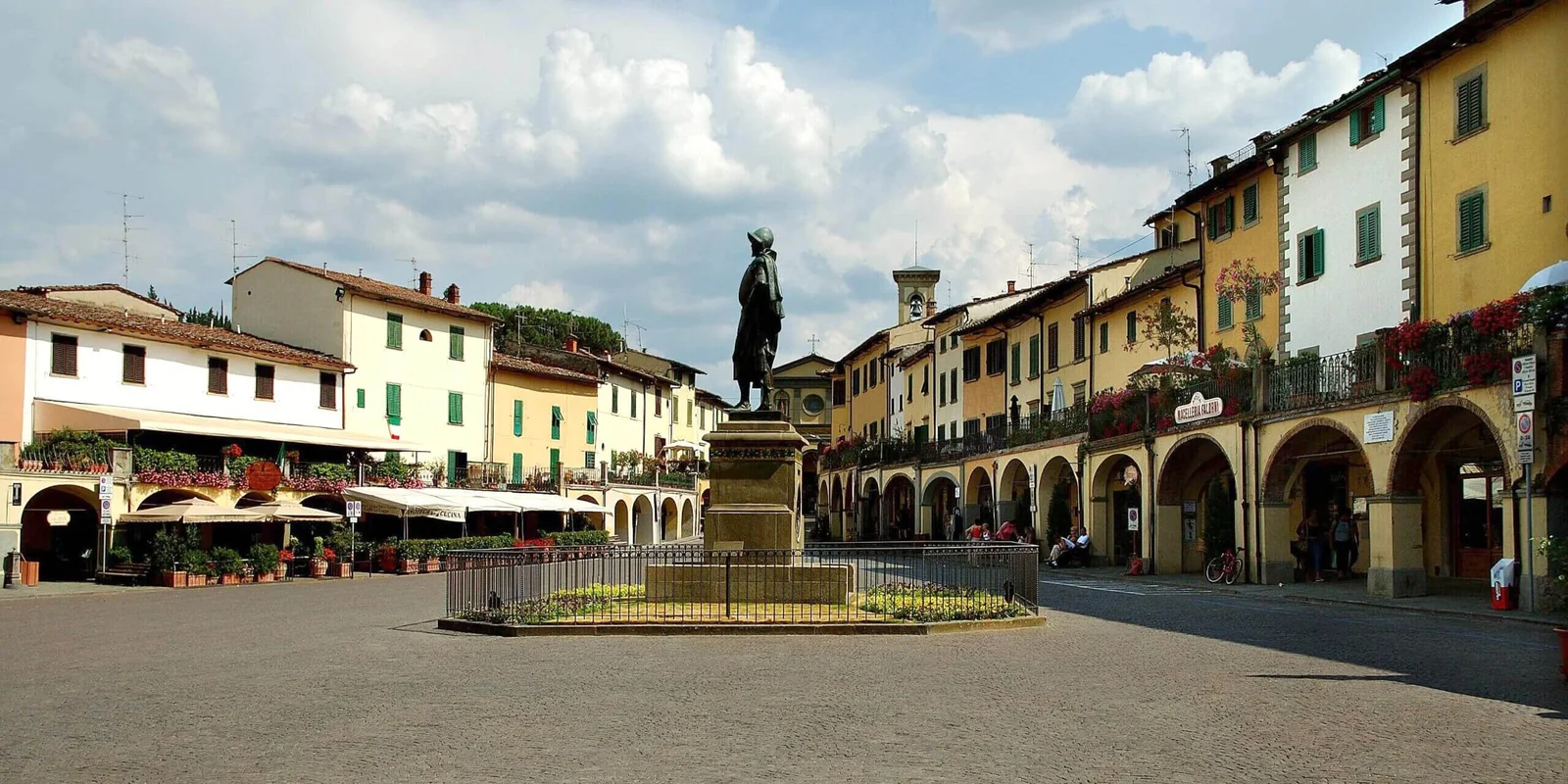
Greve in Chianti is the reference point: the farmhouse stock sits around it. Florence centro is 30 to 50 minutes by car and Siena about the same, which is what makes the Chianti hills workable rather than remote. --- is --- away. Florence Peretola airport is 45 to 70 min away. Pisa Galilei airport is 90 to 110 min away.
Greve commands strongest restaurant and wine-shop footfall while Radda upsell positioning supports 15 to 20 percent per sqm premiums over Gaiole rural stock on comparable 180 sqm casali in Chianti comparables. SS222 harvest traffic adds 20 to 40 minutes to Florence airport transfers during October vendemmia weekends when contractors and tourists share hill lanes.
What Should You Know About Design and Units?
Stone façades and terracotta roofs are not stylistic choices here; they are permit conditions. Restored 150-250 sqm layouts run €500,000-900,000 turnkey, raw shells €300,000-600,000 plus €250,000-600,000 of remediation. A pool needs its own SCIA on a compliant plot, and visible exterior work takes 3-6 months of landscape review.
Inventory spans two-bedroom casali on 2 to 5 hectare olive parcels to four-bedroom farmhouses with guest annex potential marketed for agriturismo conversion. Buyers should treat infinity pool renders as conditional until geometra confirms vincolo paesaggistico clearance and agricultural land category supports hospitality bed counts on filed SCIA records.
What Should You Know About Investment Case?
A licensed agriturismo on €700,000-1,100,000 of total capital returns 5-6% gross; the same house let short-term without the agriturismo licence returns 4-5%. April to October carries 60-70% of the year. Resale takes 18-30 months, so the difference between the two routes compounds over a long hold.
A licensed agriturismo returns 5% to 6% gross; the same casale run as an ordinary short let returns 4% to 5%, and the licence is the difference. Either way the season does the work: 60% to 70% of annual revenue arrives between April and October, so a calendar-year occupancy figure flatters the position badly. Management on an agriturismo takes 20% to 30% of gross, which is the line most spreadsheets omit entirely. Restoration itself runs €800 to €1,500 per square metre, and when the time comes to sell, a casale here typically takes 18 to 30 months to move. A liquid alternative on comparable capital is the Florence Oltrarno apartment.
Model agriturismo only when commercialista confirms documented vineyard or olive production meeting commune minimum hectares. STR on restored casali without agricultural activity suits buyers accepting 4 to 5 percent gross with simpler cedolare secca filing at 21 percent on furnished stays.
On €800,000 of total invested capital the transaction costs land between 10% and 12%, taking in registration tax, the notary, structural survey, and heritage consultancy. Agriturismo launch adds 40,000 to 70,000 EUR for compliant kitchen, guest furniture, and agricultural registration before first harvest-season guest week.
Non-resident buyers rarely secure Italian mortgage leverage above 50 percent LTV on rural casali because banks underwrite agricultural land risk slowly. Cash or cross-border mortgage buyers dominate Chianti restoration transactions, which speeds rogito to 90 to 120 days when conformità and land registry packets are complete pre-compromesso.
A Chianti farmhouse is bought by an international pool and sold to the same one, which is what makes the case work despite modest yields. Restored casali run from €400,000 past €1 million; licensed agriturismo and short-let return 4-7% gross on a season that starts earlier and ends later than Puglia’s, because the demand is cultural rather than coastal. Resale is the strongest in rural Italy, with correctly priced Chianti stock clearing in 6 to 12 months and the region drawing 14.77% of all international enquiries for Italian property. The risks are execution rather than demand: restoration priced from a listing rather than a survey, and landscape vincoli that catch a pool or a terrace after purchase. Model a 7 to 10 year hold with the works fully costed and the case is sound.
Who Is This For?
Three buyers make this work. Wine-tourism operators who can absorb 12-24 months of renovation before any revenue; American and British buyers wanting a base between Florence and Siena; and portfolio investors offsetting countryside illiquidity with something urban, such as a Florence Oltrarno apartment.
- Agriturismo operator: Documented vineyard or olive production with licensed hospitality beds
- STR investor: Restored casali in Greve corridor without agricultural compliance overhead
- Lifestyle renovator: Long hold with selective summer rental when not in personal use
- Tuscany ladder buyer: Countryside step-up after Florence or Siena urban entry
What Should You Know About Pros and Cons?
In favour: the strongest rural brand in Italy, and an agriturismo licence that differentiates the listing from every ordinary villa nearby. Against: total capital from €500,000, landscape permit delays, genuinely complex agricultural licensing, and contractor lead times of 12-18 months before a first booking.
| Factor | Advantage | Trade-off |
|---|---|---|
| Brand | Global Chianti Classico wine tourism recognition | Total capital from 500,000 EUR |
| Agriturismo | 5 to 6 percent gross licensed path | Real agricultural operations required |
| Resale pool | US and UK wine country buyer depth | 18 to 30 month exit on mispriced stock |
| Landscape | Supply limits on authentic stone casali | 3 to 6 month permit delays on pools |
| Location | Florence and Siena cultural proximity | Car dependency on hill contrada |
| Compare | Stronger heritage resale than Puglia masseria | Higher tickets than southern Italy value |
Pros
- Global Chianti Classico brand supports STR and trophy resale
- Agriturismo path delivers differentiated hospitality product
- Florence and Siena proximity drives year-round cultural tourism
- Landscape protection limits oversupply of authentic casali
- Pairs with Florence urban stock on diversified Tuscany portfolios
Cons
- High total capital versus Puglia and Abruzzo value markets
- Agriturismo licensing requires documented agricultural activity
- Heritage and landscape permits delay pool and extension projects
- Restoration overrun common on stone and timber roof stock
- Winter occupancy softer outside wine event calendar peaks
What Should Foreign Buyers Verify Before Reserving?
Five checks before compromesso on a €300,000-1,200,000 ticket. The agricultural land category; a structural survey on any abandoned casale; agriturismo eligibility confirmed with a commercialista rather than assumed; pool SCIA conformità where one exists; and a restoration budget carrying 15-20% contingency rather than none.
| Red flag | What to verify |
|---|---|
| Land category gap | Agricultural classification and buildable envelope |
| Structural risk | Engineer survey on roof beams and foundations |
| Agriturismo claim | Documented crop production meeting commune minimums |
| Pool conformità | SCIA and landscape clearance on exterior works |
| STR pro forma | Seasonal occupancy modeled, not calendar-year claims |
| Contractor quote | 15 to 20 percent contingency above fixed price |
- Get the codice fiscale early, and route the money through the notary rather than to the seller
- Geometra survey of roof, pool, and drainage on hill-adjacent plots
- Cross-read heritage restricted property Italy before exterior plans
- Settle which registration codes apply, national and Tuscan, using the holiday let licensing guide
- Compare casale tickets against Chianti area guide pricing bands
- Model net yield after IMU and rental tax with commercialista using Italy rental yield guide
- Independent avvocato review of encumbrances per due diligence Italy property
- Follow the sequence in our guide for foreign buyers, adding the agricultural classification attached to the farmhouse to the pre-caparra file.
Insider tip: Track three closed sales in the same commune before offer. In the spring listing season, asking prices on the portals typically run 8% to 12% ahead of the OMI reference bands around Greve and Radda casali.
What Should a Chianti Restoration Budget Cover?
Restoration capex typically exceeds the purchase saving on Chianti farmhouse stock. Foreign buyers at around €300,000 are usually acquiring a partially restored casale where roof, services and seismic works are outstanding, and where the agricultural parcel attached to the house carries its own rules.
| Line | What to establish before offer |
|---|---|
| Roof and structure | Survey before caparra; the single largest variable |
| Services | Rural connections are frequently absent or undersized |
| Land classification | Agricultural parcels restrict further building |
| Agriturismo licensing | Separate path if letting is the plan |
- Have a geometra price the works against the cadastral plan rather than the listing photographs.
- If letting is the intention, sequence the licence path before committing the capex.
- Budget annual IMU on cadastral value, which the comune sets between 0.86% and 1.06% on a second home.
Frequently Asked Questions
It represents casale and farmhouse restoration stock across Chianti Classico communes from Engel & Voelkers and Gate-away seed portfolios, typically from about €300,000 purchase plus €150,000-500,000 renovation. Buyers target vineyard views, agriturismo licensing, and Florence-Siena tourism spillover.
Properties distribute across Greve in Chianti, Radda, Gaiole, and Castellina contrada with vineyard and olive grove contexts. Florence centro lies 30-50 minutes north. Siena sits 30-45 minutes south depending on commune and lane access.
Raw casali often trade €300,000-600,000 before renovation. Restoration runs €800-1,500 per square metre for MEP, roofs, and heritage-compliant finishes. Total invested capital frequently lands €500,000-1,200,000 on 150-250 sqm farmhouses with land.
Yes. EU citizens purchase freely. A non-EU buyer from a reciprocity country signs the same notarial deed as anyone else, having obtained a codice fiscale first and instructed their own lawyer to read the file. Agricultural land category, agriturismo licensing, and landscape protection rules require geometra and commercialista planning before compromesso.
Licensed agriturismo with active agricultural use often achieves 5-6% gross yields. STR on restored casali without agriturismo license delivers 4-5% gross in Greve and Radda with strong shoulder seasons. Net yields fall after IMU, staffing, and tax filing complexity.
Chianti tickets exceed Valle d'Itria trulli restoration entry with stronger Florence-Siena brand resale. Puglia offers lower entry and simpler agricultural rules. Chianti suits wine tourism and agriturismo operators with higher capital.
Three pages carry the parts this one summarises. The regional picture and how Chianti prices against the rest of Tuscany are in the Tuscany investment guide and the Chianti area guide. Where a farmhouse turns out to be listed, the governing rules are in heritage restrictions on Italian property, and the letting side in holiday let licensing. For the purchase itself, due diligence before the compromesso and buying as a foreigner.
A Chianti restoration budget has four components and listings routinely quote only the first of them. Structure comes first: roof, beams and stone repair on a building that has usually been unoccupied for years, which is where surveys produce the largest surprises. Mechanical and electrical follows: heating, plumbing and wiring brought to modern standards behind a facade that cannot be altered. Then the external works: terracing, the access track, and a pool if the landscape vincolo permits one where it would be visible from a protected viewpoint. Finally the professional layer, with Soprintendenza clearance adding 8-12 weeks before a contractor can mobilise and a geometra needed throughout the programme. On a €400,000-1M farmhouse, budgeting from a builder’s estimate rather than from a survey is the single most common way a Chianti project overruns its figure.
Get an Italy property shortlist
Tell us your budget and region (Tuscany, Lake Como, Puglia, Milan, Sardinia). We reply within one business day with options matched to your goals.