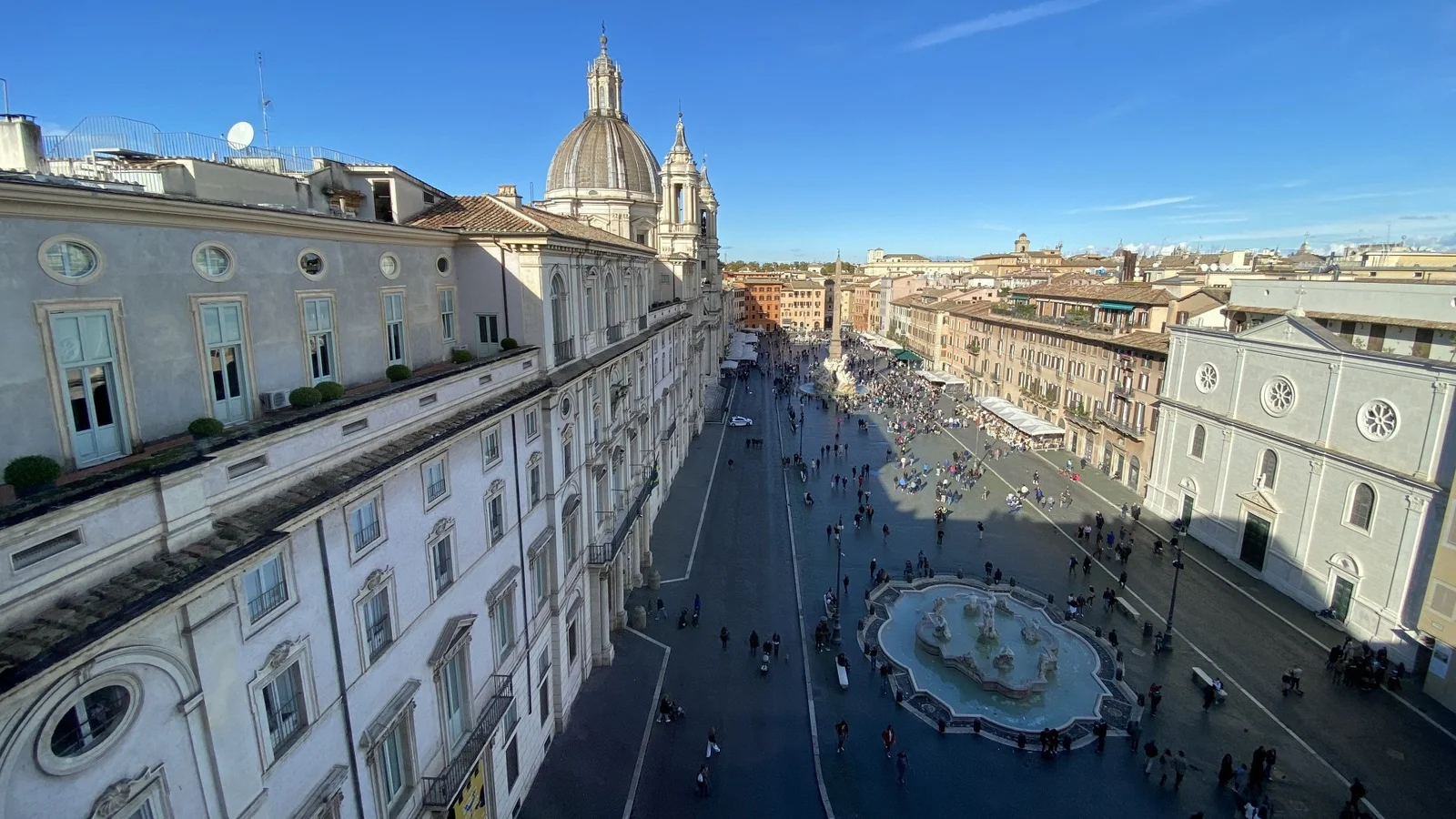
What Is Rome Jubilee Centro Storico Property?
This is resale stock inside the UNESCO historic core (the Pantheon, Navona, Trevi and Vatican-adjacent lanes) from about €450,000 for a compact restored unit, at €5,000-12,000 per sqm on prime tickets. The 2026 Jubilee has extended pilgrimage footfall into the shoulder seasons, which is what changes the letting arithmetic.
Centro storico resale is not a single developer project but a regulated market segment where each palazzo requires independent conformità review because illegal terrace enclosures and subdivided units surface frequently in agency listings US university programs, EU diplomats, and UK lifestyle purchasers dominate each enquiry season.
What Are the Key Facts for Rome Centro Storico?
Restored centro storico apartments start around €450,000 on 50-120 sqm stock, with prime zones at €5,000-12,000 per sqm, returning 3-5% gross on licensed short-let or 2-4% on a furnished lease. All-in transaction costs run 10-12% on a second home. The advantage over off-plan is immediate possession: worth weighing against COIMA Via Carcani Trastevere and its Class A conversion timeline.
| Factor | Detail |
|---|---|
| Project type | Centro storico resale apartments |
| Location | Rome UNESCO historic core |
| Price from | ~€450,000 |
| Price per sqm | €5,000-12,000 prime |
| Typical size | 50-120 sqm |
| STR licensing | CIN + commune rules |
| Compare | COIMA Guido Reni |
What Should You Know About Location and Area?
St Peter’s is 15-30 minutes on foot or by transit, the Colosseum corridor 15-25, Termini 20-35, Fiumicino 45-60, and the Flaminio regeneration district 20-30. The trade against peripheral Rome new-build is explicit: global recognition and resale liquidity, in exchange for no parking, no lift and no predictable permit path.
- Vatican corridor: St Peter’s and Vatican Museums within 15-30 minutes walk or metro
- Ancient Rome access: Colosseum and Forum within 15-25 minutes on foot or transit
- Termini hub: High-speed rail to Milan and Florence within 20-35 minutes
- Airport link: Fiumicino 45-60 minutes via Leonardo Express or private transfer
- Entry pricing: Compact 50-80 sqm restored units from about €450,000 before terrace premium
Centro addresses trade maximum Rome branding for resale marketing each Jubilee and tourism season. EUR district corporate tenants often prefer modern parking and metro, so investors splitting Rome exposure may hold one centro tourism unit and one Tranio Rome EUR corporate lease unit for blended 3-4% gross cash flow on identical total capital bands below €900,000 reviewed with commercialista.
What Should You Know About Design and Units?
Stock is compact: 50-120 sqm inside centuries-old palazzi, and two features carry most of the premium: a legally registered terrace and a working lift, against which a third-floor walk-up discounts sharply. Raw renovation stock enters lower but needs heritage-compliant upgrades and conformità clearance; budget 15-20% contingency above the geometra’s quote, because unauthorised terrace enclosures and undocumented internal changes surface late.
- Compact restored: 50-80 sqm from €450,000, couple and STR operator format
- Premium terrace: Legal terrazze with monument views €800,000-1,200,000+
- Walk-up discount: Third floor without lift trades 10-20% below lifted comparables
- Corporate lease: Furnished layouts for embassy and NGO tenants year-round
Jubilee 2026 marketing highlights pilgrimage footfall but does not simplify Soprintendenza heritage rules on facades, windows, and terrace legality foreign restorers must budget into capex schedules before compromesso on UNESCO tickets above €600,000.
What Should You Know About Investment Case?
Restored units at €600,000-900,000 return 3-5% gross under licensed short letting at 65-75% realistic occupancy, or 2-4% on long furnished leases to embassy staff. Management takes 15-25% and net lands one to two points below gross. What supports value is that UNESCO status prevents any competing new supply.
| Factor | Benchmark |
|---|---|
| Gross STR (licensed prime) | 3-5% annually |
| Long-term furnished lease | 2-4% on tickets above €800,000 |
| Management fees | 15-25% on STR |
| Transaction stack | 10-12% second-home |
| Realistic STR occupancy | 65-75% annual |
| Heritage renovation contingency | 15-20% on raw stock |
Jubilee pilgrimage traffic clusters around spring and autumn shoulder months when Vatican events draw international visitors booking centro apartments for walking access to basilicas. Summer heat and winter low tourism still create voids STR operators offset with long-term furnished leases to embassy interns during off-peak quarters when neighbor acoustic complaints can force sudden delicensing on addresses with illegal terrace enclosures discovered during municipal inspections.
Capital appreciation in prime centro tracked strong foreign demand 2015-2022 with moderation after STR enforcement headlines. UNESCO scarcity supports long-term character premiums despite yield compression versus peripheral Rome regeneration pipelines.
Rome centro storico is an address purchase where the income route depends on a building rather than on the market. Restored apartments from €450,000 on 50-120 sqm stock, prime zones at €5,000-12,000 per sqm, returning 3-5% gross on licensed short-let or 2-4% on a furnished lease, with all-in transaction costs of 10-12%. The Jubilee has lifted occupancy into the shoulder seasons through 2026, but it is an event with an end date rather than a re-rating. Two features carry most of the premium within the same street: a legally registered terrace and a working lift, against which a third-floor walk-up discounts sharply. And the condominium regolamento can prohibit sub-30-day letting outright regardless of a valid CIN, which is why 24 months of minutes belong in the file before the price is agreed.
Who Is This For?
Rome centro storico typically suits foreign buyers seeking immediate UNESCO possession from €450,000, Jubilee 2026 STR operators with professional Rome compliance teams, diplomatic landlords targeting 2-4% gross with capital preservation thesis, and heritage renovators accepting geometra-led Soprintendenza timelines on raw palazzo floors in Rome prestige shortlists versus COIMA off-plan 2029 delivery.
- Jubilee STR operator: Licensed address with Vatican walking access
- Diplomatic landlord: Furnished lease to embassy tenant with lower regulatory churn
- Heritage renovator: Raw palazzo floor with solvable conformità pre-compromesso
- Rome portfolio split: Pair centro tourism with EUR corporate lease unit
What Should You Know About Pros and Cons?
In favour: an address recognised globally, Jubilee shoulder-season demand through 2026, and immediate possession rather than an off-plan wait. Against: heritage renovation constraints under Soprintendenza, short-let regulation that varies by Municipio and by building, terrace and lift legality risk, and tickets above €800,000 where net yield compresses below 2%. Stress-test all four before authorising a compromesso above €500,000.
| Factor | Advantage | Trade-off |
|---|---|---|
| Address | Global Rome recognition | UNESCO renovation constraints |
| Jubilee 2026 | Shoulder-season tourism lift | Does not remove STR density caps |
| Possession | Immediate versus off-plan wait | Hidden structural issues common |
| Tenants | Embassy and NGO lease depth | Acoustic neighbor enforcement |
| Supply | UNESCO limits new core stock | Walk-up and terrace defects delay resale |
Pros
- Global address recognition for resale liquidity
- Jubilee 2026 supports shoulder-season tourism demand
- Immediate possession versus off-plan regeneration timelines
- Long-term corporate lease demand from embassy and NGO tenants
- UNESCO protection limits competing new supply in core lanes
Cons
- Heritage renovation constraints and conformità risk
- STR regulation and neighbor enforcement in dense palazzi
- Elevator and terrace legality materially affects value
- Tickets above €800,000 compress net yield percentages
- Transaction costs 10-12% on second-home purchases
What Should Foreign Buyers Verify Before Reserving?
Six checks before compromesso on a Jubilee-marketed ticket above €450,000. Conformità edilizia and the habitability certificate via a geometra; the legality of terrace and room subdivisions, before accepting the price rather than after; elevator compliance and condominium short-let rules; the CIN and comune registration path for that exact address; acoustic risk in a dense palazzo; and independent avvocato review.
| Red flag | What to verify |
|---|---|
| Terrace marketing | Geometra legality on enclosures and subdivisions |
| STR assumption | CIN and commune registration on exact unit |
| Elevator gap | Floor discount versus lifted comparables |
| Jubilee hype | Realistic 65-75% occupancy not 90%+ marketing |
| Heritage capex | Soprintendenza timeline on planned changes |
- Verify conformità edilizia and habitability certificate status with geometra
- Audit terrace, attic, and room subdivision legality before price acceptance
- Confirm elevator compliance and condominium rules on STR use
- Review CIN and commune STR registration path for intended address
- Model acoustic risk in dense palazzi with neighbor complaint history
- Compare ticket against Tranio Rome EUR modern stock
- Cross-read Rome property investment guide
- Independent avvocato review before compromesso deposits
Transaction timeline on resale centro stock typically runs 60-90 days from accepted offer through rogito when conformità is clean. Heritage defects extending geometra remediation can delay rogito 6-12 months unless compromesso includes objective exit clauses tied to survey outcomes. Commission comparing against Rome centro storico area guide price bands before Jubilee-marketed premium assumptions inflate offer price above OMI quartiere references.
Take the number from completed sales in the same quartiere. The regolamento’s stance on tourist use comes before everything else here. Pilgrimage enquiry spikes through the Jubilee spring without converting into signed rogiti, so asking prices track enquiry rather than sales.
What Can a Rome Centro Condominium Forbid?
The most consequential document on a Rome centro purchase is not the deed but the condominium regolamento. It can prohibit tourist use outright, and buyers in Municipio I regularly discover the prohibition after paying a caparra on a €450,000-1.4M ticket underwritten at 3-5% gross short-let income.
- Read the assemblea minutes before the caparra: a works vote already passed comes with the flat.
- Inherited abusi edilizi surface late and become the buyer’s problem after the rogito.
- Budget €8,000 to €15,000 of due diligence on a purchase around €700,000.
Annual carry is IMU, set between 0.86% and 1.06% of cadastral value by the comune plus spese typically €1,500 to €3,000.
Frequently Asked Questions
It describes resale apartments in Rome UNESCO centro storico marketed around 2026 Jubilee pilgrimage demand, typically from about €450,000 for compact restored units. Buyers target STR, long-term furnished leases, and capital preservation in Italy's most regulated historic core.
Restored apartments in prime centro storico zones often trade €5,000-12,000 per sqm depending on floor, elevator, terrace legality, and views toward monuments. Raw renovation stock enters lower but requires heritage-compliant upgrades and conformità clearance.
Yes. EU buyers are unrestricted here. For non-EU buyers the question is reciprocity, and where it exists the purchase runs through the same rogito, needing a codice fiscale and independent legal review. Heritage and STR rules require avvocato and geometra due diligence before compromesso.
Licensed STR in prime zones often delivers 3-5% gross annually with high nightly rates but strict commune caps and seasonality. Long-term furnished leases to diplomats and corporate tenants often stabilize at 2-4% gross on trophy tickets above €800,000.
Jubilee pilgrimage cycles increase visitor volumes to Vatican and centro monuments, supporting STR occupancy in spring and autumn shoulder seasons. Effect is concentrated near religious corridors and does not remove UNESCO renovation constraints or acoustic neighbor rules.
Centro storico offers immediate heritage address versus COIMA Guido Reni off-plan 2029 timeline. COIMA Via Carcani Trastevere offers Class A conversion in established neighborhood without UNESCO palazzo renovation risk.
For anyone weighing this seriously:
- Rome centro storico area guide
- COIMA Guido Reni Rome
- COIMA Via Carcani Trastevere
- Rome property investment guide
- checks before money moves
- from codice fiscale to keys
A Roman condominium can close the income route on a centro apartment entirely, and it does so more often than the comune does. The regolamento condominiale (particularly where it is contrattuale, accepted by every owner at purchase) can prohibit sub-30-day letting outright, and that prohibition binds regardless of a valid CIN or a Municipio filing. Assemblies in dense historic buildings have been voting these restrictions steadily since 2020. Two further limits sit alongside: rules on external alterations that catch air conditioning units and shutters, and quiet-hours provisions that guests routinely breach. On a €450,000-1.4M ticket where licensed short-let models at 3-5% gross against 2-4% on a furnished lease, the regolamento decides which of the two is available. Read 24 months of minutes before the price is agreed.
Get an Italy property shortlist
Tell us your budget and region (Tuscany, Lake Como, Puglia, Milan, Sardinia). We reply within one business day with options matched to your goals.