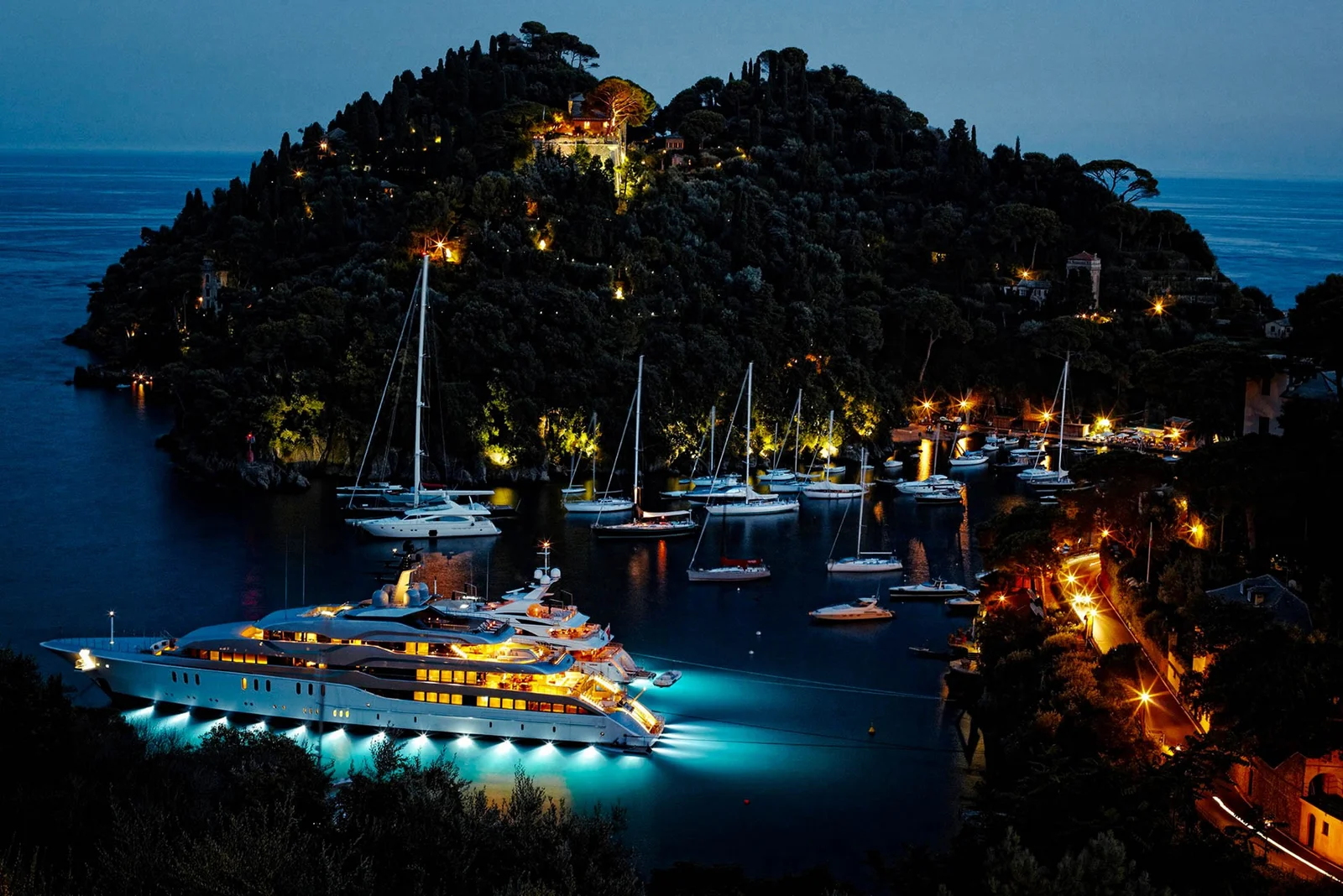
Quick answer: Portofino is too small to have a market price. The comune had 359 residents at the start of 2026, its housing stock is tiny and its transactions are rare, so any quoted rate per square metre is a description of a handful of deals rather than evidence about the next one. Valuation here is a methodology question, and most buyers arrive without one.
Almost everything written about buying in Portofino is written about the idea of Portofino. The practical problem is duller and more interesting: there is not enough transactional evidence here to price anything, and the professional tools most buyers rely on assume there is. Understanding what to do about that is the actual local knowledge.
Why the usual numbers do not work
Italian property discussion runs on published value bands by zone. Those bands are useful where enough sales occur to populate them. In a comune of a few hundred residents they are not.
| Input | Portofino’s position |
|---|---|
| Resident population | 359 at 1 January 2026 |
| Foreign residents | 20, or 5.6% of the total |
| Housing stock | Correspondingly small |
| Transactions in a year | Very few, and lumpy |
| Consequence | Any per-metre rate describes a sample, not a market |
The population figure is worth pausing on. It rose by 8 people from the previous year, an increase of 2.3%, which is the kind of change that would be statistical noise anywhere else and is a measurable demographic event here. That is the scale at which everything in this comune operates.
The practical failure this causes is specific. A buyer reads a figure per square metre, multiplies it by the floor area of the property in front of them, and believes they have a valuation. What they have is one transaction from an unknown year, involving an unknown property with unknown attributes, converted into an average and then applied to something else.
What replaces the missing evidence?
A built valuation rather than a looked-up one. The method is not exotic and it is what a competent valuer does in any thin market.
- Draw comparable evidence from the wider Tigullio and the Ligurian coast, where transaction volumes are sufficient to be meaningful
- Adjust explicitly for the attributes that the comune has and the comparables do not: the harbour setting, the scarcity of stock, the access constraints
- Establish what the planning and protection regime permits on the specific parcel, since a property whose scope for alteration is narrow is worth less than an identical one whose scope is wide
- Assess the buyer pool honestly, because scarcity supports price only where demand exists at that price
- Express the result as a range with the reasoning attached, and treat any single number as a negotiating position rather than a fact
Step two is where the discipline lies. Every adjustment should be stated and defensible. A buyer who cannot articulate why the property is worth a premium over an equivalent house 6 kilometres along the coast has not valued it; they have accepted the asking price and constructed a justification afterwards.
What does the protection regime permit?
The regional park is the instrument that decides what can be done, and it is well documented. The protected area covers 1,056.26 hectares, divided into zones with different levels of protection: 58.61 hectares in zone a, 597.31 in zone b, 362.50 in zone c and 37.84 in zone d, with a further 733 hectares of adjacent area. Six comuni are involved: Camogli, Chiavari, Portofino, Rapallo, Santa Margherita Ligure and Zoagli. A further 797 hectares of sites of community importance lie outside the park itself.
The framework was built in layers. The protected area was instituted by regional law 32 of 1986, reclassified by regional law 12 of 1995, and its perimeter identified by regional law 29 of 2001, with the park’s planning approved by regional council decision 33 of 26 June 2002.
Separately, the question of a national park has been live and contested, and a ministerial decree concerning the extent of it was annulled by the Liguria administrative court in May 2024. The lesson for a purchaser is not that the outcome is alarming but that the regime is not static, and that the position should be confirmed for the parcel at the time of purchase rather than taken from a description written earlier.
| Document to obtain | What it settles |
|---|---|
| Park zoning for the parcel | The level of protection applied |
| Certificato di destinazione urbanistica | What the planning instrument permits |
| Landscape authorisation history | What has previously been allowed here |
| Heritage constraints on the building | Whether the fabric itself is protected |
What does thinness do to the transaction itself?
Three things, and each of them is a departure from how a normal purchase behaves.
Time to sell becomes unpredictable rather than long. In a deep market, a correctly priced property sells within a distribution of times that can be estimated. Here the question is whether one of a very small number of potential buyers happens to be looking during the year in question. The same house can trade in a fortnight or sit for two years, and neither outcome carries much information about its value.
Financing becomes a valuation problem. A lender’s surveyor faces exactly the absence of evidence described above and responds conservatively, which shows up as a lower loan-to-value rather than as a refusal. The non-resident mortgage guide covers the general framework, and buyers here should treat the valuation stage as the gating item and raise it before an offer rather than after.
Negotiation loses its anchor. Where both parties can point to comparable evidence, the argument is about adjustment. Where neither can, the argument is about conviction, and the party with less need to transact wins it. That is usually the seller of a scarce asset, which is worth knowing before entering the conversation.
What is the diligence that actually matters?
Everything in the due diligence guide has to be done here as anywhere. Two of its items carry disproportionate weight in this comune.
The first is whether the registered plan matches what has actually been built. In a landscape of terraced hillside properties altered over generations, discrepancies are common and the gap transfers to the buyer at the deed. In a protected zone, regularising one is harder and slower than in an ordinary comune.
The second is access. Vehicle access, parking rights and the route by which materials reach a property are frequently held under arrangements with neighbours rather than as clean rights, and a property whose access depends on goodwill is worth less than one whose access is in the deed. This is the item most often skipped by buyers focused on the view.
- Confirm parking rights in writing and check whether they transfer
- Establish how a contractor would physically reach the property, before budgeting any works
- Read any servitude affecting the parcel rather than accepting a description of it
- Price the renovation from the renovation guide ranges and then add for access and for supervision
What stock actually exists?
Very little of it, and understanding the categories matters more than usual because each behaves differently.
The harbourfront buildings are the image of the place and the tightest of all the categories: small units in historic fabric, heavily constrained, and almost never available. Behind and above them, the hillside villas in their own grounds are the properties that generate the headline prices, and they are where the park zoning and the access questions bite hardest. Then there is ordinary housing, occupied by the small resident population, which changes hands rarely and locally.
- Harbourfront units: scarce, constrained, and priced by scarcity rather than by area
- Hillside villas: the trophy category, where planning scope drives value more than floor area does
- Resident housing: thin, local, and largely invisible to foreign buyers
- Land: effectively not a category, given the protection regime
A buyer should establish which category they are actually in before making any comparison, because a rate derived from one tells you nothing about another. The frequent error is to take a headline figure from a villa sale and apply it to a small apartment, or the reverse.
How does the seasonal economy affect a purchase?
Heavily, and in ways that show up as running costs rather than as returns.
The comune’s economy is compressed into a short high season, which means services, contractors and trades are busy and expensive precisely when an owner wants them and quiet the rest of the year. Renovation scheduling here works around that calendar, not around the owner’s convenience, and a contractor who will start in October is a different proposition from one who promises July.
Access compounds it. The road into the comune is a single constrained route along the coast, which limits deliveries, complicates works and puts a practical ceiling on how much can happen at once. Anyone budgeting a renovation should confirm how materials arrive before agreeing a price, since the logistics can rival the works.
Letting is possible and is a small, seasonal, high-value market rather than a yield play. National licensing applies as everywhere, and the returns depend on a handful of high-rate weeks rather than on steady occupancy. A buyer whose case rests on rental income should test it against the number of weeks actually lettable, which in practice is short.
What the scarcity argument does and does not prove
Scarcity is the argument every seller here makes and it is genuinely true. It also proves less than it is asked to prove.
Scarcity supports price where demand exists at that price. A property nobody wants is scarce and worthless; a property several people want is scarce and valuable. In a comune this small the number of interested parties at any moment is itself small, so the argument depends entirely on who happens to be in the market, and that is not a stable quantity.
The defensible version of the argument is narrower and more useful: the supply of comparable property here cannot increase, because the protection regime prevents it, so a buyer who wants this specific thing has no substitute available. That is a real and durable feature. What it does not do is establish a number, and a buyer should resist the slide from one to the other.
Where should a buyer actually look?
That depends on whether the objective is the address or the coast.
For buyers who want this stretch of the Riviera with a functioning market underneath it, Santa Margherita Ligure is the obvious comparison: adjacent, materially larger, and with enough transactions to price. The Liguria guide covers the region’s other coastal markets, and Genoa is the urban alternative at a fraction of the cost. Buyers weighing coast against lake should read the Liguria and Lake Como comparison.
For buyers who specifically want Portofino, the honest advice is that they are buying an asset whose value is not measurable in the ordinary way and whose resale depends on finding someone with the same preference. That is a legitimate purchase, made by people every year, and it should be made with the eyes open rather than on the strength of a rate per square metre that nothing supports. When the time comes to exit, the selling guide covers the process, and the same absence of comparables that complicated the purchase will complicate the sale.
Portofino rarely reaches an open listing. What does, along with the rest of the coast, is on property for sale in Liguria.
Frequently Asked Questions
Because the sample is too small to support one. The comune had 359 residents at 1 January 2026, the housing stock is correspondingly tiny, and transactions in a given year can be counted on one hand. A published band derived from that many sales describes those sales rather than the market, and treating it as a market rate is a statistical error rather than a matter of opinion.
By building a value from components rather than reading one off a table. That means adjusted comparables drawn from the wider peninsula and the neighbouring comuni, an explicit adjustment for the attributes that cannot be replicated, and a separate assessment of what the planning position permits. The result is a range with reasoning attached, not a number.
It sets what can be altered. The protected area covers 1,056.26 hectares across six comuni, subdivided into zones with different levels of protection, plus an adjacent area of 733 hectares. Which zone a parcel falls in determines the scope of permitted intervention, and it is the first document to obtain, before any discussion of price.
It has been contested. The regional park's perimeter was identified by regional law 29 of 2001 for an area instituted by regional law 32 of 1986 and reclassified by regional law 12 of 1995, with planning approved in June 2002. Separately, a ministerial decree on the extent of a national park was annulled by the Liguria administrative court in May 2024, so a buyer should establish the current position rather than rely on a summary.
Lending is possible and the valuation stage is where it becomes difficult. A lender's surveyor faces the same absence of evidence, and the usual response is a conservative figure and a lower loan-to-value. Buyers who need finance should raise the valuation question with the lender at the outset rather than after an offer is accepted.
It means an unpredictable one. With very few buyers and very few properties, the time to sell depends on whether one of that small group is looking in the year you are selling. The asset can trade quickly at a strong price or sit for a long time, and neither outcome tells you much about its underlying value.
They are a different product at a different price, which is exactly why they are useful for valuation. Santa Margherita Ligure and the wider Tigullio have enough transactions to produce meaningful evidence, and a Portofino valuation is usually built by starting from that evidence and adjusting explicitly for what the smaller comune has that the larger ones do not.
Paying for an intention the planning regime will not permit. Buyers frequently price a property on what they mean to do with it, and in a protected landscape with heritage supervision the permitted scope is narrower than elsewhere. Establishing what can lawfully be built or altered before agreeing a number is the whole of the discipline here.
Get an Italy property shortlist
Tell us your budget and region (Tuscany, Lake Como, Puglia, Milan, Sardinia). We reply within one business day with options matched to your goals.