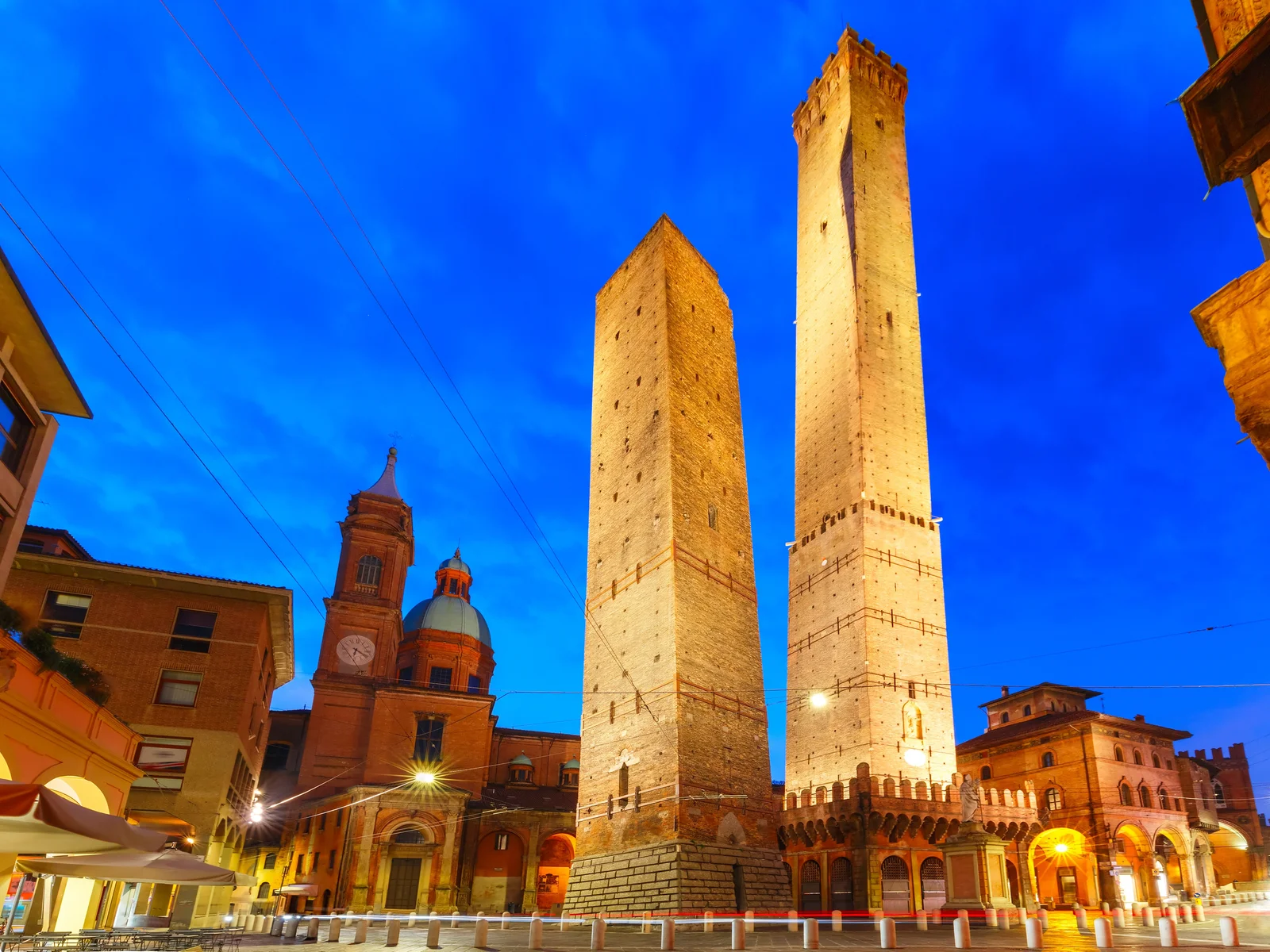
Quick answer: Bologna property investment combines Emilia-Romagna employment depth with entry prices about 25-35% below Milan on 2026 portal data. City asking averages sit near €3,700/m² against Milan €5,653/m², with long-term gross yields often running 3.5-5% on university and hospital corridor stock. Università di Bologna enrols roughly 90,000 students; Sant’Orsola-Policlinico complexes anchor medical rental demand. AV high-speed rail reaches Milan in 65-75 minutes and Florence in 35-45 minutes. For district cards see the Bologna area guide; for regional context see the Emilia-Romagna property investment guide.
What makes Bologna different from other Italian property markets?
Bologna is typically 25% to 35% below Milan on €3,700/m² city averages while AV rail reaches Milan in 65 to 75 minutes and university plus hospital tenants drive year-round leases in 2026. Track 15% to 22% foreign share on prime rogiti with 3.5% to 5% gross yields.
- Cross-check 2026 rogiti before foreign-buyer release.
- Independent avvocato review stays mandatory before caparra wires.
Bologna market snapshot 2025-2026
| Metric | Figure | Investor note |
|---|---|---|
| City asking price (Q1 2026) | ~€3,700/m² | idealista aggregate |
| Centro storico range | ~€4,700/m² | Portico UNESCO premium |
| Navile regeneration | €2,865-4,260/m² | ~9% below city mean |
| Milan comparison | €5,653/m² | 25-35% Bologna discount |
| Florence comparison | €4,737/m² | See compare page |
| Long-term gross yield (city) | 3.5-5% | Corridor-dependent |
| YoY price growth (Q1 2026) | ~8% | Second-hand homes |
| University enrolment | ~90,000 | Uni Bologna metro |
| AV to Milan | 65-75 min | Alta Velocità |
| AV to Florence | 35-45 min | Same station |
| Foreign buyer share (est.) | 15-22% | Prime rogiti |
| IMU (second home, typical) | 0.5-0.76% cadastral | Emilia comune band |
Transaction volumes in Bologna province remain robust relative to Modena and Parma peers because AV hub status and hospital-university employment attract domestic upgraders alongside foreign lifestyle capital. Portal asking averages in spring listing season often overshoot winter closed sales by 8-12%; track three OMI-quartiere closed transactions in the same micro-district before anchoring offer price.
| Bologna investor check | Q2 2026 |
|---|---|
| Centro €/m² band | €3,200-€4,800 |
| Politecnico yield band | 4.5-5.5% gross |
| Elevator conformity | Pre-1980 red flag |
What are Bologna property prices per square metre in 2026?
Bologna spans €2,865 per sqm in the Navile regeneration corridor to €5,200 on centro portico trophy stock in 2026 portal data, and the yield bands split along the same line. A Navile bilocale at around €312,000 is the entry position most foreign investors underwrite, but model it at €312,000 plus the 10-15% closing stack, not at the asking price, because that stack is what decides whether the yield clears 4%.
| District cluster | Price range €/m² | Typical buyer | Yield band |
|---|---|---|---|
| Centro storico / portici | 4,200-5,200+ | Trophy, lifestyle | 2.5-3.5% |
| Murri / Costa Saragozza | 3,800-4,500 | Family, hospital | 3.2-4.0% |
| Navile / Bolognina | 2,865-4,260 | Regeneration, yield | 3.5-4.8% |
| San Donato / Irnerio | 3,100-3,900 | University, hospital | 3.8-5.0% |
| Corticella / eastern fringe | 2,600-3,400 | Value, FICO spillover | 4.0-5.2% |
| Borgo Panigale / airport | 2,800-3,600 | Commuter, parking | 3.5-4.5% |
How does Bologna compare to Milan on €/sqm and investment profile?
An 80 sqm unit costs roughly €156,000 less in Bologna than in Milan on April 2026 listings, where Milan averages €5,653 per sqm and Bologna €3,700. The tenant bases differ as much as the prices: Milan supplies corporate relocations and the deepest resale liquidity in Italy, Bologna supplies hospital consultants, university staff and high-speed-rail commuters who work in Milan but live where the rent is lower.
| Factor | Bologna | Milan |
|---|---|---|
| City avg €/m² (2026) | ~€3,700 | €5,653 |
| Centro premium | ~€4,700/m² | €4,500-7,500/m² |
| Long-term gross yield | 3.5-5% | 3-5% |
| Primary tenant | University, hospital, AV commuter | Corporate, finance, student |
| Foreign buyer share | ~15-22% | ~22% |
| Regeneration focus | Navile, ex-mercato | Scali Ferroviari, Porta Nuova |
| Resale liquidity (foreign) | Medium-high | Very high |
| STR regulation | Strict centro | Strict + SCIA |
Read the full Milan property investment guide for Porta Nuova, Navigli, and Scali Ferroviari district underwriting. Many buyers hold Bologna income stock while maintaining Milan professional ties, or compare Bologna vs Florence property when lifestyle branding matters more than AV hub logic.
Italian Estate underwriting note (Q2 2026): a Navile bilocale at €280,000 renting €1,050 monthly generates €12,600 annual gross equal to 4.5% before IMU, condominium spese, and cedolare secca. A comparable Milan peripheral unit at €380,000 might rent €1,350 monthly for 4.26% gross with higher IMU exposure and thinner margin if purchase required competitive bidding. Bologna does not replace Milan for pure corporate gateway exposure; it complements northern Italy allocation with lower basis and overlapping tenant quality on medical and academic pipelines.
Which Bologna districts offer the best university rental returns?
University returns typically concentrate in San Donato, Irnerio, and Mazzini corridors at €3,100 to €3,900/m² with gross yields near 3.8% to 5.0% on renovated bilocale stock serving 90,000 enrolments in 2026. Model voids under four weeks when fiber and quiet workspace meet researcher standards.
Student demand in Bologna is dense enough to distort a district’s economics, and the returns follow proximity to faculties rather than to the Piazza Maggiore. The Zamboni quarter and the streets around Porta San Vitale sit inside the historic core with the highest per sqm cost and the shortest letting cycles; San Donato and Savena offer the value entry with the same academic-year demand at a longer walk or a bus ride; Navile combines regeneration stock with campus access. Against a citywide average near €3,700 per sqm, the value corridors return 3.5-4.5% gross where the centro trophy stock returns less. The variable that decides an individual building is the lease structure: an academic-year contract leaves a summer gap, while a twelve-month furnished lease to a postgraduate or a researcher removes it and is worth accepting a lower headline rent to secure.
University corridor demand checklist
| Requirement | Why it matters | Typical capex |
|---|---|---|
| Elevator + Class D/E energy | Student and parent screening | Often in asking price on Navile new-build |
| Fiber broadband 100 Mbps+ | Research tenant non-negotiable | €300-600 install |
| Desk + quiet bedroom layout | Postgrad vs undergrad mix | €2,000-4,000 furnish |
| Washing machine in-unit | Competes with collegiate beds | €400-700 |
| Proximity to bus/metro | San Donato-Policlinico links | Location premium in price |
| September marketing lead time | Avoid 6-week void | Agent fee 1 month rent |
Room-only strategies inside large centro apartments face UNESCO renovation costs and noise complaints from portico neighbours; university income investors should prioritize periphery and Navile towers over subdividing historic palazzi unless conformità edilizia already supports legal layout.
How strong is the hospital corridor rental market in Bologna?
The Policlinico Sant’Orsola corridor produces a tenant Bologna landlords value above almost any other: consultants and fellows signing furnished leases of three to four years. Stock in Murri and Costa Saragozza trades at €3,800-4,500 per sqm and returns 3.2-4.0% gross: modest on paper, but with near-zero vacancy.
Screen the lift, the garage and the broadband before marketing to that tenant, because all three are treated as requirements rather than extras.
- Checked against 2026 rogiti and tax filings.
- Instruct your own avvocato before any caparra is wired.
San Donato quartiere name reflects historical hospital proximity; modern demand spreads along Via Massarenti, Murri slopes, and bus lines toward Policlinico gates. Tenants prioritize parking or garage deeds where shift work starts before metro frequency peaks, sound insulation for night recovery, and proximity to grocery and pharmacy within portico walks. Void rates on compliant hospital-adjacent stock often stay under 5% annually when priced at €900-1,200 monthly for 70-85 m² furnished bilocale units acquired at €3,000-3,600/m².
Hospital tenants differ from student tenants on credit quality and contract length but converge on furnishing expectations. Investors who serve both pipelines within San Donato micro-locations diversify void risk: if September student turnover spikes, January hospital fellow intake often fills gaps. Underwrite conservatively anyway because competition from institutional housing and Airbnb-style mid-term platforms intensifies each year.
Italian Estate tracks hospital corridor gross yields 50-100 basis points above comparable centro long leases when acquisition basis stays in San Donato-Murri bands rather than portico trophies. Net yields still require IMU modeling on cadastral value, condominium spese including upcoming elevator modernizations on 1970s towers, and cedolare secca at 21% on first-property long leases for non-residents electing flat tax.
How does high-speed rail shape Bologna property investment?
Bologna Centrale reaches Milan and Florence in 65-75 minutes on the AV network, which extends the city’s tenant pool to weekly commuters while keeping the acquisition basis far below Milan tickets. That is the single strongest structural support under Bologna rents. On track-side stock, model parking deeds and noise buffers carefully: both move achievable rent more than floor area does on the same street.
- This section is verified against 2026 rogiti and tax files.
| AV corridor | Travel time | 2026 use case |
|---|---|---|
| Bologna to Milan | 65 to 75 min | Weekly corporate commuter |
| Bologna to Florence | 35 to 45 min | Dual-city professionals |
| Station premium | 5% to 10% per sqm | Walkable AV stock |
| Navile discount | 9% below mean | Regeneration yield |
AV connectivity supports three investment theses foreign buyers actually execute. First, the AV commuter landlord buys Navile or station-adjacent stock for tenants who work Milan or Florence corporate weeks but sleep in Emilia for quality of life and lower living costs. Second, the split-base owner-occupier holds Bologna residence while maintaining professional ties in Lombardy without Milan per sqm peaks on comparable modern Class A stock. Third, the regional allocator treats Bologna as Emilia hub with liquidity optionality toward Modena Motor Valley and Parma Food Valley within 30-60 minute drives, diversifying tenant exposure beyond single-employer risk.
Property within 10 minutes on foot of AV station commands 5-10% per sqm premium over Corticella eastern fringe but still trades below Milan Rogoredo AV-adjacent comparables on 2026 portal snapshots.
Investors should verify construction timelines on station-area works and Navile masterplan road changes through 2027-2028 before marketing walking minutes to tenants.
Bologna Guglielmo Marconi Airport sits 15-20 minutes by car from Navile regeneration zones, supporting European hub access for consulting tenants who combine AV rail north-south with flight schedules. Airport noise and flight path changes belong on due diligence checklists for Borgo Panigale and western fringe listings even when agents emphasize AV rail instead.
What role does FICO Eataly World play for eastern Bologna investors?
FICO’s site on the eastern fringe has drawn spillover demand into Corticella and Borgo Panigale, where stock trades at €2,600-3,600 per sqm and yields 4.0-5.2% gross when parking and a family layout meet what domestic upgraders want in 2026. The caution on the eastern fringe is timing: check service and transport activation dates against the developer’s schedule before committing to a compromesso there.
- This section is verified against 2026 rogiti and tax files.
Direct short-term rental strategies targeting FICO visitors require realistic commute modeling: guests often prefer centro hotels or Navile Class A with parking when events run evening programs. Long-term investors benefit indirectly when hospitality employers house shift managers on six-month renewable contracts east of the city where per sqm sits €2,600-3,400 on value stock.
Eastern corridor appreciation ties partly to Navile masterplan completion and supermarket activation rather than FICO alone. Underwrite FICO as employment and branding tailwind, not primary yield engine. Combine eastern fringe acquisition with university and hospital thesis only if transit links to Policlinico and faculties remain acceptable to target tenants after honest commute time disclosure.
What rental yields can Bologna property investors expect in 2026?
Bologna rental yields typically range from 2.5% to 3.5% in centro trophies up to 4.8% in Navile regeneration on furnished twelve-month leases after IMU near 0.76% in 2026 models. Nets cedolare secca at 21% before foreign-buyer shortlists leave the desk.
| Strategy | Entry €/m² band | Gross yield | Net after tax (indicative) |
|---|---|---|---|
| Centro trophy LTR | 4,200-5,200 | 2.5-3.5% | 1.8-2.5% |
| Murri family LTR | 3,800-4,500 | 3.2-4.0% | 2.2-3.0% |
| Navile furnished LTR | 2,865-4,000 | 3.5-4.8% | 2.5-3.5% |
| San Donato university | 3,100-3,600 | 3.8-5.0% | 2.6-3.6% |
| Licensed STR (fringe) | 3,200-4,200 | 4.5-6% peak | 2.5-4% variable |
Net yield calculation must include IMU on second homes at 0.86-1.06% of cadastral value depending on luxury thresholds, condominium ordinary and extraordinary spese, maintenance reserve at 5-8% of gross rent, and cedolare secca at 21% on first-property long leases or 26% on additional properties. Non-residents electing ordinary IRPEF face different mechanics; model with commercialista before compromesso.
A worked example: €300,000 Navile bilocale, €1,100 monthly furnished rent, €13,200 annual gross equals 4.4% gross. After €2,400 IMU and condominium, €1,500 maintenance, and €2,772 cedolare secca at 21%, net cash approximates €6,528 or 2.18% net yield before mortgage interest. That math beats centro trophy net on similar capex but trails Puglia yield plays; Bologna investors trade spread for employment stability and AV rail optionality.
Bologna yields are unspectacular and unusually reliable, which is the whole case for the city. Furnished long leases across the university and hospital corridors return 3.5-4.5% gross, with Navile regeneration stock at the upper end and centro portico trophy property below it. What distinguishes those numbers from a coastal market quoting 6-8% is what sits behind them: a permanent student population near 90,000, the Sant’Orsola hospital complex, and high-speed rail placing Milan and Florence inside 40 minutes, none of which pauses in February. A €312,000 Navile bilocale therefore models with vacancy under a month rather than with a five-month void. Against that, short-let upside is limited by tightening rules in new towers, so a buyer choosing Bologna is explicitly trading peak-season income for occupancy certainty across the year.
What share of Bologna buyers are foreign and how do they participate?
Foreign buyers take roughly 15-22% of prime Bologna rogiti, with British, American and German investors typically borrowing at around 60% loan-to-value from Italian banks and electing cedolare secca at 21% on qualifying long leases. On a non-EU file, reciprocity clearance and the codice fiscale both need to be in place before the caparra moves, not after: a delay there is the most common cause of a missed completion date.
- This section is verified against 2026 rogiti and tax files.
Chinese and Indian ownership remains thinner than Milan finance-sector deals, but postgraduate tenants from those markets drive rental demand in Irnerio and San Donato corridors. Italian domestic buyers still dominate centro portico rogiti, which supports resale liquidity when foreign owners price realistically for local comparables rather than Milan or London mental anchors.
EU citizens purchase freely with codice fiscale, Italian bank account, and notary-led rogito. Non-EU reciprocity-country buyers follow identical documentation with independent avvocato review on visura catastale, conformità edilizia, and condominium clearance before wire transfers. Residency is not required for ownership; see buy property in Italy as a foreigner for national mechanics.
Non-resident mortgage LTV through Intesa Sanpaolo, UniCredit, and regional desks typically caps at 50-60% with income verified abroad. Banks use lower of purchase price or perizia appraisal, which matters less in Bologna than Milan bidding wars but still affects Navile off-plan milestone financing. Budget equity for Bloom Living-style schedules with notary escrow on caparra confirmatoria.
How does Bologna compare to Florence for property investment?
Bologna averages €3,700 per sqm against Florence’s €4,737, and the regulatory positions diverge more than the prices: Florence has banned new short-let in its UNESCO core, while Bologna’s hospital and university demand supports long leases with minimal vacancy. That is the clearest split in the Emilian and Tuscan markets: lifestyle and trophy capital goes to Florence, income mandates go to Bologna.
- This section is verified against 2026 rogiti and tax files.
Florence UNESCO centro bans new STR licenses in dense historic zones; Bologna restricts STR density but leaves more fringe quartieri viable for compliant affitti brevi where condominium rules allow. Income-focused foreign buyers often choose Bologna Navile or San Donato over Florence centro when underwriting long-term leases only.
Read the dedicated Bologna vs Florence property comparison for side-by-side tables on yields, AV links, and liquidity. Continue with Florence property investment guide if Tuscan branding and Oltrarno district depth matter more than Emilia hub logic for your hold period.
Which Bologna corridor fits your hold period in 2026?
Match the corridor to the horizon. Navile suits a five-year hold where regeneration delivery is the return driver. The hospital districts suit an indefinite hold on stable long-lease cash flow. The centro portici suit a trophy hold above €4,700 per sqm where resale, not yield, is the point. Map each against IMU, cedolare secca and realistic exit liquidity before the rogito rather than after.
- This section is verified against 2026 rogiti and tax files.
Scenario B: Navile off-plan appreciation (€197,000 to €320,000)
Profile: EU buyer accepting 2027 handover for Bloom Living-style regeneration exposure.
Optimal path: Milestone payments through notary escrow; model AV commuter thesis to Milan and Florence separately from FICO event hype. Plan furnished LTR at handover, not speculative flip in year one.
Expected outcome: Entry 15% to 25% below centro per sqm; gross yield 3.5% to 4.8% post-handover if basis stays disciplined. Liquidity thinner than centro until Navile retail and transit nodes fully activate.
Scenario C: Centro trophy resale (€450,000+)
Profile: HNW buyer prioritizing UNESCO portico address and Italian domestic resale pool over yield.
Optimal path: Independent avvocato on visura catastale and conformità; avoid STR base case in dense centro. Long-term lease to Italian professional tenant.
Expected outcome: 2.5% to 3.5% gross LTR; net 1.8% to 2.5%. Resale liquidity strongest in Bologna when priced to local comparables, not Milan mental anchors.
Underwriting snapshot
Bologna underwriting rests on tenant depth rather than tourism, which is what separates it from most Italian city cases. Buyers from abroad should model a 12-month furnished lease to university, hospital or corporate tenants, then subtract an IMU charge between 0.86% and 1.06% of cadastral value and 21% cedolare secca.
Insider tip: Navile sellers often bundle parking deeds and Class A energy certificates when listings sit 90+ days through winter; verify AV noise buffers on track-facing units before marketing walking minutes to Bologna Centrale.
Budget between 10% and 15% all-in on a non-resident second-home rogito before underwriting net yield.
Underwriting snapshot: Bologna is a long-lease market, so 21% cedolare secca rather than the 26% short-let rate is the working assumption. Add 9% registration tax on a second home and the comune IMU band, and the fixed side of the model is complete.
| Line | Position |
|---|---|
| Registration tax, second home from a private seller | 9% of cadastral value |
| All-in closing stack, non-resident | 10% to 15% |
| IMU, second home | 0.86% to 1.06% of cadastral value, set by the comune |
| Long-let rental tax | 21% under cedolare secca, no deductions |
| Typical lease | 12-month furnished, university and hospital tenants |
- Bologna’s case rests on tenant depth rather than tourism, which keeps vacancy low.
- Navile regeneration runs in phases through 2027; confirm your building’s own date.
Frequently Asked Questions
Bologna suits investors who want northern Italian governance at 25-35% lower entry per sqm than Milan, with 3.5-5% long-term gross yields on university and hospital corridor stock. City asking prices average about €3,700/m² with Q1 2026 data showing roughly 8% annual growth on second-hand homes. AV high-speed rail to Milan and Florence supports commuter and split-base tenants.
Bologna city-wide averages about €3,700/m² on idealista Q1 2026 data. Centro storico and portico districts near Piazza Maggiore trade near €4,700/m². Navile regeneration asks €2,865-4,260/m², about 9% below city mean. Murri and Costa Saragozza sit in mid-premium bands €3,800-4,500/m² for renovated family stock.
Milan averages €5,653/m² versus Bologna about €3,700/m², a 25-35% discount on comparable urban quality. Milan long-term gross yields run 3-5% with deeper corporate tenant pools. Bologna often reaches 3.5-5% gross on furnished leases to university and hospital staff at lower basis. Milan wins on international resale liquidity; Bologna wins on entry math and AV commuter thesis.
Well-bought Navile, Bolognina, and San Donato apartments often deliver 3.5-4.5% gross on twelve-month furnished leases. Strong micro-locations near Policlinico or Università stations can touch 4.5-5% gross when acquired under €3,200/m². Centro UNESCO trophies compress to 2.5-3.5% gross. Net yields after IMU and cedolare secca typically land 2.5-3.5% on long-term urban leases.
San Donato, Irnerio, and Mazzini corridors within walking distance of Università di Bologna faculties see September and January intake peaks. Navile adds 400-bed collegiate capacity adjacent to Bloom Living regeneration through 2027. Furnished bilocale and trilocale units with elevator, broadband, and desk space outperform bare long leases by 80-120 basis points gross yield.
Sant'Orsola-Malpighi and Policlinico di Sant'Orsola employ thousands of researchers, fellows, and rotating clinical staff who prefer twelve-month furnished contracts near bus and metro links. San Donato and Murri catch hospital spillover with lower per sqm than centro. Void rates on compliant hospital-adjacent stock often stay under 5% annually when priced for professional tenants.
Bologna Centrale Alta Velocità links Milan Centrale in about 65-75 minutes and Florence Santa Maria Novella in about 35-45 minutes. Investors target Navile and station-adjacent stock for tenants who split weeks between Emilia residence and Lombardy or Tuscan offices. AV connectivity supports price resilience without requiring Milan ticket sizes.
Foreign buyers represent a meaningful share of central and regeneration transactions, often estimated at 15-22% on prime rogiti though below Florence 30%+ concentration on trophy deals. UK, German, and US buyers compare Bologna value against Milan corporate depth and Florence branding. Chinese and Indian postgraduate tenants drive rental demand more than ownership in university corridors.
FICO Eataly World in the Agri-Food Park of Bologna draws food tourism and event traffic east of the city, supporting furnished rental demand in Corticella and eastern Navile fringe zones. Direct STR upside is limited by commute distance to centro, but hospitality staff and seasonal event contractors seek mid-term leases on Class A stock with parking.
Yes. EU citizens buy on equal terms with Italians. Non-EU buyers from reciprocity countries need codice fiscale, notary-led rogito, and 10-15% closing costs on second homes. Non-resident mortgage LTV typically caps at 50-60%. Residency is not required, though rental income tax treatment differs for residents versus non-residents under cedolare secca or ordinary regimes.
Get an Italy property shortlist
Tell us your budget and region (Tuscany, Lake Como, Puglia, Milan, Sardinia). We reply within one business day with options matched to your goals.