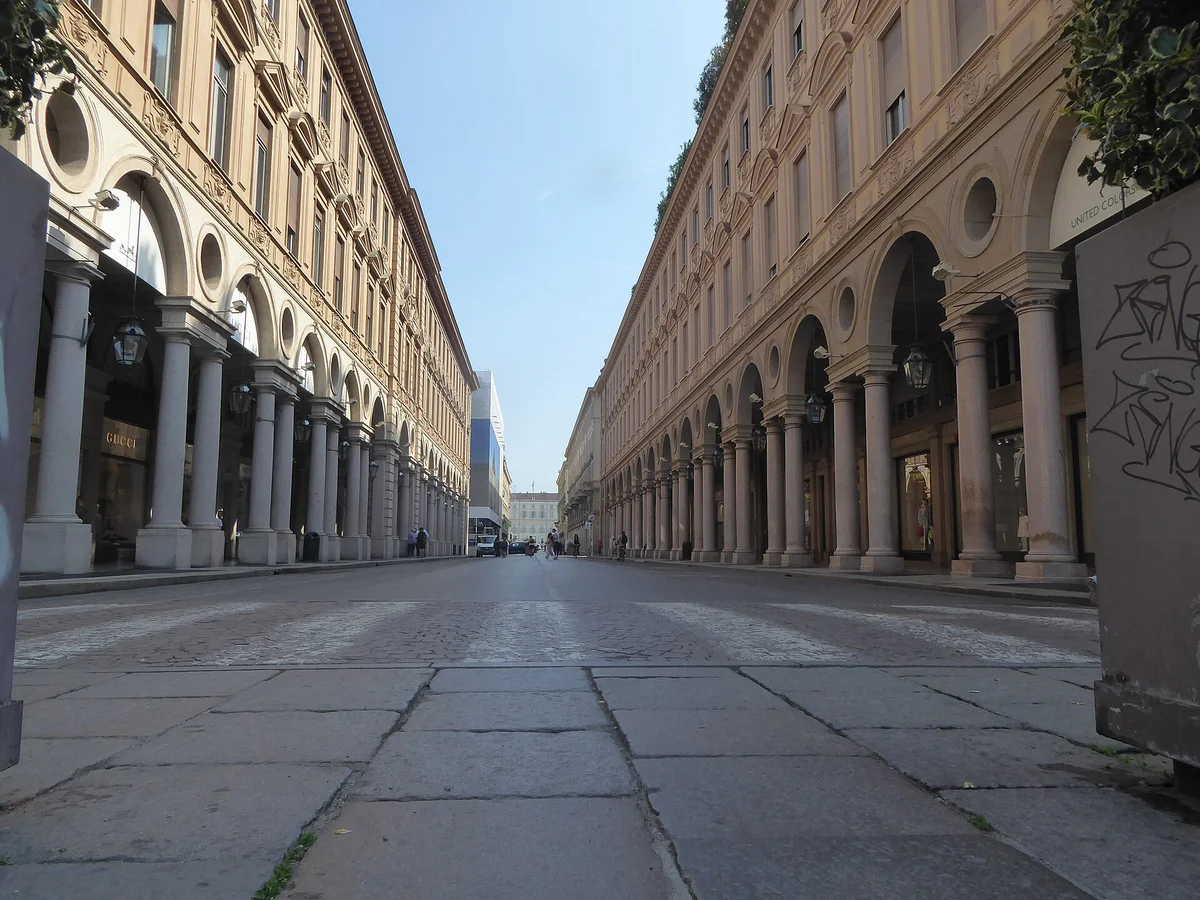
Quick answer: nuda proprietà means buying the title to an Italian property at 25-50% below full value while the elderly seller keeps a lifetime right to live in it. The discount is priced by official age coefficients, the seller pays the running costs, and full ownership returns to you automatically when the usufruct ends. No rent, no keys, no timetable: the trade is capital patience for a structural discount. This guide covers the 2026 coefficient tables, the cost split during the usufruct, worked purchase maths on a Turin flat, the risks that matter, and exit routes. The ordinary full-ownership route is mapped in the foreign buyer hub.
What is nuda proprieta (bare ownership) and how does it work?
Nuda proprietà is ownership of a property minus the right to enjoy it: the civil code splits full title into a usufruct, kept by the seller for life, and the bare ownership you buy, typically at 25-50% below full market value. The split is temporary by construction, because a usufruct cannot outlive its holder.
The lifecycle has exactly three phases and no surprises hidden between them:
- Purchase: a standard notarial rogito transfers the bare title; the deed states the usufruct’s reservation.
- Usufruct period: the seller occupies (or lets) the home, pays its running costs and taxes, and maintains it ordinarily.
- Reconsolidation: at the usufruct’s end, full ownership vests in you automatically: no new deed, no purchase tax, only a cadastral update filing.
| Right | Usufructuary (seller) | Bare owner (buyer) |
|---|---|---|
| Occupy / use | yes | no |
| Collect rent | yes | no |
| Sell own right | yes (usufruct) | yes (bare title) |
| Mortgage own right | yes | yes |
| Alter structure | no | no (until reconsolidation) |
How are nuda proprietà prices calculated?
Fiscal pricing starts from the MEF coefficient table, which converts the usufructuary’s age into a percentage split of full value, and the 2026 table is unchanged from 2025 because the law floors the reference rate at 2.5% even though the legal interest rate fell to 1.60% in January. Age is the only input: health, gender and lifestyle never enter the formula.
| Usufructuary age | Usufruct value | Bare ownership value |
|---|---|---|
| 64-66 | 50% | 50% |
| 67-69 | 45% | 55% |
| 70-72 | 40% | 60% |
| 73-75 | 35% | 65% |
| 76-78 | 30% | 70% |
| 79-82 | 25% | 75% |
| 83-86 | 20% | 80% |
Market pricing then negotiates around the table, almost always below it from the buyer’s side:
- Buyers demand extra discount for illiquidity and timing uncertainty, so achieved prices commonly sit 5-15 points under the tabled percentage.
- Joint usufructs on two lives (a couple selling together) price off the younger life and extend expected duration, deepening the discount further.
Coefficient tables are annexed to the registration-tax code and recalibrated only when the legal interest rate moves, which produced a quirk worth knowing in 2026: the legal rate dropped to 1.60% in January, but a statutory floor keeps usufruct computations at 2.5%, so the tables carried over from 2025 unchanged. A lower reference rate would have raised usufruct values and cut bare-ownership shares, so the floor quietly protects buyers’ tabled percentages. The same table prices every life usufruct in the country, from a €90,000 Molise farmhouse to a €2 million attico in Rome, which makes it the rare corner of Italian property where valuation arguments have an official answer sheet. Deals are struck around it, but taxes are computed on it, and both sides of the negotiation know those two numbers differ.
The table serves a second, harder function: it fixes the tax base. Registration tax applies to the bare-ownership share of the cadastral value, computed with the same coefficients, which is why the registration tax guide’s prezzo-valore mechanics matter here in reduced form.
What does a worked purchase look like?
A Turin example makes the arithmetic concrete: a €300,000 flat in Crocetta, owner aged 75, prices at 65% of full value on the fiscal table, and a negotiated market deal lands near €175,000. The buyer’s registration tax runs on 65% of the cadastral base, not the price, keeping entry costs proportionally light.
| Line | Value |
|---|---|
| Full market value | €300,000 |
| Fiscal bare-ownership share (age 75) | 65% → €195,000 |
| Negotiated purchase price | €175,000 (−42% vs full value) |
| Cadastral value (full, rendita €1,100 × 1.05 × 120) | €138,600 |
| Registration tax base (65%) | €90,090 |
| Registration tax 9% | €8,108 |
| Notary and fixed costs | ~€3,500 |
| All-in entry | ~€186,600 |
Two features distinguish this from every other purchase in this cluster. Holding costs approach zero, because IMU, utilities and ordinary maintenance belong to the usufructuary, leaving the bare owner only a prudent reserve for extraordinary repairs. And the position appreciates mechanically with time: at the usufructuary’s 80th birthday the same title is tabled at 75%, a 10-point gain independent of the Turin market, on top of whatever the market itself does.
Holding-period returns compound from three independent sources, and separating them keeps expectations honest. The coefficient ladder adds roughly 5 percentage points of tabled value every 3-year age band, purely from the usufructuary’s ageing. Market movement applies to the full value, so a 2% annual rise in Turin prices accrues to the bare owner on €300,000, not on the €175,000 paid. And the entry discount to the fiscal table, the 5-15 points negotiated at purchase, is captured in full at reconsolidation. On the worked Crocetta example those three streams turn €186,600 all-in into a plausible €330,000-360,000 asset over a 12-year usufruct, a 4.5-5.5% annualised return with no tenant, no void, and no management, which is precisely the profile pension-style capital keeps rediscovering in this niche.
Nuda proprietà purchase maths never includes rental yield, and that is the point: the comparison asset is not a buy-to-let but a zero-coupon claim on a specific address. Buyers who need income belong in the rental yield guide’s territory instead.
Who pays for what during the usufruct?
The civil code’s cost split is stable and worth learning verbatim: articles 1004 and 1005 give the usufructuary ordinary maintenance, taxes on use and running costs, while the bare owner carries extraordinary structural repairs, defined as roof, load-bearing structures, whole-system replacements and perimeter walls. On a sound urban flat the bare owner’s ledger is often €0 for years. Extraordinary works are voted in the condominium, so the owner-side picture in condominium fees in Italy applies to the bare owner as well.
| Cost | Usufructuary | Bare owner |
|---|---|---|
| IMU (second-home rules) | yes | no |
| Utilities, condominium ordinary fees | yes | no |
| Ordinary maintenance and repairs | yes | no |
| Extraordinary repairs (roof, structure, systems) | no | yes |
| Condominium extraordinary works | no | yes |
| Building insurance (structure) | negotiable | commonly bare owner |
Practical frictions cluster in the grey zone between the two columns, and the deed is the place to close them in advance:
- Define «extraordinary» by list, not by adjective, in the rogito.
- Require the usufructuary to insure and to maintain proof of ordinary upkeep.
- Ban or permit letting explicitly, with any permitted lease ending at the usufruct.
- Agree access rights for periodic inspection, absent from the default rules.
Insider tip: ask the condominium administrator, before the deed, for the assembly minutes of the last 3 years. Approved-but-unexecuted extraordinary works, a €40,000 facade job voted and pending, become the bare owner’s bill the day after purchase, and the listing will not mention them.
What are the real risks of buying bare ownership?
Longevity is the priced risk, and everything else is the unpriced remainder: an 80-year-old usufructuary has a further life expectancy of roughly 9-10 years on Italian mortality tables, but individual outcomes range from months to three decades, and your capital’s annualised return moves inversely with every extra year. The other risks are contractual and preventable.
The full risk ledger, with the mitigation that actually works:
| Risk | Reality | Mitigation |
|---|---|---|
| Longevity beyond tables | duration uncertainty is the product itself | price at a discount to the fiscal table; never model a date |
| Property neglect | usufructuary skimps ordinary upkeep in late years | deed obligations + inspection rights + insurance |
| Extraordinary repair calls | roof/structural bills land on you at any time | €10,000-20,000 liquid reserve; condominium minutes check |
| Letting at reconsolidation | lease tail can outlast usufruct briefly | contractual letting ban, or accept and price it |
| Resale illiquidity | thin secondary market for bare titles | plan to hold to reconsolidation; treat resale as bonus |
| Title defects | same as any purchase | full checks per the due diligence guide |
Longevity mathematics deserves respect rather than fear, and Italian data gives it precise shape: ISTAT mortality tables put further life expectancy at roughly 14 years for a 75-year-old and 9-10 years for an 80-year-old, with women outliving those averages by 2-3 years. Around every average sits a wide distribution, and the buyer’s return curve is convex to it: a usufruct ending in year 5 turns the worked Turin example into a 12%+ annualised outcome, year 20 compresses it toward 3%. Professional buyers respond with portfolio logic, several small positions across different lives instead of one large one, and household buyers should copy the principle where capital allows: two €90,000 bare titles in different cities diversify biology and market in a way one €180,000 title never can.
Inheritance interacts cleanly rather than riskily: if the bare owner dies first, the bare title passes to their heirs like any asset, and reconsolidation later benefits them, mechanics that sit alongside the succession rules in the inheritance guide. The one genuinely unfixable feature is emotional, not legal: this is an investment whose maturity date is a person’s death, and buyers uncomfortable holding that position should simply not hold it.
How do you exit a nuda proprietà position?
Exit is either patience or resale, and patience is the designed route: reconsolidation converts the discounted entry into 100% ownership with no further tax event, after which the property sells under ordinary rules, including the 5-year capital gains clock that started at the original purchase. Resale of the bare title works at any time, but it sells into a market perhaps 5% the depth of the ordinary one. Once the property is fully yours, selling property in Italy as a foreigner covers the mechanics.
The three exits ranked by frequency:
- Hold to reconsolidation: the base case; your €175,000 Turin entry becomes a €300,000+ asset at then-current prices, and the capital gains guide’s five-year exemption has usually long since matured.
- Resell the bare title: mechanically simple, no usufructuary consent needed; expect the same 5-15 point liquidity haircut you demanded on entry, offset by the coefficient gain from the usufructuary’s ageing.
- Negotiated early consolidation: buy out the usufruct from an ageing seller who wants to move near family; priced off the current coefficient, it converts the position to full ownership on your timetable.
Numerically, the coefficient ladder does quiet work throughout: a title bought at age-71 pricing (60%) is tabled at 70% six years later and 80% after the usufructuary’s 83rd birthday, so even a flat Turin market delivers a mechanical 33% gross uplift over that span, before the final step to 100% at reconsolidation. Layer ordinary market growth on top and the asymmetry that attracted institutional buyers to French viager and Italian nuda proprietà portfolios becomes visible in a single household-sized position.
Three buyer profiles account for most successful purchases, and each reads the coefficient table differently. The generational planner buying for children a decade from adulthood wants younger usufructuaries and deeper discounts, accepting 15-20 year horizons. The yield-refugee reallocating from a 3% bond ladder wants usufructuaries past 78, where the tabled bare share of 70-75% compresses the wait. The value hunter treats the 5-15 point discount to the fiscal table as the entire trade and shops accordingly, indifferent to address. Mismatched profiles produce the unhappy owners: a 15-year horizon bought on a yield-refugee’s impatience is the classic error.
Who should buy bare ownership, and who should not?
Nuda proprietà fits capital with a decade of patience and no need for keys: parents banking a future home for children now aged 10, investors parking equity in hard assets at a 30-50% discount, and buyers of last-time-mover stock in cities where full-price entry is prohibitive. It structurally fails anyone needing income, use, or a date.
A candid fit test, four questions long:
- Can this capital sit without income for 10-20 years? If no, stop.
- Does your plan survive the usufructuary reaching 100? If no, stop.
- Can you fund a €20,000 structural repair on demand? If no, stop.
- Is the discount to the fiscal table at least 5 points? If no, negotiate or walk.
Buyers who pass all four are the natural counterparties to Italy’s demographic arithmetic: a home-owning generation in its late seventies, urban flats without resident heirs, and a retirement-income gap that the retirement property guide approaches from the seller’s side of the very same trade. The tax hub’s overview completes the picture for the years after reconsolidation, when the property rejoins the ordinary regime.
Frequently Asked Questions
You own the property's title stripped of the right to use it: the seller keeps a usufruct, almost always for life, covering occupation and any rental income. Full ownership reconsolidates automatically when the usufruct ends, with no further deed, tax, or payment. Until then you cannot occupy, let, or alter the property, but you can sell or mortgage the bare title itself.
Fiscal tables value bare ownership at 60% of full value where the usufructuary is aged 70-72, 70% at 76-78, and 75% at 79-82. Market pricing is usually harsher than the tables: achieved discounts of 30-50% off full market value are common for sellers in their seventies, because buyers demand compensation for illiquidity and timing uncertainty.
Owners in their seventies or eighties, usually without heirs they wish to house, converting an illiquid home into retirement capital while staying in it for life. Milan, Turin and Rome dominate listings because urban owners are more often heirless and their flats carry the values that make the trade meaningful. Several thousand such sales complete across Italy each year.
The ordinary regime applies with a reduced base: registration tax at 9% (2% with prima casa rights, rarely usable here) on the bare-ownership share of the cadastral value, computed with the MEF age coefficients. IMU is not the buyer's problem during the usufruct: the usufructuary owes it, along with ordinary maintenance and condominium fees.
The civil code splits them: the usufructuary bears ordinary maintenance and running costs; the bare owner bears extraordinary structural repairs, roof, load-bearing walls, replacement of essential systems, unless caused by the usufructuary's neglect. Budget a reserve: on older stock a roof intervention can cost €15,000-40,000 and cannot be deferred to the reconsolidation date.
Yes. The usufruct includes the right to receive the property's fruits, and leases signed by the usufructuary are valid, though they end no later than the usufruct itself, with a civil-code tail of up to five years in specific cases. If you want a guarantee of vacancy at reconsolidation, negotiate a contractual ban on letting into the deed.
Yes, freely and without the usufructuary's consent. The resale market is thin but real, and the mathematics favour patient holders: as the usufructuary ages, the coefficient value of your title rises mechanically. A bare title bought at 60% of value with the usufructuary at 71 is tabled at 75% once they reach 80, before any market growth.
It suits capital that does not need income or possession on a schedule: you buy Italian bricks at a structural discount, carry almost no running costs, and wait. It fails buyers who want use, yield, or a predictable date. Treat it as a patient, discounted claim on a specific address, priced by actuarial tables and settled by biology.
Nuda proprieta is bare ownership: you hold the title to an Italian property while the seller keeps a usufruct, almost always for life. The bare title is valued at 60% of full value when the usufructuary is aged 70-72, and full ownership returns to you automatically when the usufruct ends.
Get an Italy property shortlist
Tell us your budget and region (Tuscany, Lake Como, Puglia, Milan, Sardinia). We reply within one business day with options matched to your goals.