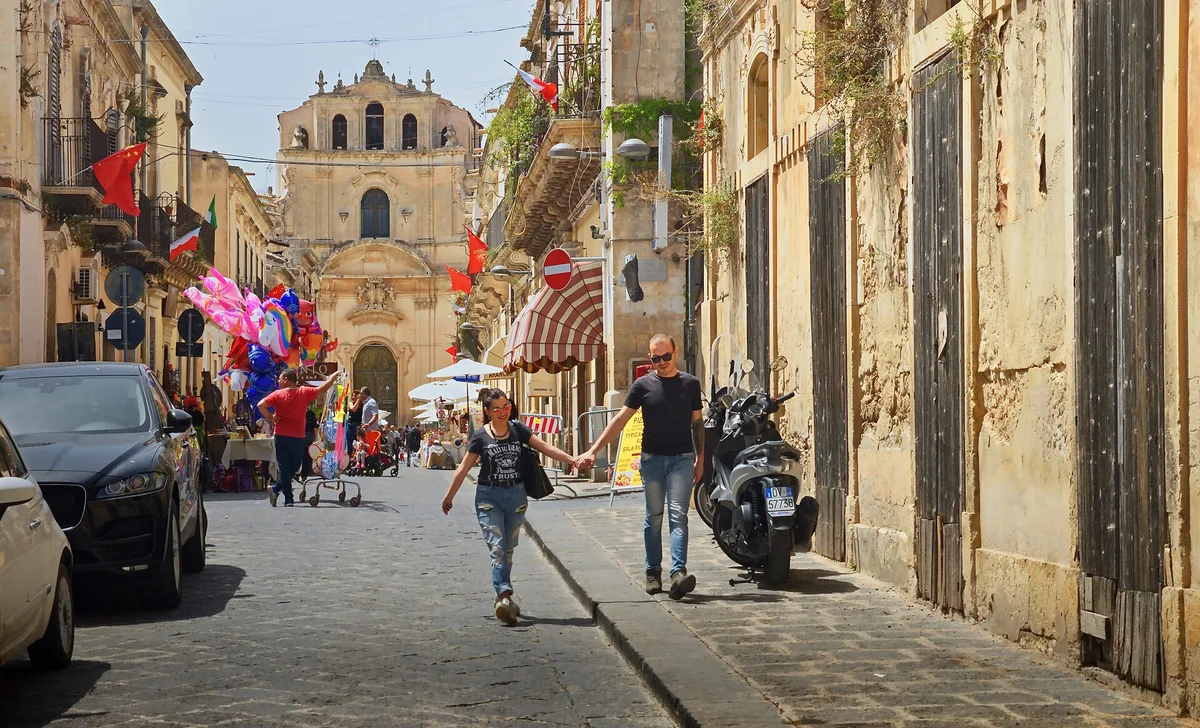
What Is Noto Baroque Masseria Stock?
Noto masseria stock is restored and restorable stone farmhouses from €300,000 in the Val di Noto UNESCO corridor, typically on one to five hectares. Licensed short stays on pool stock return 5-7% gross. The resale market is British and German second-home demand, which arrived here later than in Tuscany and is still growing.
Agency portfolios mix turnkey restored masserie with raw stone shells needing 80,000 to 200,000 EUR remediation, pool SCIA, and borehole or septic compliance on rural contrada lanes. Each lot carries distinct abusi history, agricultural land classification, and heritage review paths that buyers must verify before compromesso on countryside photography that hides access constraints.
What Are the Key Facts for Noto Masseria Stock?
Resale and restoration stock starts at €300,000, three to five bedrooms across 120-280 sqm. A pool needs its own SCIA and a compliant plot. Letting requires a national CIN plus a Sicilian CIR. Resale on correctly priced pool stock takes 12-24 months in south-eastern Sicily.
| Factor | Detail |
|---|---|
| Price from | 300,000 EUR |
| Restored band | 450,000 to 900,000 EUR |
| Typical land | 1 to 5 hectares |
| Bedrooms | 3 to 5 typical |
| Status | Restoration / completed mix |
| STR licensing | CIN + Sicilia CIR |
| UNESCO | Val di Noto baroque ensemble |
| Compare | Noto area guide |
What Should You Know About Location and Area?
The masserie sit in countryside 5-15 minutes from Noto’s baroque centro, 35-45 minutes from Ortigia in Syracuse, and 75-90 minutes from Catania Fontanarossa. Against town stock at €900-1,800 per sqm, the trade is walkable centro dining for pool privacy on almond slopes: a genuinely different product from anything on the Etna coast.
Infiorata season in May and July-August baroque festival weeks support event-heavy short-stay calendars when masserie include documented parking and honest car-necessity copy on rural access lanes. Shoulder seasons can host wine route and food festival packages when operators market Modica and Ragusa Ibla day trips within 30 to 45 minutes.
| Destination | Approximate time |
|---|---|
| Noto centro baroque | 5 to 15 min drive |
| Marina di Noto beach | 15 to 25 min |
| Syracuse Ortigia | 35 to 45 min |
| Modica / Ragusa Ibla | 30 to 45 min |
| Comiso Airport | ~60 min |
| Catania Fontanarossa | 75 to 90 min |
Countryside masserie command 40 to 60 percent per sqm discounts versus Taormina centro apartments on comparable bedroom counts in Sicily comparables. SS115 and SP coastal links add 20 to 35 minutes to Catania airport transfers during peak August weeks when tour buses queue on Noto hill approaches. Owners marketing 1,800 to 2,500 EUR weekly peak short-stay should document private transfer partners and realistic check-in windows for guests arriving after late flights into Catania.
Licensed pool masserie with 1 to 5 hectares and borehole water rights typically trade 450,000 to 900,000 EUR restored in Noto underwriting files when visura shows conformità on stone volumes and septic capacity matches advertised guest counts. Weekly STR at 1,800 to 2,500 EUR peak with 20 to 25 percent management and 5 to 7 percent gross yield on 600,000 EUR tickets requires modeling 120 to 140 rentable nights rather than calendar occupancy claims in agency pro formas. Restoration shells from 300,000 EUR need 80,000 to 200,000 EUR geometric and MEP budgets before pool SCIA and CIN registration timelines align with first guest season targets foreign buyers set at rogito.
What Should You Know About Design and Units?
Dry-stone walls and vaulted interiors on 120-280 sqm: €300,000-900,000 restored, or a raw shell plus €80,000-200,000 of remediation. Plots of one to five hectares carry the pool SCIA comfortably. Any visible change to the stonework takes 4-8 months of heritage review under Val di Noto protection.
Inventory spans finished masserie marketed for weekly family bookings to renovation projects sold on drone photography before filed SCIA exists. Buyers should treat infinity pool renders as conditional until geometra confirms agricultural land rights, borehole permits, and septic capacity for guest counts agents advertise on English-language portals.
Stone masserie differ from uniform suburban villas because each contrada carries seismic classification on pre-1980 volumes, dry-stone retaining walls, and outdoor kitchen gas lines that affect insurance and STR liability premiums versus compact Noto centro apartments with stair access only.
What Should You Know About Investment Case?
Licensed short stays on €450,000-900,000 restored pool tickets return 5-7% gross, at €1,800-2,500 a week in peak summer. Baroque apartments in the centro do better on paper at 6-8% but carry no land and no pool. Resale on either takes 12-24 months.
| Factor | Benchmark |
|---|---|
| STR gross (countryside + pool) | 5 to 7 percent |
| STR gross (centro compare) | 6 to 8 percent |
| Weekly peak STR | 1,800 to 2,500 EUR |
| Jul-Aug revenue share | 40 to 50 percent of annual gross |
| Rentable nights model | 120 to 140 nights per year |
| Management (professional STR) | 20 to 25 percent of gross |
| Resale liquidity | 12 to 24 months typical |
| Compare coast | Taormina area guide |
Model 120 to 140 rentable nights annually rather than calendar-year occupancy claims in agency pro formas. Mid-market countryside thesis favors yield plus land optionality: correctly priced pool masserie may wait 12 to 24 months for qualified buyer versus faster turnover on smaller Syracuse Ortigia apartments with broader culture-tourist resale audience.
Transaction stack on 500,000 EUR second-home purchase runs 9 to 12 percent including registration tax, notary, geometric survey, and heritage consultancy fees. Furnished short-stay launch adds 25,000 to 45,000 EUR for pool furniture, outdoor kitchens, and CIN onboarding before first guest season.
Non-resident buyers sometimes secure Italian mortgage leverage on restored masserie when rental income is documented on cedolare secca filings, though banks underwrite rural borehole and pool compliance slowly. Cash buyers dominate sub-400,000 EUR restoration shells, which speeds rogito to 90 to 120 days when conformità and land classification packets are complete pre-compromesso.
Who Is This For?
Three buyers, and only the first is underwriting a return. Countryside owners who accept 5-7% gross and sub-25% winter occupancy on pool stock; British and German families who want the Val di Noto address specifically at €300,000-900,000; and portfolio buyers pairing Sicilian exposure with mainland holdings elsewhere in Italy.
- Countryside STR operators: Pool masserie, weekly family bookings, almond route marketing
- Restoration buyers: Stone shells from 300,000 EUR with geometric and heritage budgets
- Baroque tourism investors: Infiorata and festival calendars plus Modica day trips
- Gateway plus land: Syracuse or Noto centro cash-flow layer with masseria step-up timing
A Val di Noto masseria suits three buyers and the first of them is doing the most work. A weekly short-let operator who can absorb 12-24 months of restoration before revenue, then run a season that concentrates between May and October at rates the almond-slope setting supports. A lifestyle buyer who wants pool privacy 5-15 minutes from a UNESCO baroque centro rather than walkable centro dining, and treats income as an offset. And a portfolio buyer pairing Sicilian exposure with mainland holdings, using town stock at €900-1,800 per sqm as the price reference. What none of them should assume is that the permit position is settled: the UNESCO landscape, Soprintendenza scope on the historic fabric and the rural cadastral position all need clearing before an offer.
What Should You Know About Pros and Cons?
In favour: UNESCO recognition and a mid-market entry from €300,000, which the Amalfi and Tuscan equivalents left behind years ago. Against: restoration overrun risk on dry stone, pool SCIA delays that push a season, thin winter occupancy below 25%, and a resale pool narrower than the number of people who view.
| Factor | Advantage | Trade-off |
|---|---|---|
| Entry ticket | From 300,000 EUR countryside | Restoration 80,000 to 200,000 EUR on shells |
| STR yield | 5 to 7 percent gross pool stock | Jul-Aug 40 to 50 percent revenue concentration |
| Land | 1 to 5 hectares typical | Agricultural classification review on visura |
| Brand | Val di Noto UNESCO baroque corridor | Rural access lanes require honest STR copy |
| Compare Taormina | Lower per sqm, similar yield % | Weaker international luxury resale depth |
| Centro compare | 6 to 8 percent STR on smaller tickets | Stair access and bell noise on Ortigia stock |
Pros
- Mid-market entry from 300,000 EUR with stone architecture and land parcels
- Val di Noto UNESCO marketing supports culture tourism beyond beach weeks
- Licensed pool masserie avoid centro stair limits and parking complaints
- Weekly STR peaks at 1,800 to 2,500 EUR with 20 to 25 percent management norms
- Pairs with Noto centro or Syracuse apartment liquidity on diversified portfolios
Cons
- Restoration cost overrun on partially completed marketing stock
- Pool SCIA, borehole, and septic permits vary by contrada
- Rural car dependency limits walkable centro guest expectations
- Winter void months remain material without long-term furnished leases
- Heritage and seismic rules delay exterior stone changes on visible plots
What Should Foreign Buyers Verify Before Reserving?
Five checks before compromesso on a €300,000-900,000 ticket. Conformità on stone volumes and any pool already built; the agricultural classification on the visura; borehole and septic capacity, which govern how many guests the house can hold; a short-stay model built on 120-140 nights; and avvocato review.
| Red flag | What to verify |
|---|---|
| Land classification | Building rights and agricultural use on visura |
| Pool conformità | SCIA records match cadastral and advertised guest capacity |
| Water and septic | Borehole permits and septic sizing for STR headcount |
| Restoration gap | Engineer sign-off before trusting turnkey marketing photos |
| STR pro forma | 120 to 140 nights modeled, not calendar occupancy |
| Seismic class | Structural report on pre-1980 stone volumes |
- Codice fiscale and notary-led wire path before compromesso on resale stock
- Geometra survey of stone walls, pool, and drainage on rural plots
- Cross-read heritage restricted property Italy before exterior stone plans
- Confirm CIN and Sicilia CIR path via Italy holiday let licensing guide
- Compare countryside tickets against Noto area guide and Taormina area guide pricing bands
- Model net yield after IMU and cedolare secca with commercialista using Italy rental yield guide
- Independent avvocato review of encumbrances per due diligence Italy property
- Follow the sequence in our guide for foreign buyers, adding seismic compliance and the baroque facade clearance to the pre-caparra file.
Insider tip: Track three closed sales in the same contrada before offer. Portal asking averages often overshoot OMI reference bands by 8 to 12 percent in spring listing season on Noto countryside stock.
What Constrains a Baroque Masseria Restoration?
Heritage constraints govern the works programme on Noto’s baroque stock. Foreign buyers at around €300,000 are usually acquiring protected fabric where facades, openings and roof structures require clearance, so the approval timetable rather than the builder’s quote sets the realistic completion date.
| Factor | Effect |
|---|---|
| Heritage protection | Constrains facade, openings and roof works |
| Soprintendenza clearance | Required before permitted works begin |
| Conformità edilizia | Built layout must match the cadastral plan |
| Seismic classification | Applies across south-eastern Sicily |
- Establish the Soprintendenza position before the offer, not after the deposit.
- Conversion conformità costs on baroque centro stock commonly run €15,000 to €35,000.
- Budget IMU levied at 0.86% to 1.06% of the cadastral value annually on a second home.
Frequently Asked Questions
It represents restored and renovatable stone masserie in the Noto countryside within the Val di Noto UNESCO baroque corridor, typically from about €300,000 with 1-5 hectares and optional pools. Buyers target baroque tourism, almond countryside, and weekly STR below Taormina entry tickets.
Properties sit in contrade between Noto centro and the Iblei foothills, usually 5-15 minutes from the baroque cathedral grid and 35-45 minutes from Syracuse Ortigia. Marina di Noto beach lies within 15-25 minutes for coastal marketing on licensed pool stock.
Countryside masserie start from about €300,000 for restoration-ready stone stock. Fully restored properties with pools and land often trade €450,000-900,000 depending on hectares, borehole rights, and finish quality before furnishing.
Yes. EU citizens purchase freely. Non-EU buyers from reciprocity countries follow standard Italian rogito with codice fiscale and independent legal review. Restoration projects need conformità, heritage checks on stone volumes, and pool SCIA before STR launch.
Licensed countryside masserie with pools often achieve 5-7% gross STR on weekly summer bookings at €1,800-2,500 peak weeks. Noto centro baroque apartment comparables reach 6-8% gross STR on smaller tickets. Net yields fall after IMU, 20-25% management, and cedolare secca.
Noto masserie enter at roughly half to one-third Taormina per sqm with similar gross yield percentages on compliant pool stock. Taormina wins on luxury branding and international resale depth. Noto suits baroque and countryside buyers at mid-market tickets from €300,000.
Read Also:
- Sicily property investment guide
- Noto area guide
- Taormina area guide
- Heritage restricted property Italy
- Italy holiday let licensing
- Due diligence Italy property
- Buy property Italy foreigner
Three constraints shape a masseria restoration in the Val di Noto and each one lengthens the programme before it raises the cost. The UNESCO landscape inscription governs anything visible from protected viewpoints, which on an open almond slope is most of the exterior including the pool surround. The Soprintendenza controls facades, roof lines and openings on the historic fabric itself, with clearance running weeks rather than days before a contractor mobilises. And the cadastral position on rural buildings frequently predates any formal record, so regularisation may be needed before a change of use permits letting at all. Against town stock at €900-1,800 per sqm, a restored masseria commands its premium precisely because those three have already been cleared, which is why the permit file is worth more scrutiny than the finish specification.
Get an Italy property shortlist
Tell us your budget and region (Tuscany, Lake Como, Puglia, Milan, Sardinia). We reply within one business day with options matched to your goals.